
There is a particular kind of anxiety that surfaces every time a famous woman declines to perform devotion on schedule. You can see it in comment sections, in the shrug-and-gloat posts from strangers who have decided this absence means something. When Cristiano Ronaldo played his first match of the FIFA World Cup 2026 on June 17 in Houston, a flat 1-1 draw with DR Congo, zero shots on target for the 41-year-old chasing Eusébio’s ghost, I noticed that part of the online conversation was not actually about Ronaldo. It was about where Georgina Rodríguez was.
She was in Mallorca. On a superyacht. Shooting a cover for Harper’s Bazaar Spain in a rust-colored one-piece, heels, jewelry, the whole infrastructure. Before kickoff she posted a heart-in-clouds Instagram story as a send-off and then, apparently, went back to her own calendar. The discourse that followed told you almost nothing about Georgina Rodriguez and quite a lot about what audiences still expect a football girlfriend to be: present, visible, subordinate in frame if not in spirit, cheering from a seat that confirms whose story she belongs to.
This is the sociology of the WAG moment, and the Georgina Rodriguez World Cup 2026 story is where that sociology gets genuinely complicated.
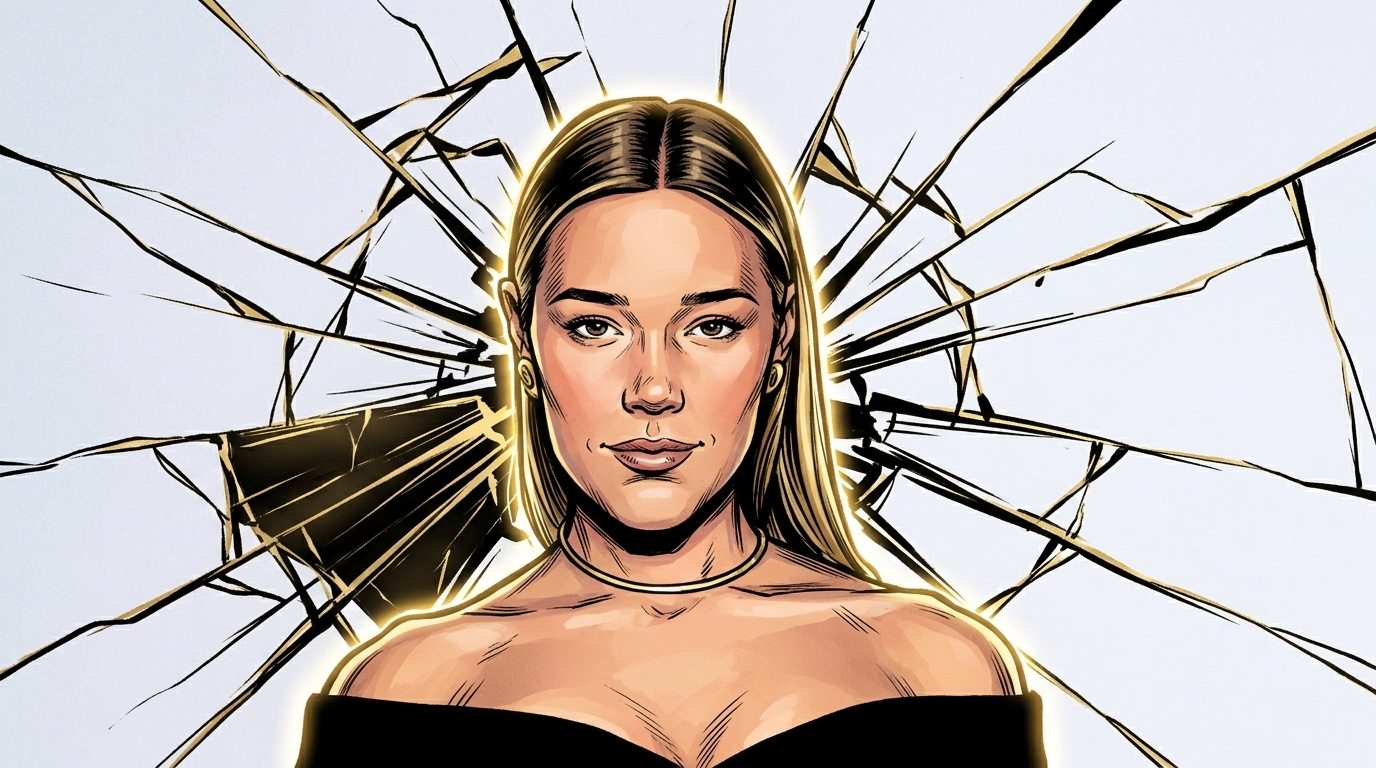
She arrived in Madrid as a teenager with no connections, no money, and no particular plan beyond survival. She got a job at a Gucci store. In 2016 she met a man who was already arguably the most famous athlete on the planet, and most people in that position become a footnote — they get absorbed into the orbit and stay there. Georgina Rodriguez did not get absorbed. She built a brand that is now, by most empirical measures, indistinguishable from a small media company.
The numbers, when you line them up, are genuinely striking. She has 73.2 million Instagram followers as of this month. Her estimated value per sponsored post sits at $716,000 according to VANTIX’s influencer ranking, putting her at the top of the 2026 World Cup WAG cohort by a significant margin. She holds partnerships with Chopard, L’Oréal, Charlotte Tilbury, Aroya Cruises, Calzedonia, and Uber Eats. And she is credited as a producer on I Am Georgina, the Netflix documentary about her life, which premiered on her birthday, January 27, 2022. That last detail is not an accident. It is a signal about who controls the framing.
https://x.com/GeorginaDaily_/status/2053941850189283450
https://www.instagram.com/p/DNOPitPoAgN/
For American audiences, this FIFA World Cup 2026 represents a genuine first encounter. The United States does not have a strong infrastructure for following European WAG culture the way British tabloids or Portuguese sports pages do, and so the version of Georgina that is arriving now, beamed into American feeds through World Cup coverage, is being processed through frameworks that are still catching up. Is she a supportive partner? A luxury lifestyle influencer? A woman who happened to meet the right person? The answer is probably that these categories are not very useful, but the fact that we keep reaching for them says something about how little our vocabulary for female celebrity has evolved even as the actual landscape has shifted dramatically.
Portuguese and European audiences know a more layered version. They have watched I Am Georgina, a show that is not, despite what the title might suggest, simply a hagiography. It is a carefully constructed document of a woman managing her own image in real time, which is a different and more interesting thing. She is not passive content. She is the author.
https://www.instagram.com/p/DZsQl_-s-VJ/
The engagement announcement in August 2025 confirmed how thoroughly she had become her own gravitational center. She captioned the diamond ring photo “Yes I do. In this and in all my lives.” and the resulting coverage was not, notably, framed as a Ronaldo story. Outlets were covering Georgina Rodriguez’s engagement. The distinction is subtle but real, and she has spent roughly a decade making sure it stays that way.
What is genuinely interesting about the Georgina Rodriguez World Cup 2026 moment is that it exposes the way the tournament functions as a social media amplifier. We wrote about how a goalkeeper from Cape Verde built 14 million followers in days, the World Cup as a sudden-attention machine. For Georgina, the dynamic runs in reverse: she arrives with the followers already in place, the brand architecture already constructed, and the tournament is just one more venue through which she routes her existing audience. Ronaldo is playing the match; she is playing a longer game on a different board entirely.
That is not a criticism. It is an observation about how power actually moves in the attention economy.
Ronaldo is 41 and scoreless across his last 10 major tournament matches. He is playing, by his own admission, in what is almost certainly his final World Cup. He has eight career World Cup goals and the question of whether he can reach Eusébio’s Portugal record, let alone break it, is the kind of question that orbits the entire tournament like a weather system. The pressure on him is enormous and it is also, in its way, a kind of cage. When you are that player chasing that record at that age, you belong to the tournament completely.
Georgina, meanwhile, shot her cover and went back to Mallorca. The World Cup is one context among many for her. Mbappé’s 100th cap for France generates the kind of historical narrative that makes the tournament feel like a cathedral of individual achievement. The Georgina Rodriguez World Cup 2026 story is a different kind of milestone: the moment a woman who was once described entirely in relation to a man became, at least for the audiences paying attention, more interesting than the man himself.
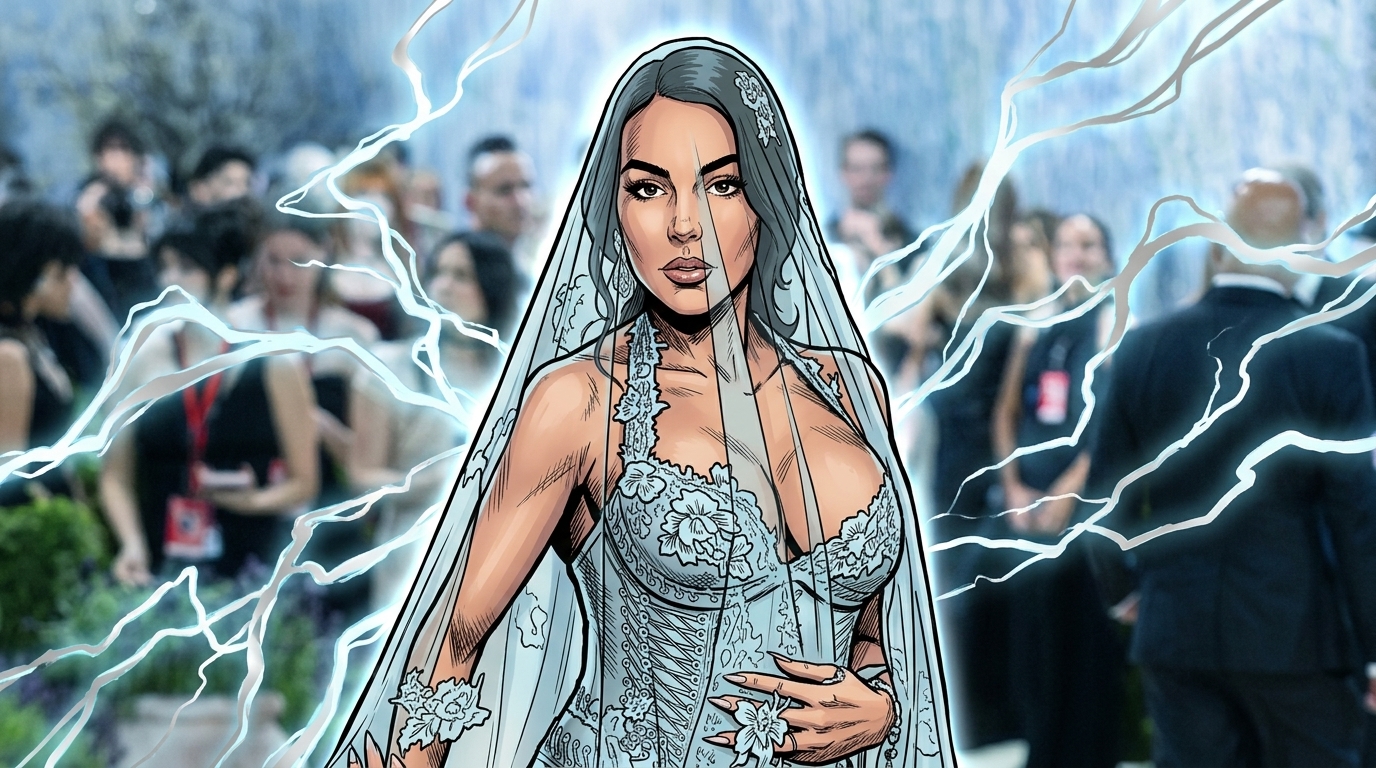
I don’t know exactly what to do with that. The Met Gala appearance in custom pale blue Ludovic de Saint Sernin, the sheer veil and the spiritual reference to the Virgin of Fátima, was extraordinary on its own terms, independent of anything Ronaldo was doing that week. The Calzedonia and L’Oréal deals exist independent of any match result. Her net worth, estimated between $25 and $35 million, does not fluctuate with Portugal’s tournament performance.
What the discourse around her absence from Houston reveals, and this is the thing I keep coming back to, is that we still want the WAG to be the audience. We want her watching from the stands, visible proof of a man’s domestic life, an emotional anchor to the human story underneath the athletics. Georgina Rodriguez has built herself into a brand with the scale of a small media company, and she refuses that audience role without ever appearing to refuse it. She posts the heart-in-clouds story. She says yes in all her lives. And then she goes back to work.
That is a very specific kind of power, and I am genuinely uncertain whether we have the language for it yet.