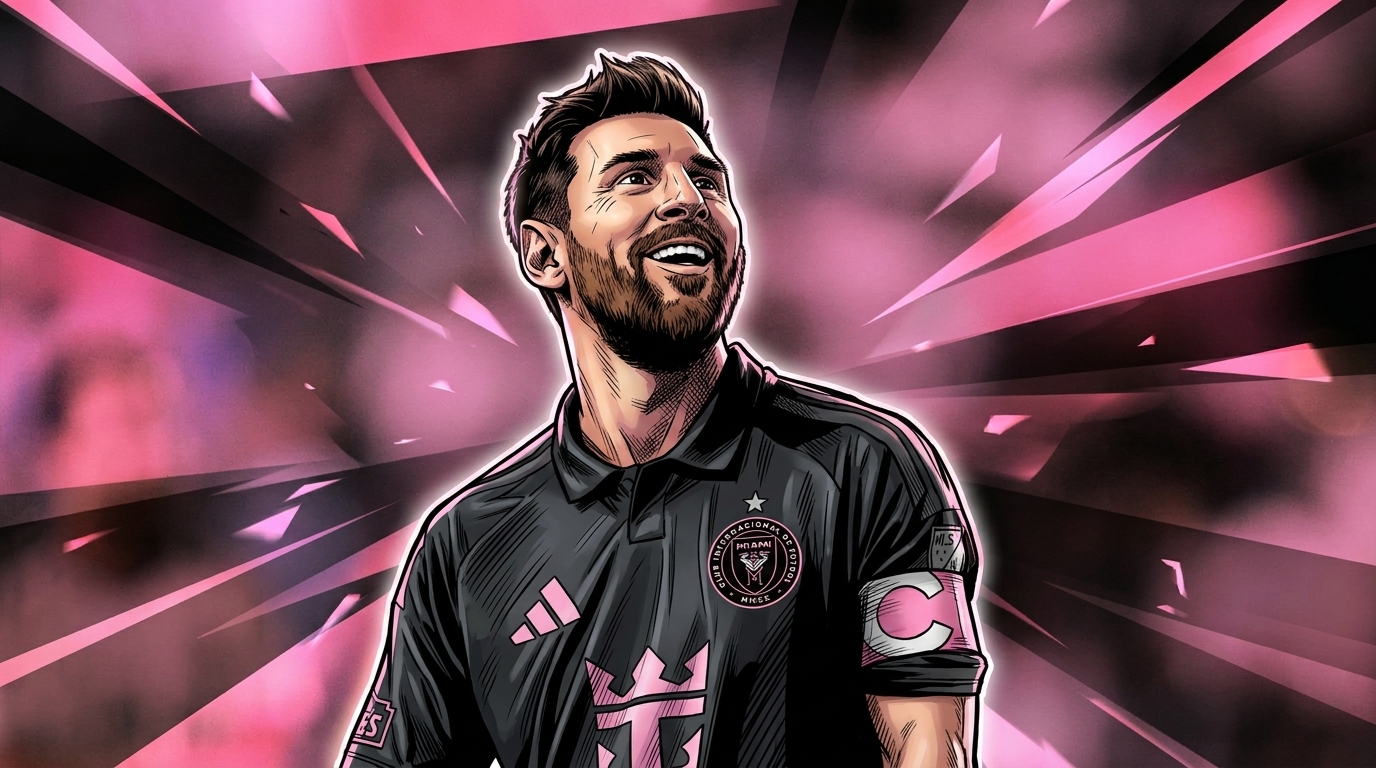

We have spent thirty years searching for this. Not a system, not a philosophy, not a coach — a striker. A genuine No. 9 who could walk into a World Cup match on home soil, score twice before halftime, and make 70,000 people inside SoFi Stadium feel like the question had finally been answered. On Friday night in Inglewood, Folarin Balogun did exactly that. Balogun’s two goals against Paraguay were the kind of performance that rewrites a team’s self-conception in real time. The USMNT beat Paraguay 4-1. The attendance was 70,492. Roughly 19 million people watched on television, the highest-rated USA men’s match of all time, per FOX Sports.
https://twitter.com/FOXSportsPR/status/2065868746229420157
That audience did not tune in for a tactical exercise. They tuned in because this is the World Cup, it is being played here, and for once the American team has players worth watching. Balogun is one of them. The question now is whether casual American sports fans understand who he actually is, where he came from, why he’s wearing this jersey and not a different one, and what his presence changes about how we think about the USMNT going forward.
Who Is Folarin Balogun?
Folarin Balogun is a 24-year-old striker currently playing for AS Monaco in Ligue 1. He was born in Brooklyn, New York, moved to London at roughly one month old, and was raised in England by parents of West African descent. He is, in other words, a very American story. Immigrant roots, global upbringing, wearing red, white and blue because the country that shares his birthplace wanted him badly enough to earn the commitment.
Balogun came through Arsenal’s Hale End academy, one of the most respected youth setups in European football, and made his senior debut for the Gunners in October 2020. The breakthrough came on loan at Reims in 2022-23, where he scored 21 goals in 37 Ligue 1 appearances, the kind of output that shifts a player’s market value overnight. Monaco signed him in August 2023. In 2025-26 he has 19 goals and three assists across all competitions, earning fan MVP recognition at the club. He is not a project. He is a finished product.
Why Did Balogun Choose the USA Over England?
This is the part of the story that matters most, and it deserves more than a footnote. Balogun was eligible for three nations: the United States, England, and Nigeria. He appeared for England’s U-21 side in 2021, which created a brief window in which his international future remained genuinely uncertain. He switched his allegiance to the USMNT in 2023, and the senior squad has benefited from that decision ever since.
His explanation, offered in post-match comments Friday night, was not complicated: “I’ve always said the fans gave me so much motivation. They showed me so much support. For me, the most important thing has always been to repay that.” That is either the most earnest thing a professional athlete has said in years, or a very well-constructed media answer — possibly both. What is inarguable is the substance of the repayment: a 31st-minute far-post finish off a deflected Christian Pulisic centering feed, followed by a second just before halftime in which he cut inside two Paraguayan defenders and curled a left-foot shot into the upper corner. The second goal, in particular, was the work of someone who has done this thousands of times. In a club game that would have been celebrated as a smart finish by a quality striker. In a World Cup group stage match on home soil, it felt like an announcement.
For context: Balogun is now the first American player to score multiple goals in a single World Cup match since Bert Patenaude accomplished the feat in 1930. (Patenaude scored three, for the record.) That is not a stat designed to make Balogun sound dated. It is designed to illustrate how rarely the United States has produced this caliber of striker at this level. Ninety-six years is a long gap.
What the USMNT Looks Like With a Genuine No. 9
The honest answer to this question is: considerably more dangerous than before. Pochettino’s tactical setup has always had a logic to it: press aggressively, move the ball quickly to wide areas, get Christian Pulisic on the ball in positions where he can drive at defenders. The problem at the finishing end of that sequence was consistency. A system that relies on Pulisic to do everything from the build-up through to the goal, which is roughly what the USMNT was asking of him for better part of the last four years, works only when Pulisic is exceptional, and collapses when he is merely very good.
Pulisic’s World Cup build-up has carried all the weight of someone who understood the stakes. Against Paraguay he had the assist on the first Balogun goal, a deflected feed that became an opportunity because Balogun was already moving to the correct position at the correct time. That is what a real No. 9 provides: the ability to convert chances that a system generates rather than chances that an individual creates entirely alone.
Gio Reyna added the exclamation point: a trivela from the outside of his right foot past Orlando Gill in stoppage time, his first World Cup goal in 16 minutes of play after entering as a substitute. But the more telling moment was Balogun’s second. That goal did not require a brilliant teammate pass. It required a striker who can isolate defenders, identify the right foot to use, and manufacture a shot from a tight angle inside the box. That is a separable skill from pace, from aerial ability, from link-up play. It is the skill of someone who has spent years in European football learning how to score when nothing is going perfectly. (Reyna, separately, used his goal celebration to announce his wife Chloe’s pregnancy, tucking the ball under his jersey and sucking his thumb. For someone who carried significant controversy out of the 2022 World Cup, Friday night was a fairly complete rehabilitation.)
The cautionary note (because there is always one) is that Paraguay is not a top-ten nation. One match of evidence is one match of evidence. What Balogun showed against Paraguay is that the ceiling exists. Proving it consistently against better opposition is the next task.
What Comes Next: USA vs. Australia on June 19
The United States currently leads Group D, which also includes Turkey. The next match is against Australia on June 19 at Lumen Field in Seattle, kickoff at noon Pacific. Australia is a FIFA top-25 nation and will present a more organized defensive structure than Paraguay managed on Friday. The Socceroos have their own striker conversation: they have been building around a generation of technically capable midfielders without a consistent No. 9 to finish their work, which means the match may hinge on which team can convert the limited high-quality chances that a well-organized defensive block allows.
Balogun’s post-match quote when asked about the reaction to his performance was characteristically understated. “To be honest, I think I’ll probably just watch some Netflix.” This is either a sign of supreme psychological composure or confirmation that he genuinely did not register the historical weight of what he’d done. Either interpretation is fine. Neither one should be confused for lack of motivation.
What matters more than the quote is the shape of what comes next. A World Cup group stage is three matches. Two goals in game one establishes Balogun as the player opponents must account for, creating space for Pulisic, for Reyna, for Tyler Adams in the midfield. That is how good teams function: one player’s excellence forces a defensive adjustment that benefits everyone else. The USMNT has not had that player centrally in thirty years of trying.
They appear to have him now. He was born in Brooklyn, raised in London, developed in Reims and Monaco, and now playing on the biggest stage in the sport for the country that started the story. You can follow the rest in our World Cup coverage.
Balogun was asked what this night meant to him. He answered with the Netflix line. But the full answer is visible in a different place: a far-post finish in the 31st minute, and a curling left-foot shot into the upper corner just before halftime, in front of 70,492 people, in a country that has been waiting a very long time for someone to do exactly that.