
Club WWE, launching Friday for $99 a year, is being sold as a gift to the WWE faithful; the numbers say it’s closer to a cover charge outside a room they already owned a piece of. The company frames it as rewarding loyalty. What it actually reveals is a business that has stopped trying to grow its audience and started figuring out how to charge the one it already has more efficiently.
The mechanics are simple enough. For $8.25 a month, according to WWE’s own announcement, members get early access to select ticket sales, a members-only shop stocked with exclusive merch, an archive of old matches and behind-the-scenes footage, a live chat feature for watching Raw with strangers, and a rewards program that pays out points for logging in. The launch date isn’t an accident. Club WWE goes live the same day the three-day Fanatics SummerSlam Takeover begins in Minneapolis, WWE’s single biggest live-gate stretch of the summer.
Loyalty programs are supposed to run in one direction: give a company something to dangle in front of casual customers so they turn into regulars. Club WWE runs the play backward. It takes fans who already buy the pay-per-view, already own the Cena hoodie, already booked the trip to Minneapolis this weekend, and sells them a laminate certifying what they were already doing.
Airlines figured out this math decades ago; boarding priority and two extra inches of legroom get rebranded as rewards for loyalty instead of what they actually are, which is a toll charged to people who were flying anyway. WWE has applied the identical logic to a $99 all-access pass sold to an audience that was never going to stop watching in the first place. Club WWE turns fandom into a $99 line item, and the timing, landing the same week as the company’s biggest live gate of the summer, makes the math hard to miss.
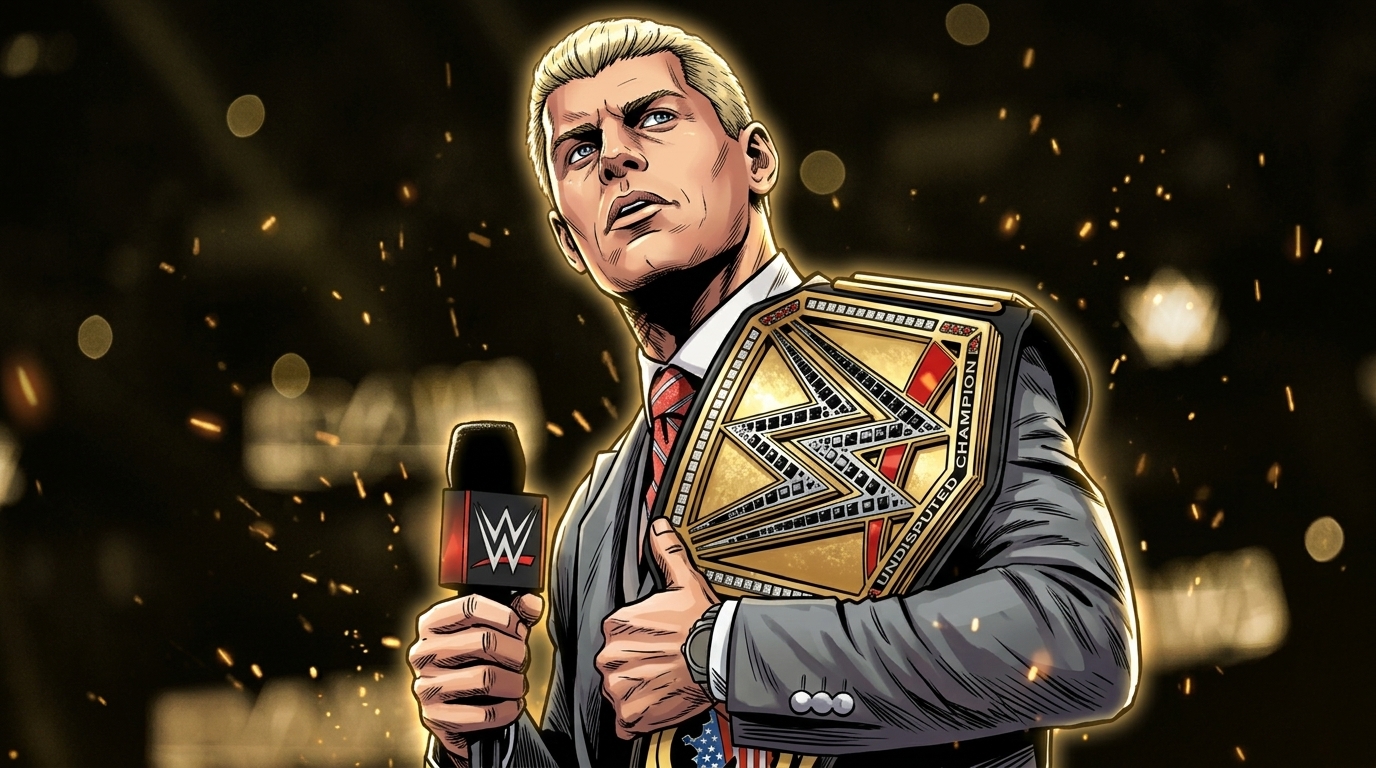
John Cena, the face of the campaign, described Club WWE as something that “creates a year-round destination that rewards our most passionate fans” and called it “something additive to the fan experience.” A destination that charges an entrance fee isn’t a destination; it’s a gate. And “additive” is doing a lot of work for a program whose primary function, per its own feature list, is subtracting ninety-nine dollars a year from fans who were already spending plenty.
WWE previewed the ticketing angle back in May, two months before Friday’s official rollout, when the company’s account framed early registration as a favor:
https://twitter.com/WWE/status/2052754040967319903
That’s a two-month head start on convincing people that paying to wait in a shorter line is a perk, not an admission that the regular line got worse.
None of this reads like triage. TKO’s first-quarter numbers show WWE’s live-events and hospitality revenue up more than 60% year over year, and a company posting growth like that isn’t scrambling to fill seats. It’s optimizing an asset that was already working.
Fans had already noticed the toll booths multiplying. Between the streaming tiers and the pay-per-view add-ons, fans already paying nearly $1,000 a year just to watch weren’t exactly starved for chances to hand WWE more money before Club WWE existed. Selling early ticket access as a premium perk is its own dark joke coming from a company that, earlier this summer, discounted a stadium WWE couldn’t fill at 25% off; the problem was apparently never that fans couldn’t get tickets fast enough.
Paul Levesque, Triple H to anyone who’s watched since the Attitude Era, has spent the past several years building this exact infrastructure as WWE’s chief content officer; Club WWE reads less like a pivot than an inevitability. The company didn’t need saving. It needed a subscription tier, and now it has one, wrapped in a welcome kit and a note signed by its biggest star, priced at $99 a year for the privilege of being exactly the fan you already were.