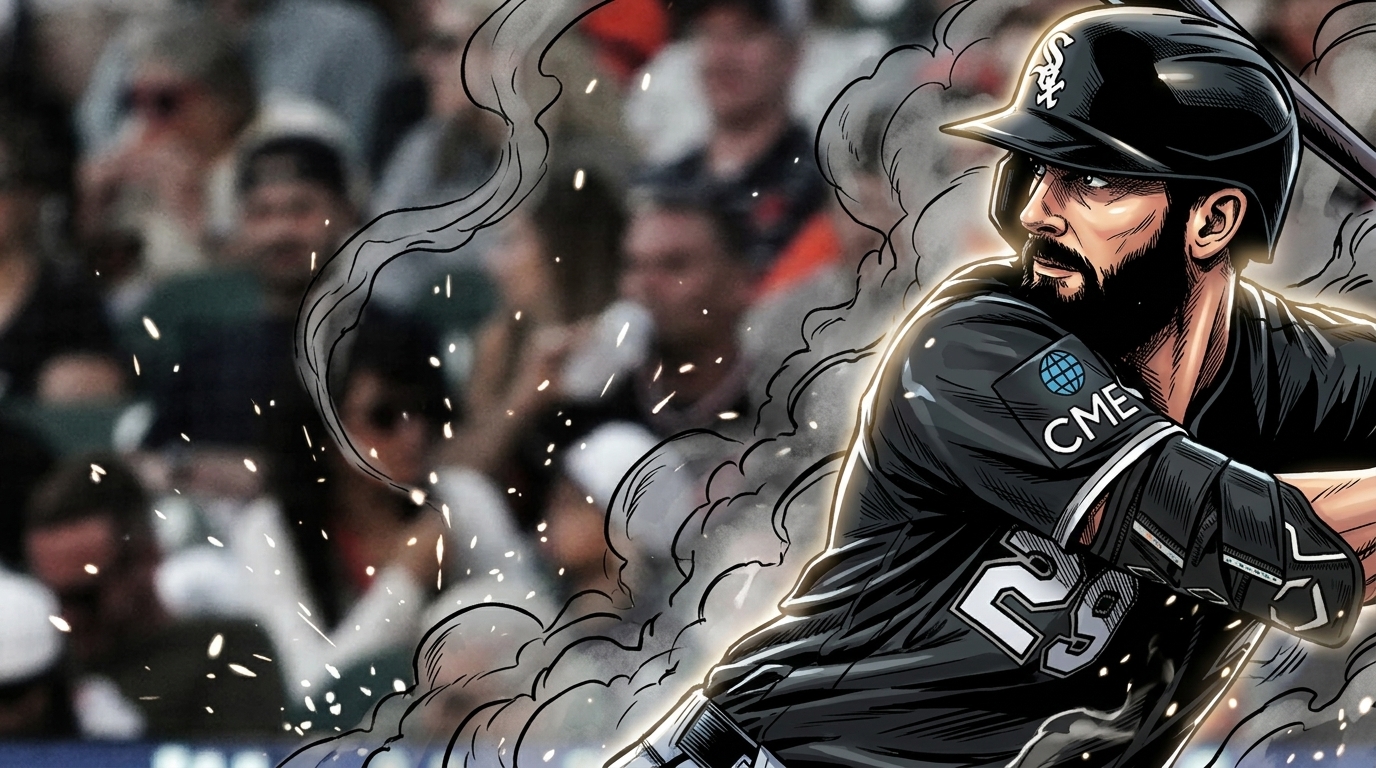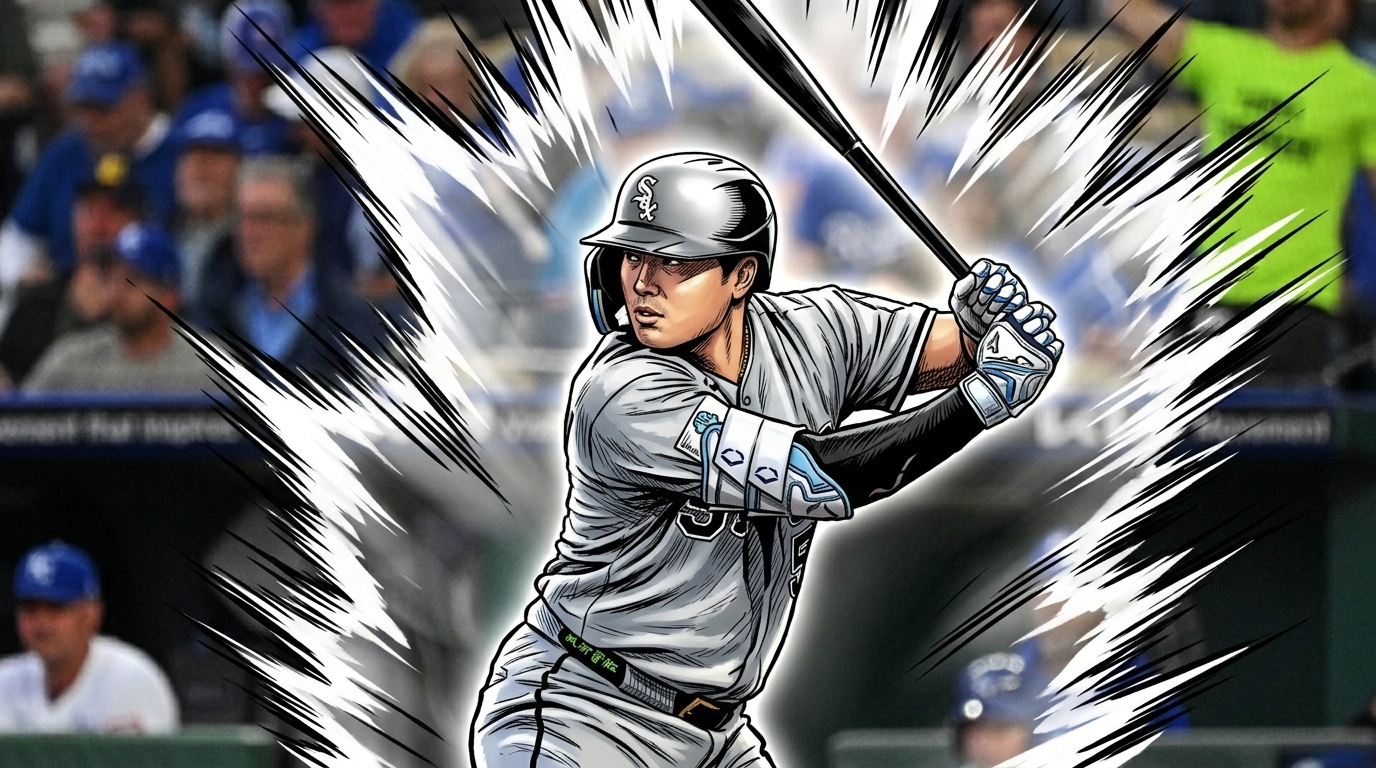

We’ve been watching this build — quietly, from a distance, the way you track a team that lost 121 games two years ago and don’t want to jinx it by saying too much too soon. The Chicago White Sox are 43-38. They are a legitimate AL Wild Card contender. And for everyone who covered that 2024 collapse, or charted the 2025 false start at 24-53, saying that sentence out loud still feels slightly irresponsible. Do it anyway. Then immediately worry about the 5.39 road ERA.
Because both things are true at the same time, and at some point between now and October, they are going to meet.
What Everyone Is Already Saying About the White Sox
By mid-May, the consensus had shifted. Per Schoenfield at ESPN, the White Sox had become one of three legitimate AL Wild Card threats by mid-May, doing it with pitching that nobody had penciled in as rotation-grade a year ago. The MLB.com feature that ran around the same time identified five specific players who had vaulted Chicago into contention: Davis Martin, Colson Montgomery, Miguel Vargas, Munetaka Murakami, and Grant Taylor.
The South Side Showdown piece from June 24 cut through the optimism with the number that keeps coming back: a 3-9-1 road series record, a 5.39 ERA away from Guaranteed Rate Field, and a last road series win dating to May 1-3 against San Diego. As the Showdown framed it, this is the “biggest 2026 problem” the White Sox face — not talent, not depth, but a persistent, stubborn, almost theatrical inability to perform the same way outside their own building.
https://x.com/DraftKings/status/2069054464992936351
That DraftKings breakdown from June 22 captures the longer arc: 39-37 at that point in 2026, versus 24-53 at the same point in 2025, versus 20-57 in 2024. The best start since the 2021 AL Central title. The numbers are what they are. The split underneath them is also what it is.
Are the 2026 White Sox a Real Playoff Contender?
Yes — with a specific caveat. The White Sox have genuine starting pitching (Davis Martin’s 3.18 ERA across 87-plus innings is not a mirage), a legitimate power source in their lineup, and a home environment where they’ve played elite baseball. The caveat is the schedule. The postseason requires winning road games, and a 5.39 road ERA paired with a 3-9-1 series record away from home represents a real ceiling on how far this team can go, not just a weakness to paper over.
The Number Nobody Wants to Say Out Loud
The home/road split is extreme enough that it demands an explanation beyond variance. A 3.41 home ERA paired with a 5.39 road ERA isn’t bad luck across a sample; that’s a 1.98-run gap across a full half-season. The WHIP tracks the same way: 1.22 at home, 1.46 on the road. (Strikeouts travel, so the strikeout rate doesn’t explain it.) Something about the environment, the defense, the scouting adjustments opposing teams make the second time they know the Sox are coming.
Davis Martin is the most unlikely development of this entire rebuild, and I mean that as genuine praise rather than backhanded skepticism. Martin turned 29 this season. He had never shown this level of production in his career — not in the minors, not in his brief major league appearances before 2026. His strikeout rate jumped from 17.3% in 2025 to 24.3% this season. That’s not the kind of improvement that looks like luck; that’s a genuine pitch-mix development, probably a mechanical adjustment that finally stuck. His 9-3 record is among the best in the AL. His 3.18 ERA has drawn early AL Cy Young conversation per ChiCitySports and RoundTable.io. He is, at the moment, a legitimate ace. (He is also 29 years old and has never done this before, which is information worth keeping somewhere accessible when the August narrative starts getting ahead of itself.)
Colson Montgomery is the other story that requires careful handling. He’s hitting .221 with 20 home runs and an .800 OPS through 77 games, and since debuting July 4, 2025, his 41 home runs rank among the most in baseball over that span. The 37.6% whiff rate is real; sitting at the 2nd percentile isn’t a number you paper over. But 2.0 WAR at shortstop for a player this age ages well in retrospect, and the raw power production is not a sample-size artifact. Montgomery’s ceiling is not what’s in question. Whether he closes the hole against high-velocity fastballs before the league finishes locking in the approach — that’s the actual question.
And then there’s Murakami — or rather, the hamstring strain that briefly silenced this whole story. Munetaka Murakami had produced a season worth building sentences around: .240/.378/.560, 20 home runs in 55 games (the third-fastest pace in MLB history at the time he went down) with a 63% hard-hit rate that sat at the 100th percentile. His one documented weakness is a .185 average against 95-plus fastballs, which is the kind of flaw you’d expect teams to have catalogued by now. The Grade 2 hamstring strain came with a 4-6 week prognosis. The White Sox went from a lineup that felt deep to one that felt thinner in exactly the spots that matter on the road.
Miguel Vargas at third has been a quiet piece of this: .233/.361/.476, 12 home runs in 53 games, and a bat-speed increase of 3.4 mph that led all qualified players. Vargas doesn’t dominate any single conversation about this team, which is part of why the White Sox are who they are right now. The production is distributed in a way that doesn’t leave one injury as an existential event. Murakami going down was significant. It didn’t end anything.
What to Watch For in July and August
There’s a version of this that ends with a September collapse that everyone will reframe as predictable in hindsight. I know that version — I spent two years compiling notes for TV analysts who never credited anyone’s foresight, and I’ve seen it written in advance. The analysts will cite the road ERA, the whiff rate, the Davis Martin age curve. They’ll be using numbers I just gave them.
There’s also a version where the White Sox, as we covered when they showed what this rebuild could look like against the Dodgers, have genuinely built something that travels. That version requires the road splits to compress (not disappear, compress) over the next six weeks. It requires Murakami returning to a lineup that maintained its record without him. It requires Davis Martin to prove that the strikeout jump holds against teams seeing him for the second and third time in a season.
July’s road schedule is the first real test of whether the home/road gap is deep-seated or correctable. The Sox will face teams that have full scouting books on Martin and Montgomery. The answers that come back from those series will tell you more about October than any of the current standings.
The South Side Showdown framed this correctly: the problem isn’t that the White Sox aren’t good. The problem is that the good version and the road version are behaving like two different teams. When those two things finally converge, one direction or the other, you’ll have your answer on whether the Chicago White Sox 2026 rebuild is a real story or a very good first half.
One of those outcomes is more fun to write about in October. I have a strong suspicion which one it’s going to be. I am also from Wisconsin, so I’ve watched AL Central optimism dissolve before, and I know better than to say it out loud until September.
Watch July. Watch the road ERA. Watch whether Martin’s strikeout improvement holds when lineups see him twice. That’s the story. Everything else is already written.