
The first time I learned to read an absence as information, it had nothing to do with sports. A producer’s name got quietly scrubbed from an album’s liner notes between the promo copy and the actual pressing, and nobody attached to the record would say why. I spent the better part of a week reading forum threads about a single beat placement, because the silence around it was more interesting than any explanation could have been. Two days into the Caitlin Clark documentary snub, I recognize the pattern: nobody has facts, so everybody is inventing a story, and the story people invent tends to be about themselves.
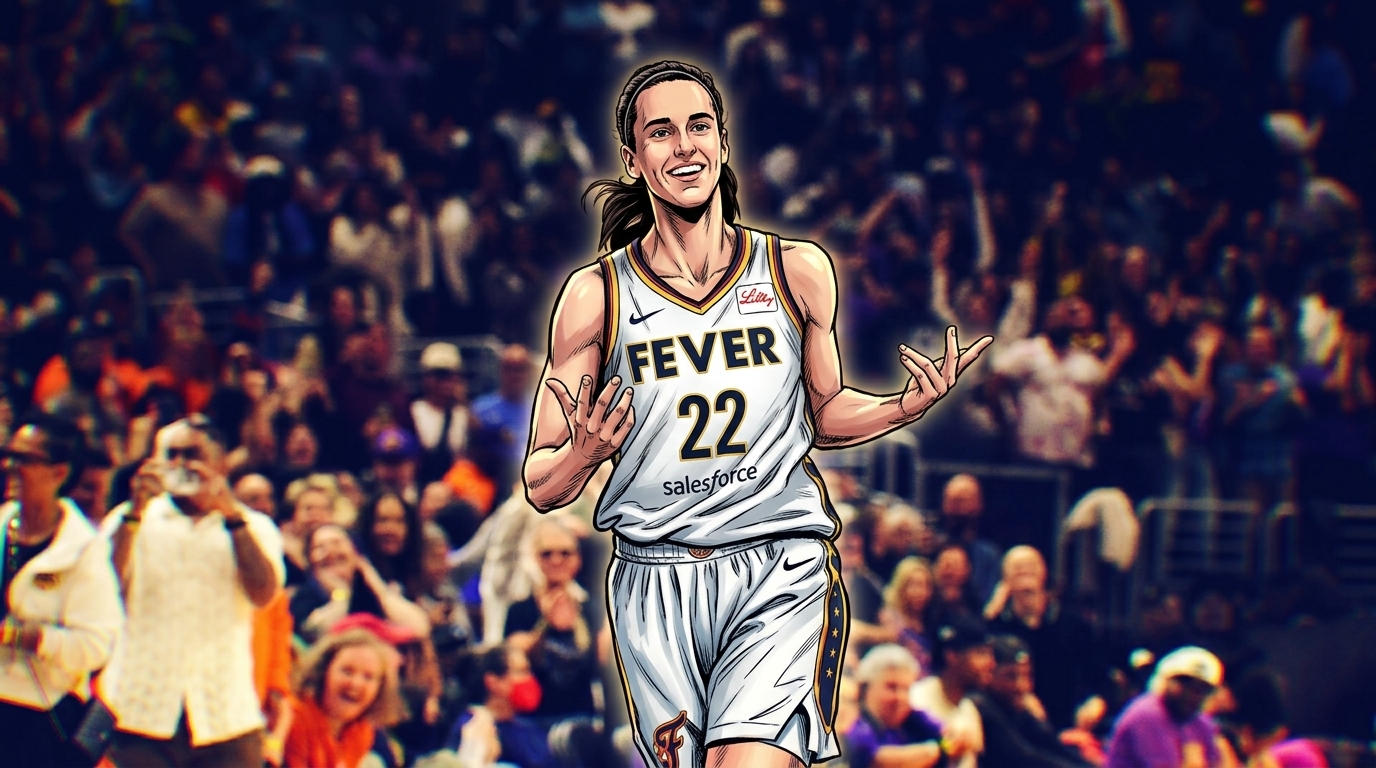
“Life in the W” premiered on ESPN2 the Friday of All-Star weekend, timed to the WNBA’s 30th anniversary like a card nobody asked the guest of honor to sign. It follows A’ja Wilson, Napheesa Collier, and DeWanna Bonner through last season’s collective bargaining fight and the private costs underneath it, and as a cast for a show about labor and legacy, it’s genuinely defensible. What it isn’t is a show that gives Clark, the player most responsible for anyone outside the league’s usual audience paying attention at all, a single interview or a personal storyline of her own. She turns up in game footage. Broadcasters say her name a handful of times. Nobody attached to the Caitlin Clark ESPN documentary will explain why that’s the extent of her involvement, and for two days that unexplained gap has curdled into a proxy fight over who actually gets to own the story of why the WNBA is suddenly a mainstream product.
That’s not for lack of anyone asking. Fox News’s OutKick requested interviews with both filmmakers and posed the obvious questions directly: was Clark ever approached, did she decline, what criteria decided who got the three chairs. A publicist initially offered both filmmakers up for interviews, then pulled the offer back, citing All-Star weekend scheduling. Maybe that’s exactly what it looks like, a busy weekend and bad timing. It could also be the easiest sentence in sports media relations, the one you reach for when the honest answer is more complicated than a scheduling conflict. I don’t know which, and neither, it turns out, does anyone reporting on the Indiana Fever’s missing star.
The theories filling that vacuum say more about the discourse than about the show. Some fans read the omission as access management, evidence that Clark’s camp keeps too tight a grip on her image to hand a camera crew two years of vulnerability. Others read it as the opposite: proof that the WNBA’s veteran core, the players who built the union and absorbed the unglamorous years, wanted a documentary that didn’t let the newest star eclipse the labor story again. A smaller, louder faction reads it as an editorial statement dressed up as an oversight, ESPN quietly deciding whose face belongs on the boom it helped create. None of these are confirmed. All of them are more revealing of the person holding the theory than of anything happening inside a production office.
One post framed the snub about as bluntly as anyone has all week, arguing it’s less about a documentary and more about who ESPN wants standing at the front of the league’s story.
https://twitter.com/j_mcshay/status/2081755531622990110
That’s the read that’s stuck with me, mostly because it doesn’t require ESPN to be malicious, just protective of a narrative it’s still deciding how to tell. Yahoo Sports covered the backlash under a headline that used the word “snubbing,” which is its own kind of editorializing, but it’s hard to argue with the instinct behind it. When an outlet builds a documentary about a boom and leaves out the person most credited with the boom, without saying why, it invites everyone watching to write the missing chapter themselves.
None of this actually explains why Clark isn’t in “Life in the W.” Maybe she was asked and said no, protecting some peace she’s built for herself outside the spotlight. Or maybe nobody asked at all, an oversight nobody wants to own out loud now that it’s this visible. There’s also a version where the omission was a deliberate choice about whose voice gets centered in a labor story, and where that reasoning holds up better than the discourse assumes. ESPN and its filmmakers could settle any of this by answering the questions OutKick already put to them. They haven’t, and I doubt they will, because the ambiguity does something an answer wouldn’t: it keeps every faction invested in a fight over ownership that the WNBA’s boom, two years in and thirty seasons deep, still hasn’t resolved.