
Seventeen years of showing up to call every single Blue Jackets game, and Bob McElligott’s reward was getting quietly filed under a line item nobody outside the building will ever see.
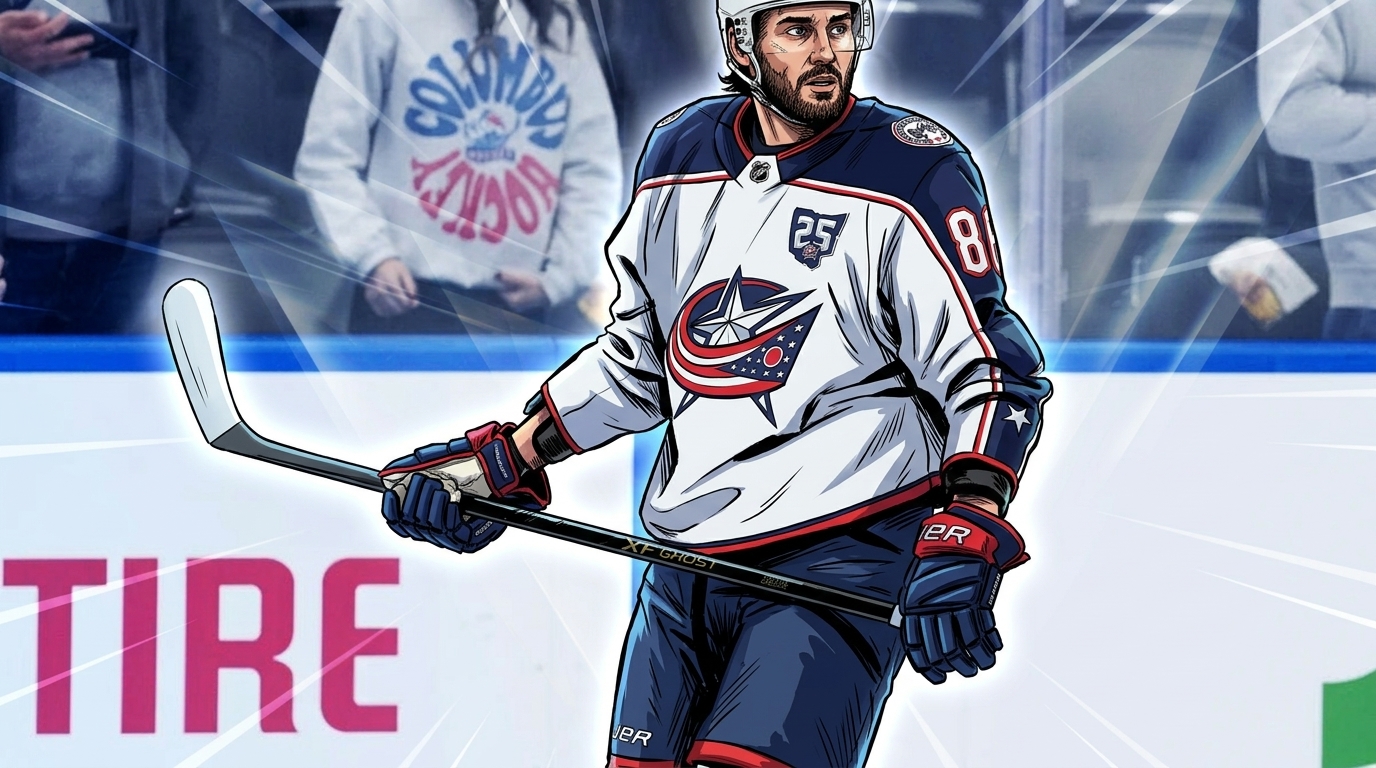
Bob McElligott, the Blue Jackets’ radio play-by-play voice for the last seventeen years, had his contract go unrenewed the same week the team confirmed that starting with the 2026-27 season, radio broadcasts will carry the identical TV feed instead of running their own call. Steve Mears and Jody Shelley now do double duty on both platforms, radio remains parked on 97.1 The Fan in name only, and Columbus becomes the fifth NHL team to make this move, joining Buffalo, Carolina, Dallas, and St. Louis, a club nobody applies to join voluntarily.
The team’s own statement about the move didn’t dodge the sentiment, even while it dodged the actual policy question.
“Bob has made significant contributions to the Blue Jackets organization on the air and in the community over the past 17 years. Bob’s voice was at the heart of many of our club’s unforgettable moments. We sincerely thank him and wish him nothing but success moving forward.” — Blue Jackets VP Marc Gregory
It’s a warm thing to say about somebody whose job just evaporated for reasons the statement never mentions.
Instead, the public messaging leaned entirely on convenience. The team promised fans they’d experience the same live game coverage whether watching on television or listening on the radio, which is true in the narrowest sense; it’s also the same coverage minus the person who spent 17 years building the Blue Jackets radio audience specifically for radio, with radio’s own rhythms and its own economy of description, none of which survives the trip through a TV mic built for a different medium.
Fans noticed the gap immediately. Radio announcing requires painting the picture a camera provides for free on television, and plenty of listeners aren’t tuning into 97.1 out of nostalgia; they’re at work, or driving, or otherwise stuck somewhere a screen can’t follow them, which is precisely the audience a simulcast quietly stops serving.
National writers weren’t gentle about any of it. Andrew Marchand called it “embarrassing for the NHL” in five words on X. Mike Harrington was more clinical, arguing that “teams thinking simulcasts are good for listeners are just being cheap.” Analyst Mo Egger went further: a franchise that does this “does not care about its audience, its advertisers, or its on-air personnel.”
Mark Lazerus supplied the number that actually matters, and it isn’t a savings figure the team never released.
“An embarrassing look for a league that claims to have made around $8 billion this season, for a franchise that’s probably worth north of $2 billion.” — Mark Lazerus
Nobody outside the Blue Jackets front office knows what cutting one radio booth saves; whatever the number is, it’s a rounding error against those two figures, and ownership decided it was worth cutting anyway.
Picture a couple gutting their kitchen to open up the floor plan, knocking out the wall between the kitchen and the dining room because the room “felt closed in.” Nobody checked whether the wall was load-bearing first; they just wanted more space, and a cheaper renovation besides. The house is still standing the next morning. Nothing fell down. The ceiling not collapsing overnight isn’t evidence the wall wasn’t holding anything up.
McElligott was the load-bearing wall here, not because he did anything dramatic on a given night, but because 17 years of showing up, night after night, is the actual mechanism that turns a small-market fan base into season-ticket holders instead of people who catch highlights on their phones. That work doesn’t show up on a quarterly earnings call. It’s exactly the type of asset an organization can remove without anything visibly buckling for years.
That’s the real function of a wall like that. You don’t notice it’s carrying weight until you’re staring at a sagging ceiling three winters from now, trying to remember when the crack started.
I grew up forty minutes from Nationwide Arena, listening to McElligott call games on drives back from Crew practices and, later, apartment moves around Columbus. That wasn’t sentimentality about a broadcaster’s voice so much as the mechanism critics keep describing from the outside: radio built loyalty in exactly the hours television couldn’t reach me.
McElligott addressed his own departure plainly, without theatrics:
https://twitter.com/BobbyMacSports/status/2082595075599536366
He wasn’t hearing it from a press release himself either. The note reads like a man breaking news to the people who’d been listening longest, an odd position for a Blue Jackets broadcaster to land in after 17 years on the job.
Columbus isn’t chasing a fringe trend here; it’s following a familiar playbook. Another owner gutting his own broadcast made a nearly identical call and drew a nearly identical backlash, and the timing is rough for a franchise trying to sell itself as invested: this lands while a Blue Jackets roster in transition is asking a rebuilding fan base to trust that ownership cares about the product, not just how it’s presented.
What the simulcast actually says about ownership priorities is more straightforward than the press release wants it to be: cutting the one job that costs almost nothing relative to an NHL payroll, while dressing the announcement up as a convenience upgrade, answers the question on its own. The wall’s down. Ask again in three winters how the room feels.