
There’s a number buried inside the Pacers’ new DAZN streaming deal that matters more than the $120 season pass everyone’s furious about, and it’s not even a number fans will ever see on their bill. It’s $9 million: the gap between what Indiana used to collect, guaranteed, every single year, and what it’s now betting it can collect instead.
For years, FanDuel Sports Network cut the Pacers a flat $17 million check annually, whether the ratings were good or nobody was watching at all, one of twelve NBA franchises riding that same no-risk arrangement. The DAZN deal replacing it guarantees only $8 million, plus a 50-50 split of whatever advertising revenue the broadcasts actually pull in. Translated into plain terms: Indiana went from getting paid to exist on television to getting paid based on whether people choose to watch, and now, whether they’re willing to pay for that choice.
What the Pacers Actually Gave Up
Pacers basketball has lived on three different channels over the years: Fox Sports Indiana, then Bally Sports Indiana, then FanDuel Sports Network, three rebrands wrapped around the same basic pitch. That channel came bundled into most cable packages automatically, whether a subscriber ever tuned into a Pacers game or not. That bundling is precisely what made the flat $17 million guarantee possible. The network didn’t need Pacers fans to actively choose anything. It just needed enough cable subscribers paying their monthly bill somewhere in Indiana.
The DAZN arrangement removes that cushion entirely. The $8 million guarantee plus 50-50 ad-revenue split means Indiana only clears its old number if the broadcasts generate real advertising dollars, which requires real viewers, on a platform where every one of those viewers had to make an active, standalone decision to sign up and pay. There’s an extra $7-8 million on the table if the Pacers stick with DAZN through the 2027-28 season, but that’s a loyalty bonus stacked on top of a more variable deal. It doesn’t change the math underneath it.
Why Would the Pacers Trade a Guarantee for a Bet?
The Pacers left FanDuel Sports Network’s flat $17 million guarantee for a DAZN arrangement that pays only $8 million upfront plus that ad-revenue split. The move only matches the old number if enough fans actually subscribe at $19.99 a month or $119.99 a season, turning viewership into a direct financial variable for the first time in years.
That’s a strange trade to make voluntarily, and Pacers CEO Mel Raines more or less admitted as much. “If there was an easy, quick, obvious solution, everybody would’ve picked that and announced a long time ago,” she told reporters when the deal was announced August 20. Read plainly, that’s not a pitch about DAZN being the exciting future of regional sports. It’s an admission that the old bundled-cable model that funded the flat guarantee is dying across the league, and DAZN was the best offer left standing once it did.
I track my own streaming subscriptions with roughly the same obsessive spreadsheet energy I put into my fantasy baseball rosters, and this deal still doesn’t pencil out cleanly for me. The Pacers didn’t downgrade because DAZN offered more money. They downgraded because the guaranteed-money version of this business appears to be going away, and they took the best variable-pay contract they could find on the way out.
The Backlash Isn’t Noise. It’s the Risk Model.
The Pacers framed the price as a bargain on their own announcement:
https://twitter.com/Pacers/status/2090408577521401899
“About $1 per game if you sign up by October 15” sounds reasonable until you sit with what it leaves out. Twenty-two regular-season games and four preseason games remain free on the DAZN app, with 15 of those also simulcast on over-the-air local TV, which means the per-game framing is being calculated across a slate that’s already smaller than a full season, applied to games fans are also being asked to pay for on top of a product that used to arrive bundled for free.
Fans noticed the gap immediately. One told Yahoo Sports the move was “robbery,” accusing the team of having “habitually ignored their fans” and shrinking “the viewing market even smaller.” Another put it more specifically: “I can watch every Fever game on ION, or other local channels, but I gotta pay for another streaming service to watch a team 30 miles down the road from me.” That’s not a fan being unreasonable about a rebrand. That’s a fan doing the exact cost-benefit math DAZN’s own revenue model depends on, and concluding it doesn’t add up.
This is where the Pacers’ bet gets genuinely risky. The $119.99 season pass, $59.99 early-bird price, and $19.99 monthly option only generate the ad revenue Indiana needs if a meaningful chunk of that angry fan base subscribes anyway. Every fan who decides the juice isn’t worth the squeeze is a fan who isn’t just missing a broadcast. He’s a data point pulling the Pacers further from matching the flat $17 million they used to collect without any of this trouble. It’s the same dynamic playing out across the league: see the NFL’s own thousand-dollar streaming problem. The Pacers are more exposed to it than most, because their deal has no bundled floor left underneath it.
What Has to Happen for This to Pay Off
Indiana is asking fans to pay for a product coming off a rough stretch. The Pacers won 19 games last season and finished with the second-worst offensive rating in the league, which is not the roster you’d pick to test whether people will pay $120 for local broadcasts. What Indiana is actually selling is the hope sitting on the other side of that record.
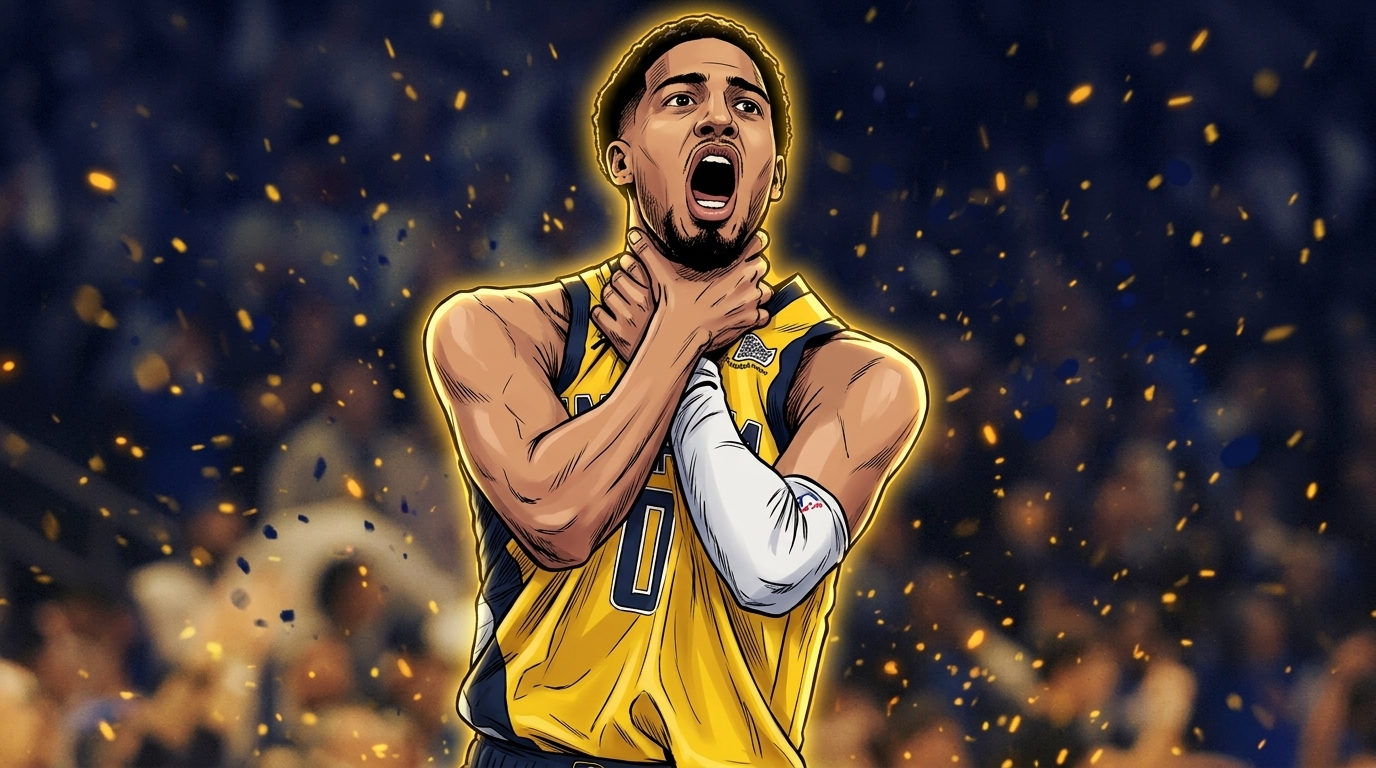
Tyrese Haliburton tore his right Achilles tendon in Game 7 of the 2025 NBA Finals and missed the entire 2025-26 season recovering from it. The Pacers are now “extremely optimistic” he’ll be ready for the 2026-27 opener, and he’s already working through full-court 4-on-4 pickup games. That’s the actual product DAZN is being asked to monetize: not a 19-win team, but the return of the guy who made the Pacers appointment television in the first place. If you’re wondering whether Haliburton’s comeback is worth the paywall on its own, that’s the exact question the Pacers are betting their broadcast revenue on you answering yes to.
There’s a built-in pressure valve, too: the deal includes a mutual exit clause after year one, which tells you Indiana isn’t fully confident in its own bet either. If the ad-revenue split badly undershoots the old $17 million guarantee, both sides have a clean way out before it compounds into a multi-year problem.
Watch the subscription numbers, not the win total, if you want to know whether this works. A healthy Haliburton fills arenas regardless of DAZN’s math. Whether he fills a paywall is the actual experiment the Pacers just signed up for, and it’s the kind of bet that either looks obvious in hindsight or gets rewritten within twelve months. For more on how that shakes out across the conference, check out the rest of our NBA coverage.