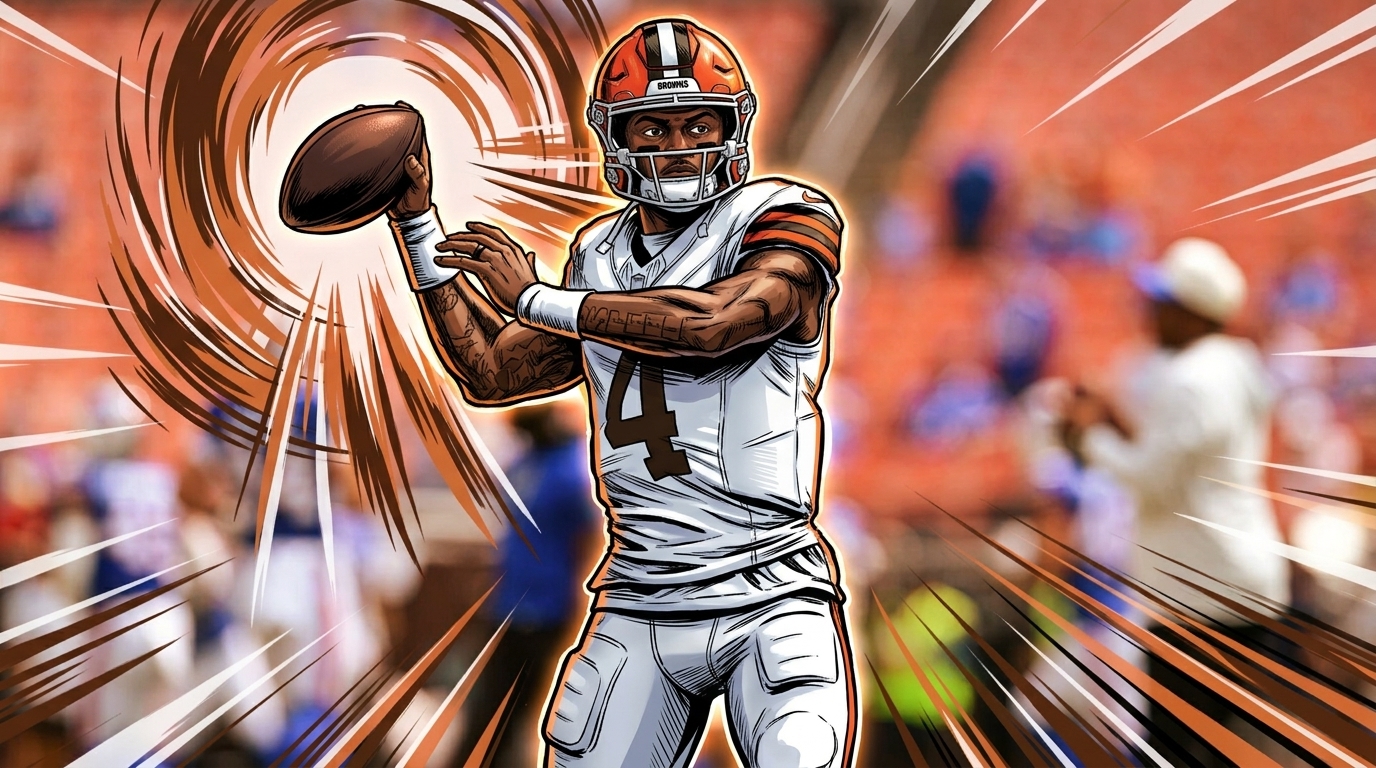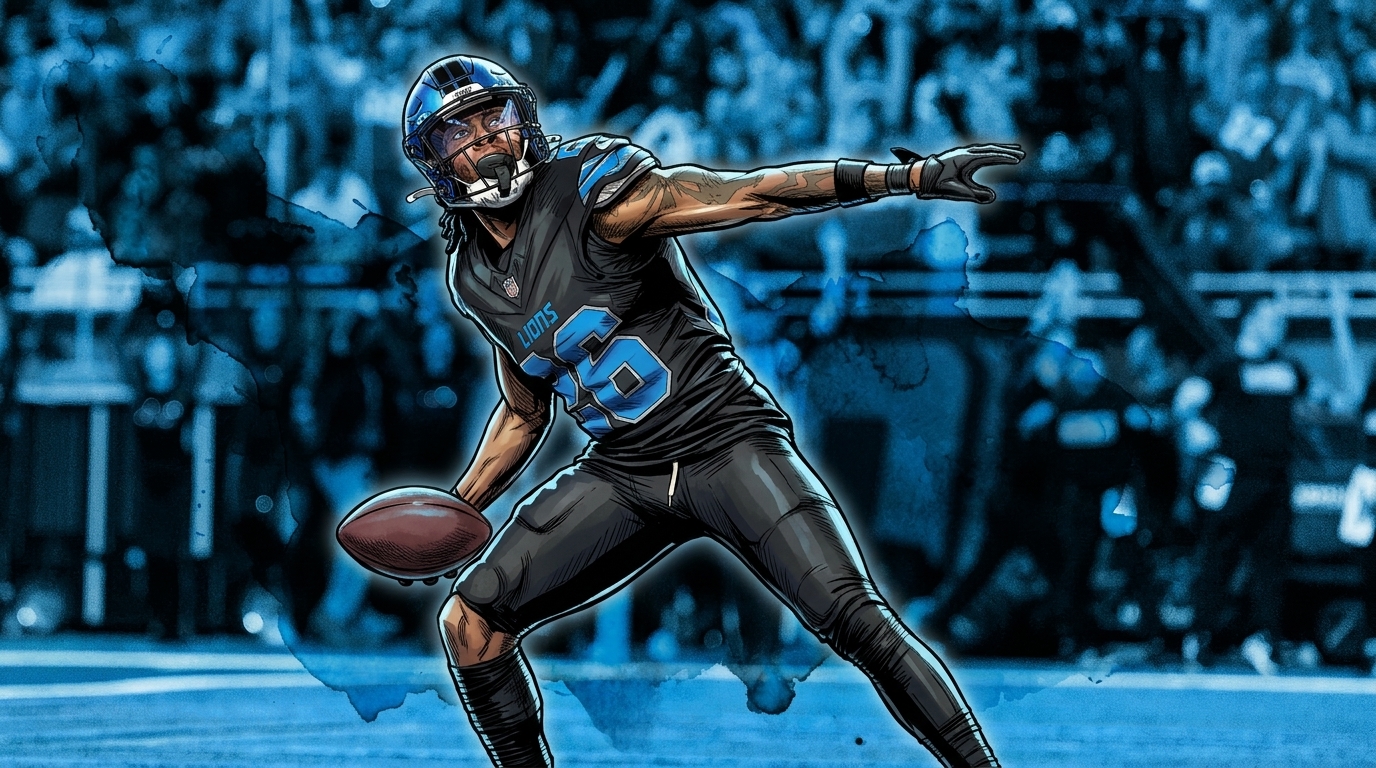

Bijan Robinson and Jahmyr Gibbs showed up to the first padded practice of training camp Wednesday, suited up in full pads, and did not practice, and if that sounds like a contradiction, congratulations: you’ve identified the entire strategy. This is a hold-in, not a holdout, a distinction the league office would very much prefer nobody make out loud. Both players were on the field. Neither ran a rep. ESPN had them both officially listed as non-participants, which is as close as an NFL injury report gets to a strongly worded letter.
Three weeks ago, before camp opened, I wrote about the last time he tried this, when simply showing up was the most subversive move available to Robinson; the logical next step, it turns out, was showing up and refusing to work, and he brought company. Jahmyr Gibbs, the Detroit Lions back who’s spent three seasons making Dan Campbell’s offense look like cheating, did the same thing on the same day in a different city, which turns a single-team grievance into a referendum on how the Atlanta Falcons and every other team with a great, cheap running back have been doing business.
The résumés aren’t complicated. Robinson led the NFL in yards from scrimmage last season, a Falcons franchise record at 2,298, made first-team All-Pro, and has gone to the Pro Bowl each of the past two years. Gibbs has made three Pro Bowls in three NFL seasons since Detroit took him 12th overall in 2023. Both are entering the final two years of rookie contracts stretched by fifth-year options, the standard mechanism by which a team keeps a great player cheap for as long as the rulebook allows.
And cheap is the word. Robinson and Gibbs currently rank 27th and 31st, respectively, among running backs in total salary, a genuinely funny sentence to type about the two best young backs in the sport, according to CBS Sports. Saquon Barkley sits atop the position at $20.6 million a year. CBS projects Robinson’s next deal at roughly three years and $56.52 million, Gibbs’ at three years and $60.45 million; other outlets go higher still. Robinson and Gibbs are underpaid by their own front offices’ design, and everybody in both buildings knows it.
Think of the running back market as a currency peg. For half a decade, teams have kept the exchange rate artificially low by pointing at every non-elite back who got paid and immediately declined, treating one bad contract as proof the whole position was worthless. It worked, mostly, because backs decline fast and have no leverage until the tail end of a rookie deal, at which point they’re cheap to replace with the next rookie. A peg like that survives as long as no currency of real value tries to leave the system at once.
Robinson and Gibbs are trying to leave at once. That’s the actual news here, if you want to call it that; two elite producers hitting the leverage window in the same summer means the cheap comparables the Falcons and Lions have been citing just walked onto the practice field and declined to participate, on camera, in front of reporters. A peg survives quiet defections. It does not survive two at once, from players good enough that nobody can credibly call them replaceable.
Dan Campbell, asked directly about Gibbs, offered this: “This will kind of continue. It’ll come as it comes. I think that’s the best way to say it. This is both sides working through something and we’ll take it as it comes, but that’s where it is.” I’ve read that quote four times and it tells me less each time, which might be the point; “it’ll come as it comes” is what a coach says when the honest answer is “we are staring at each other and hoping the other side flinches first.”
That standoff is the real story dressed up as patience. Neither the Falcons nor the Lions wants to blink first, because whoever pays Robinson or Gibbs first sets the number the other has to match, and possibly the number every team with a good young back has to start budgeting around. It’s also the league’s habit of manufacturing a holdout every summer, dusted off for a year when the grievance happens to be legitimate. Yardbarker described it as two non-participants amid contract discussions, which is the driest possible framing of an open rebellion.
Adam Schefter had the news first, and put it about as plainly as it can be put:
https://twitter.com/AdamSchefter/status/2082469405774983511
Neither team has to move this week, or even this month; the tag window is the real deadline, and both sides know it. But the running back market might actually be moving for the first time since the position got priced like a rental car, and it’s moving because the two players moving it are too good to bluff. Atlanta and Detroit built contenders on the theory that great backs come cheap. Robinson and Gibbs just spent a Wednesday demonstrating what happens once the backs notice.