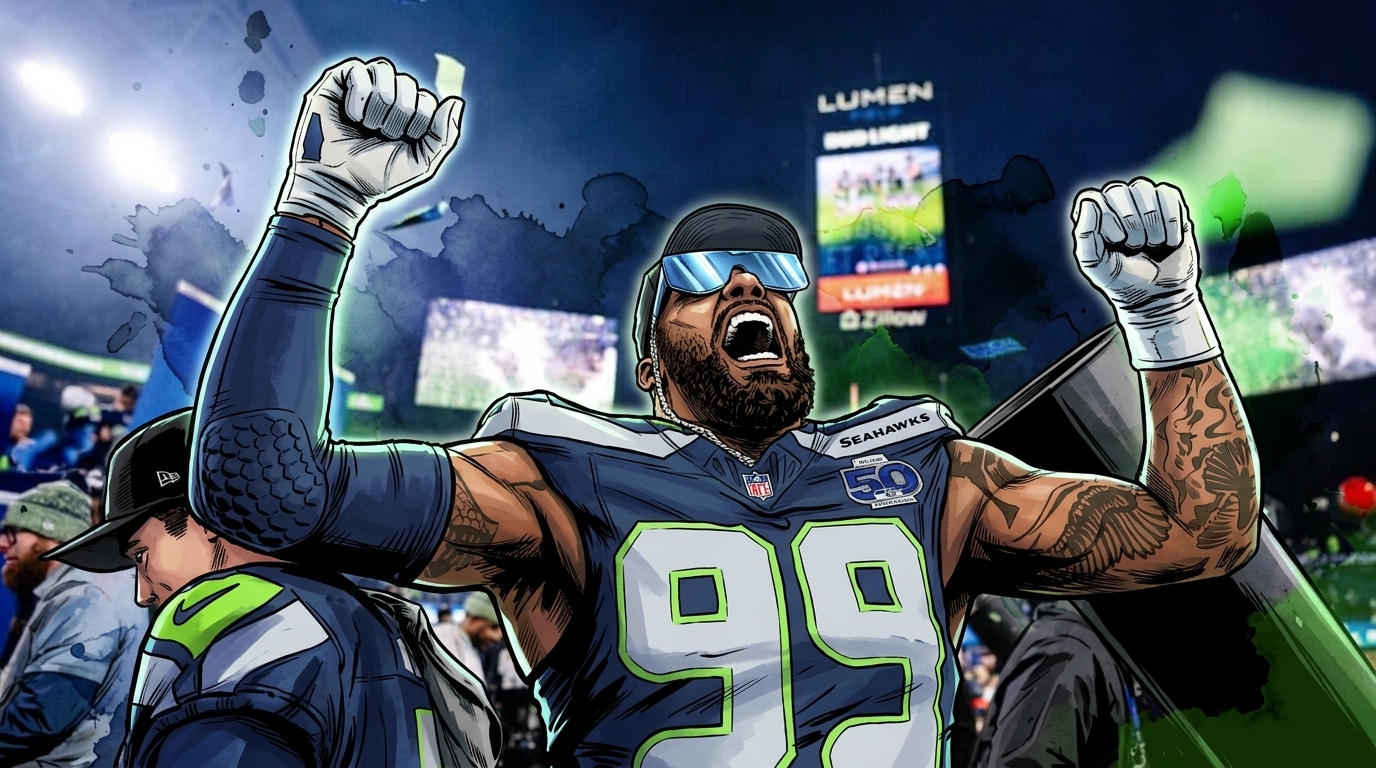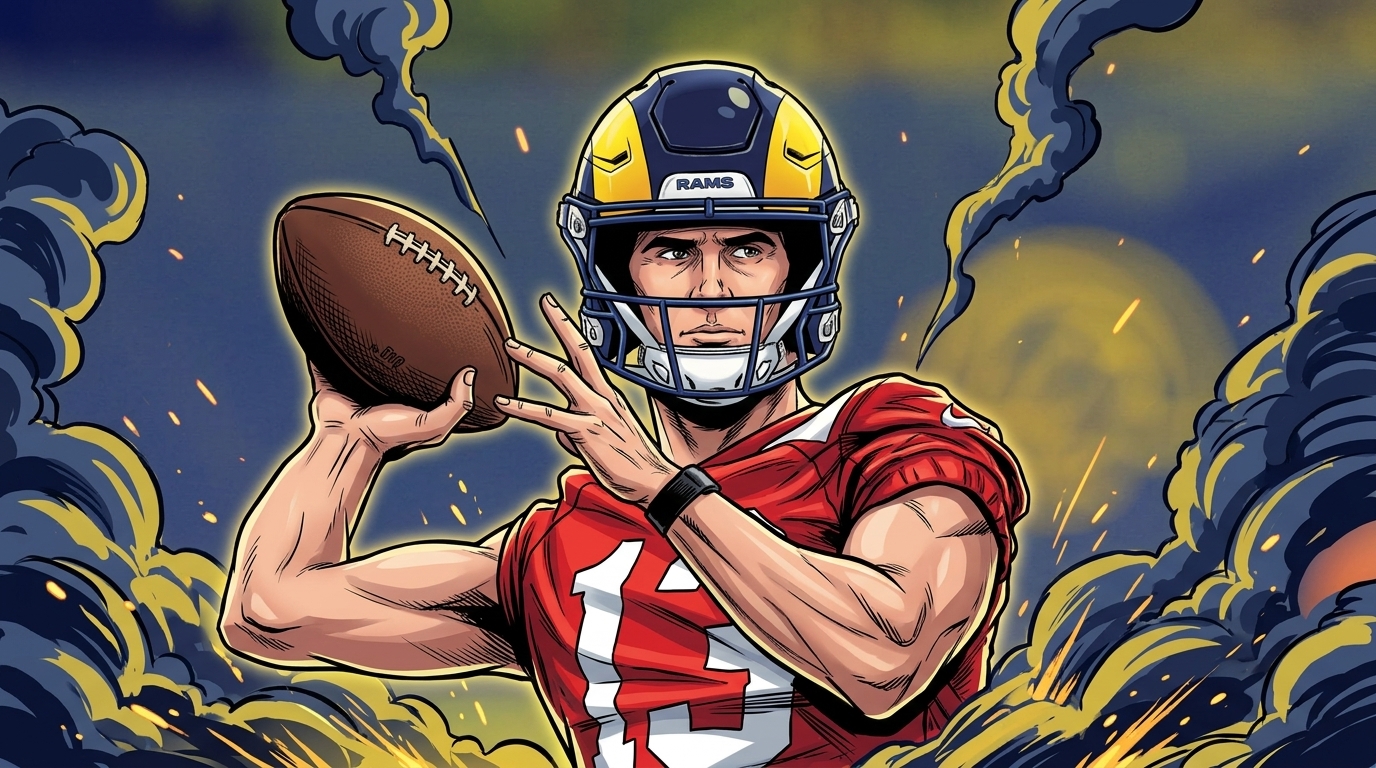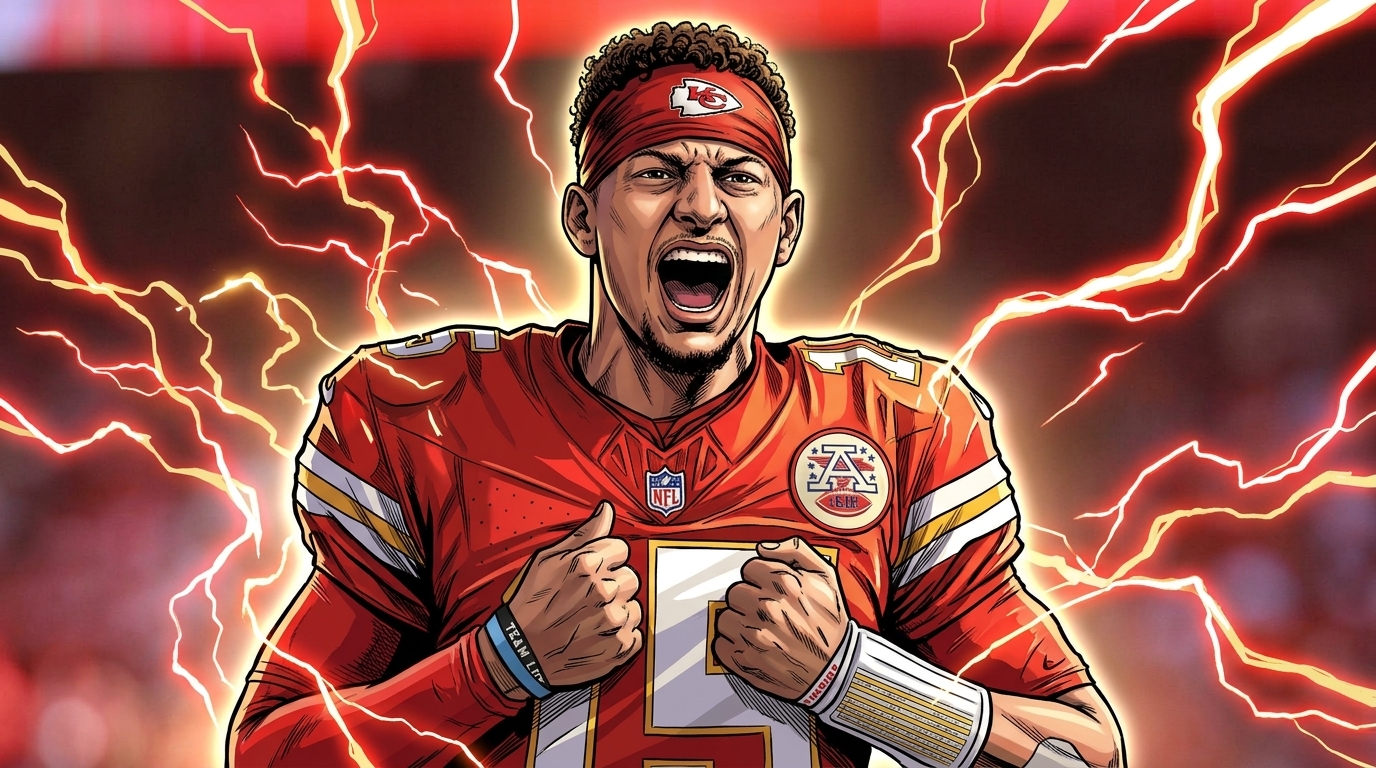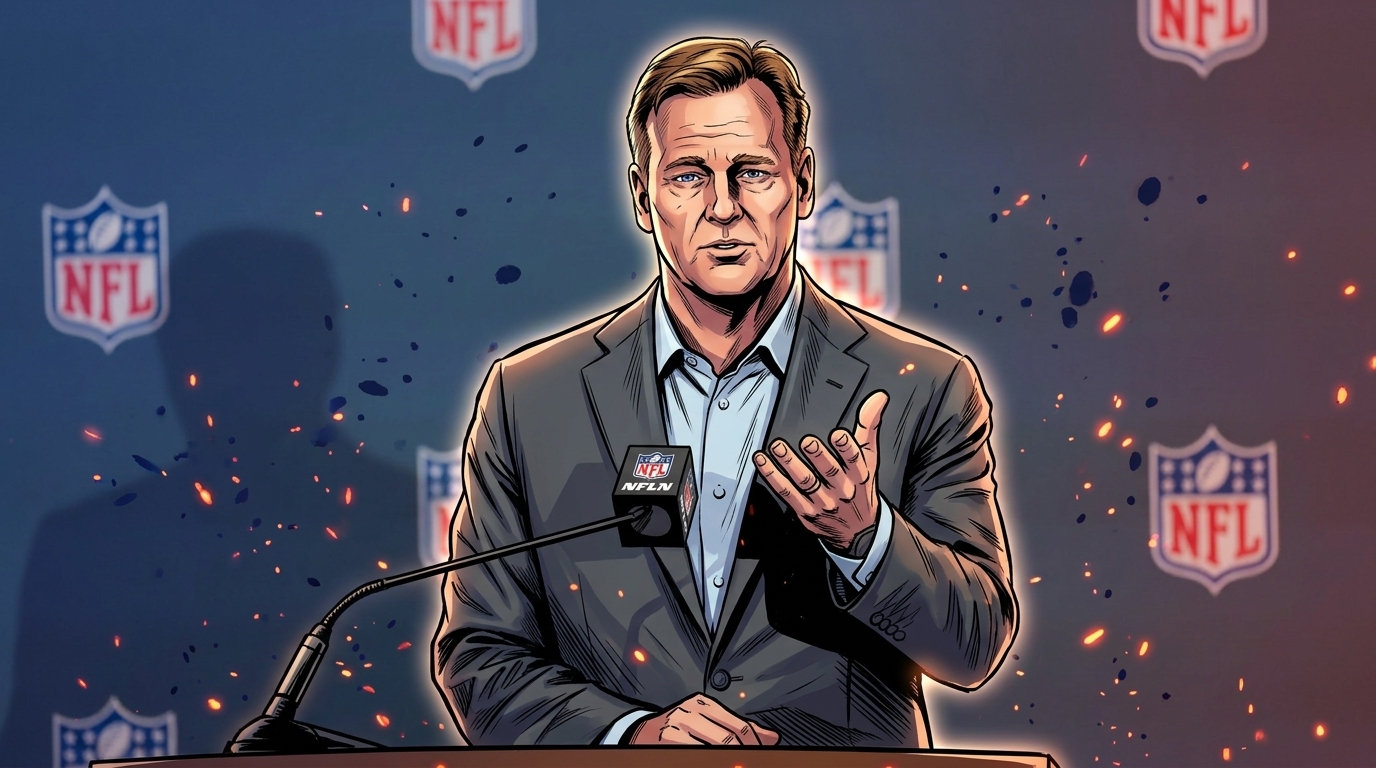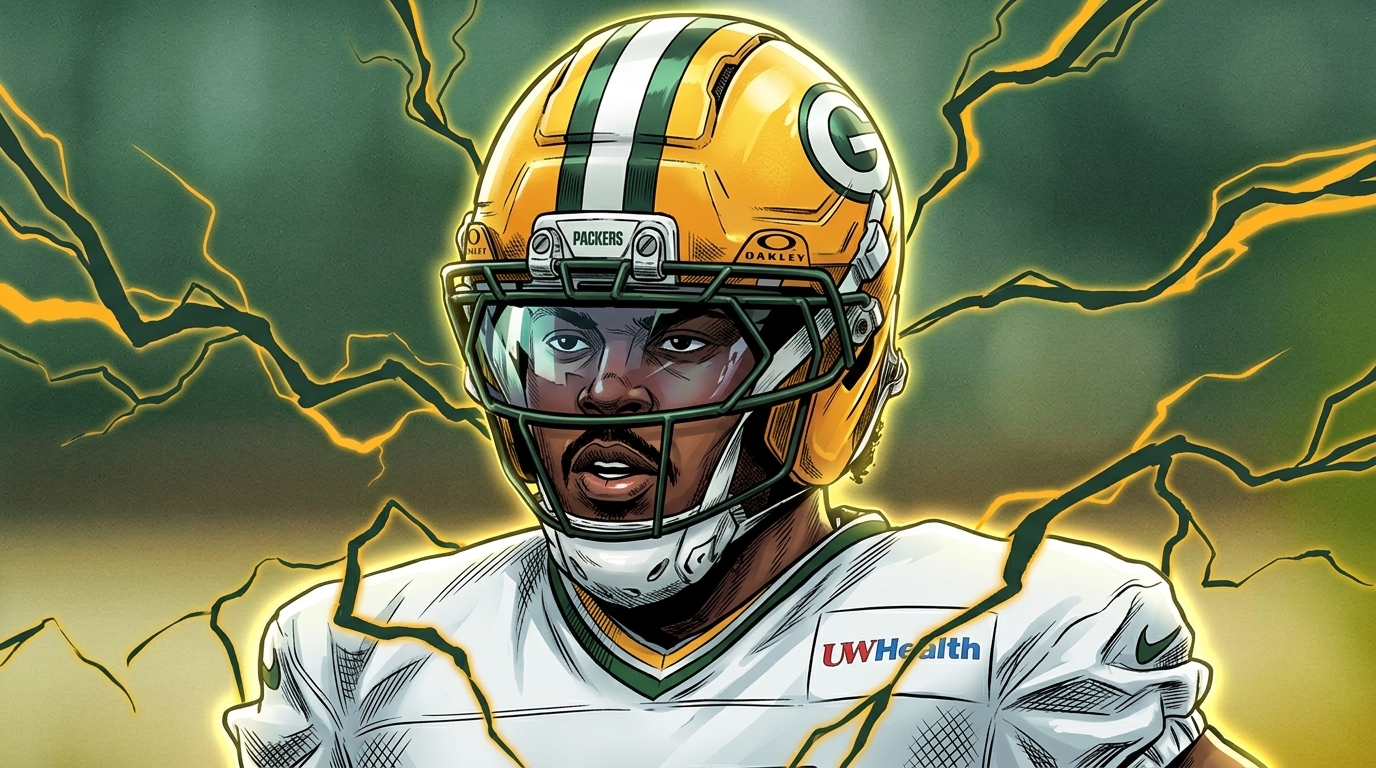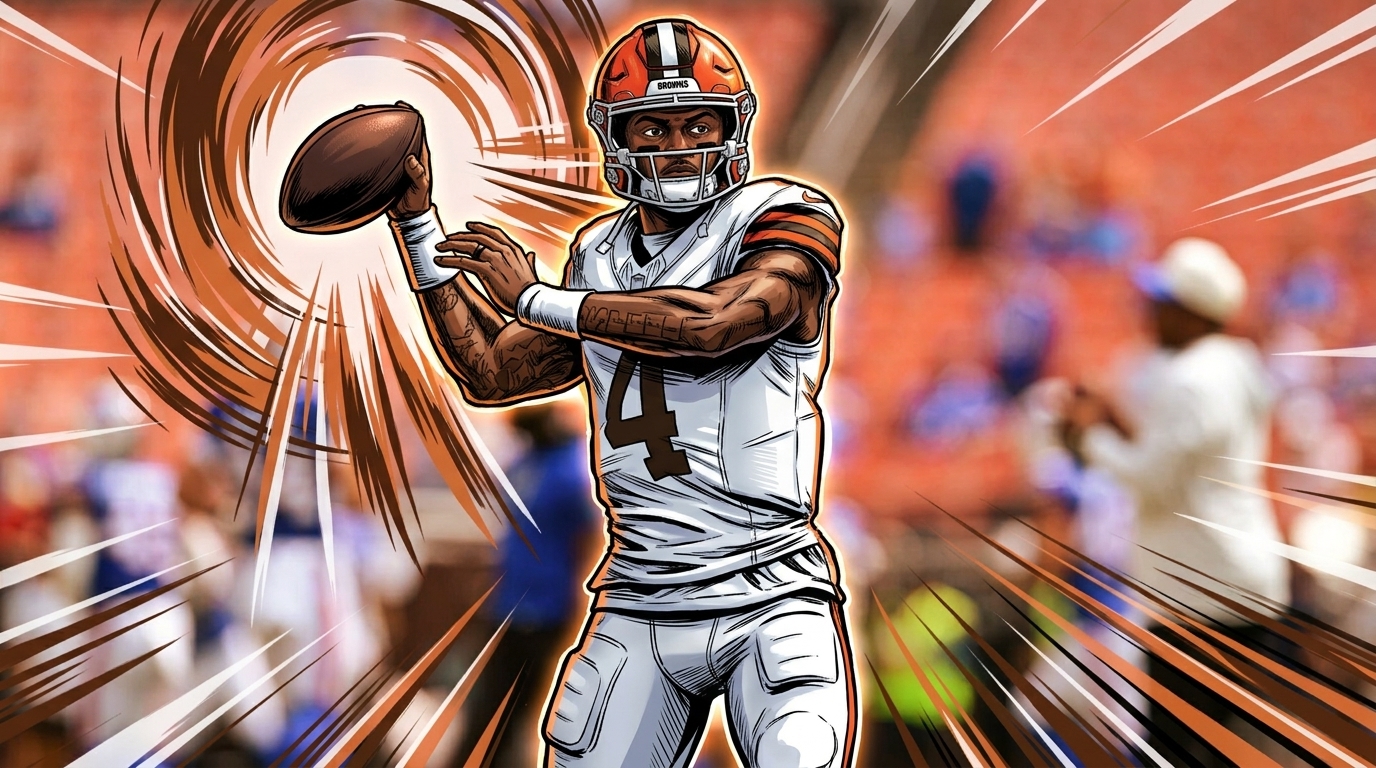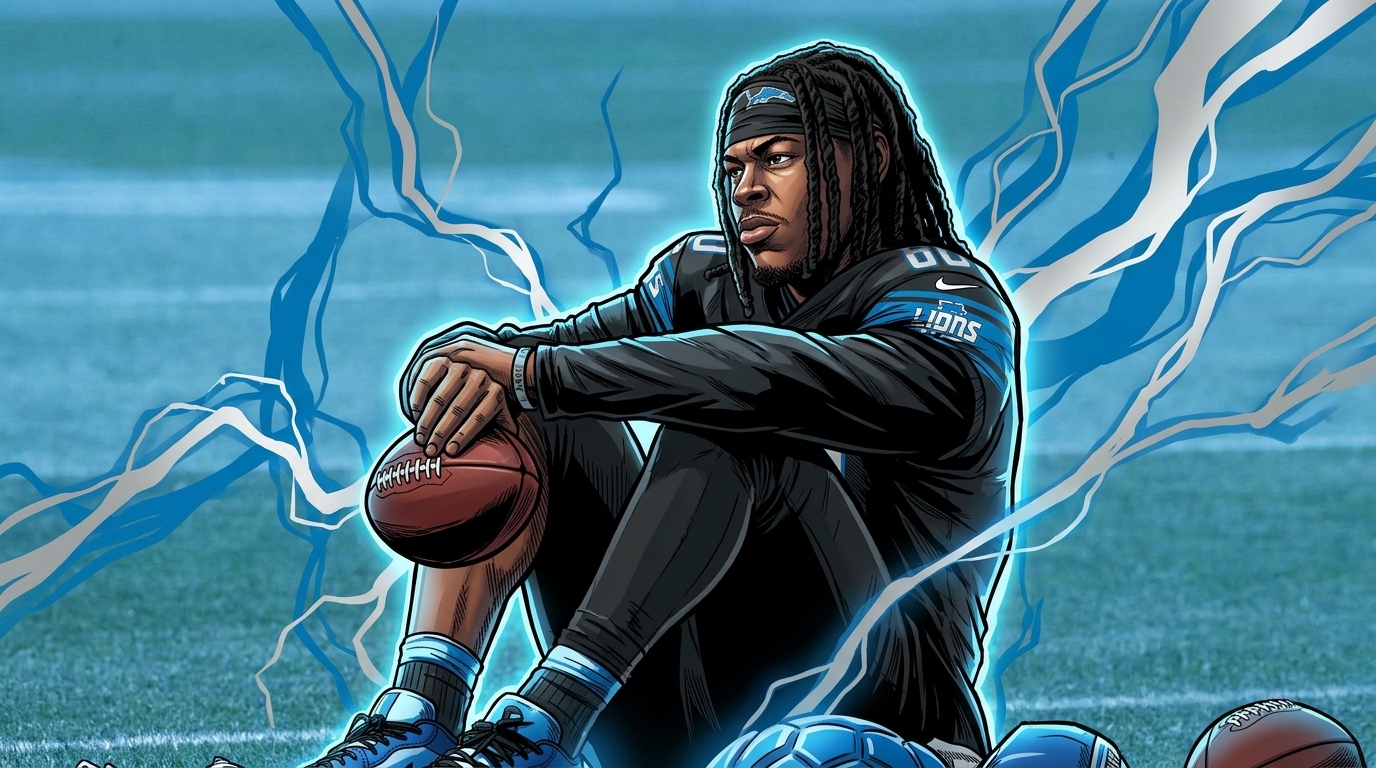

We’ve been watching this pattern build for years, and every July it arrives right on schedule: training camps open, a few players don’t show, and the league frames it as individual grievances while the calendar ticks toward Week 1. This summer has Jahmyr Gibbs in Detroit and Baker Mayfield in Tampa, and on the surface they look like two entirely different problems. One is a running back fighting a market the NFL spent a decade suppressing. The other is a quarterback who erased every doubt about himself and is now watching his employer treat his leverage window like a scheduling conflict. The problems are different. The machinery producing them is identical.
Why Is Jahmyr Gibbs Considering a Holdout?
Gibbs is under contract through 2027 on his rookie deal, earning $3.18M in 2026 cash: $1.145M base plus a $2.038M roster bonus, against a cap hit of $5.68M. He is the Lions’ unquestioned lead back after Detroit traded David Montgomery. Jeremy Fowler at ESPN projects any extension at $20M or more per year, with the Saquon Barkley Eagles deal at $20.6M serving as the market ceiling, and Bijan Robinson’s ongoing extension talks in Atlanta reportedly ranging $21-25M would lift the floor even further.
https://x.com/ESPNNFL/status/2060461475534094576
Jon Jansen, the former Lions offensive lineman who now covers the team on 97.1 The Ticket, noted there is a real chance Gibbs “may be a hold-in, or a hold-out” without a new deal in place. Gibbs himself, per NBC Sports/PFT, has taken the measured approach publicly: “My agent can handle my contract, I’m just thinking about the team and ball.” Mike Florio at PFT has been less diplomatic, publicly urging Gibbs to stay away from the facility until the Lions come correct. Pro Football Rumors confirmed in June that the two sides are “not close to extension agreement.” (Gibbs participated in all spring OTAs, which means the leverage math hasn’t forced the issue yet, though it increasingly runs in his favor.)
The running back market took roughly a decade of institutional harm before Barkley’s Eagles contract began repairing it. The analytics wave that arrived around 2010 gave front offices permission to treat RBs as replaceable parts, and the CBA reinforced it by keeping rookie wage scales low at the position. Barkley’s Super Bowl run in Philadelphia is the most important counter-argument the position has produced, and Gibbs’ camp knows it.
Baker Mayfield’s Camp Deadline, Explained
Baker Mayfield is in the final year of a three-year, $100M deal he signed in March 2024. He will make $40M in 2026 cash. After this season, he becomes an unrestricted free agent.
https://x.com/NFLSTROUD/status/2062909100183163250
The problem, as Tom Pelissero at NFL Network has framed it, is that Mayfield sits at the bottom of franchise quarterback pay: 16th among quarterbacks at $33.3M per year, roughly $17M annually below market rate. Spotrac pegs his market value at $53.6M per year. Mayfield’s agent community consensus lands around $50M per year. The Buccaneers’ posture, per Mike Garafolo on July 6, is that they are “not in a rush.” Mayfield himself drew a hard line: “my deadline is as soon as training camp starts, we’re not doing any contract stuff, it’s all ball.” (What Mayfield is actually saying is that the Bucs had the entire offseason, and if they needed more time than that to figure out what he’s worth, they’ve already communicated something.)
This is the contract system at work in clean form. Mayfield has one real leverage window: the twelve months before free agency. The Bucs know that letting him play out the season gives them a chance to negotiate under duress or to simply let him walk and reset. Mayfield’s leverage is maximum now and decreases with every week he plays healthy. Both sides understand this. The stalemate is not confusion; it’s positioning.
The Same System, Two Different Problems
I think the most clarifying thing about this particular summer is how many players are in the same situation simultaneously. Trey Hendrickson ended his Bengals holdout but isn’t practicing. C.J. Stroud’s extension talks in Houston have stalled. Micah Parsons and the Cowboys are contentious. Devon Witherspoon has a camp deadline in Seattle. NFL Network ran a joint piece tying Gibbs and Mayfield into a single pre-camp contract preview, because the league itself has acknowledged, at some level, that this is now an annual phenomenon.
The 2020 CBA, which runs through 2030, hardwired the adversarial dynamic that produces these summers. Holdout fines are mandatory at $50,000 per day; teams cannot forgive them. Players lose accrued season credit. (The league designed these fines to be non-waivable specifically because waivable fines weren’t deterring anyone.) The mechanism was deliberately designed to weaken individual leverage, and for years it worked. What changed is the environment around it. Players now have social media platforms, sophisticated agents, public sympathy after a decade of watching peers get underpaid, and comps like the Barkley deal that make the market rate undeniable.
The league didn’t design a system that prevents holdouts. It designed a system that makes holdouts expensive enough to deter them, but not expensive enough to eliminate them when the gap between what a player earns and what a player is worth becomes too large to ignore. When that gap reaches $17M per year for a starting franchise quarterback, or when an elite lead back earns $3.18M in a year he’s carrying an entire offensive load, the deterrent math stops working.
That’s where we are. Gibbs and Mayfield aren’t holding out because they’re difficult. They’re holding out because the numbers got too far apart to pretend otherwise, and the league’s own rulebook gives them no other tool. The post-CBA moment is real: players have more visibility into market rates, more public support for acting on them, and better-resourced representation than any generation before them. None of that changes the fundamental contract mechanics — the fines still accrue, the accrued season still disappears — but it does change the cost-benefit calculation on both sides.
I believe the Mayfield situation resolves before Week 1, because the Bucs need him and he has no incentive to miss games he’s already guaranteed to play. The Gibbs situation is likelier to drag; an extension on a rookie deal feels less urgent to Detroit’s front office than keeping the locker room functional, and the Lions have shown in recent years they will hold their position. What won’t resolve is the pattern itself. Next July, there will be a different set of names attached to the same underlying dispute.
The system produces this outcome reliably, and the system runs through 2030. Keep that in mind as you follow this summer’s contract landscape over the next few weeks. The holdouts are the symptom. The CBA is the diagnosis. And the prognosis, for at least four more summers, is more of the same.