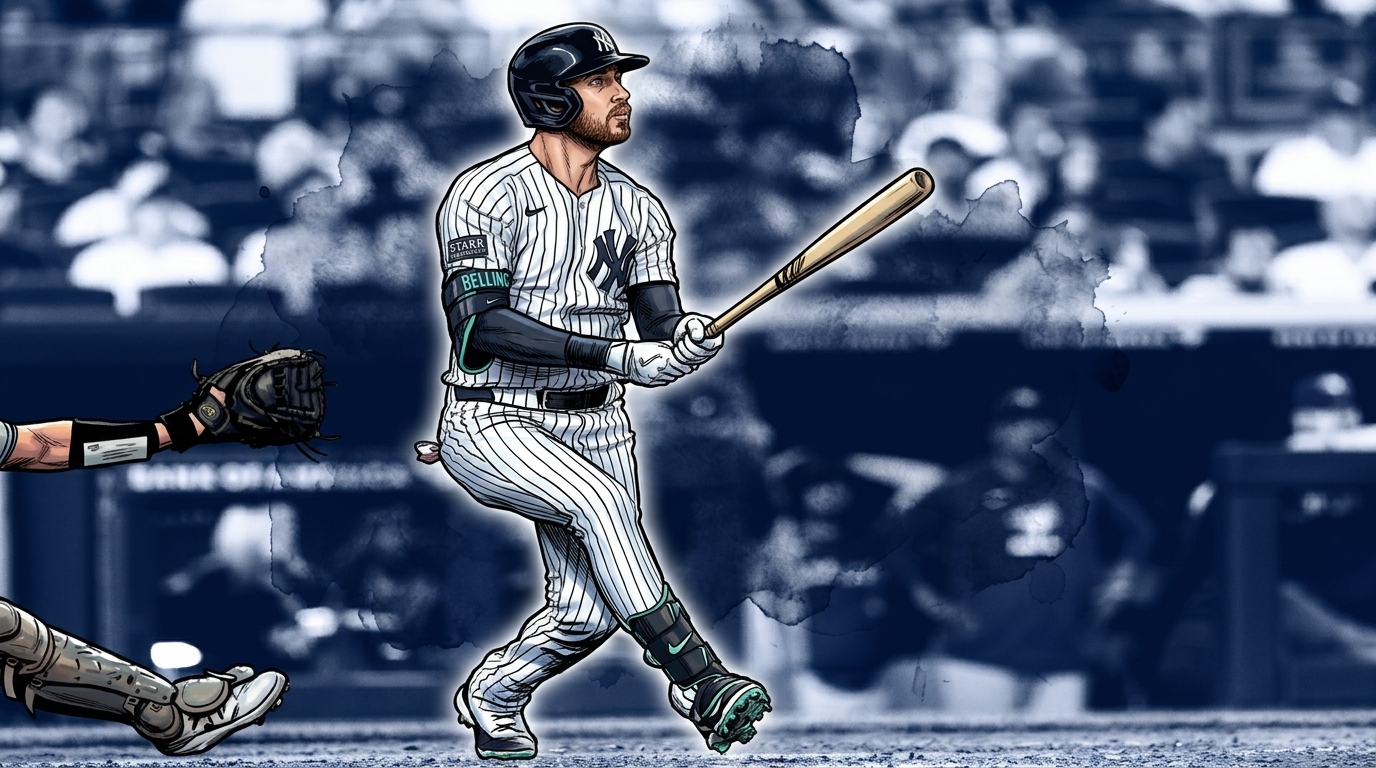

Here’s a question worth sitting with: if Cody Bellinger’s Deserved Runs Created Plus — a metric designed to strip out noise and measure actual offensive quality — stayed between 106 and 111 across his supposedly lost years in Chicago, was he ever actually lost?
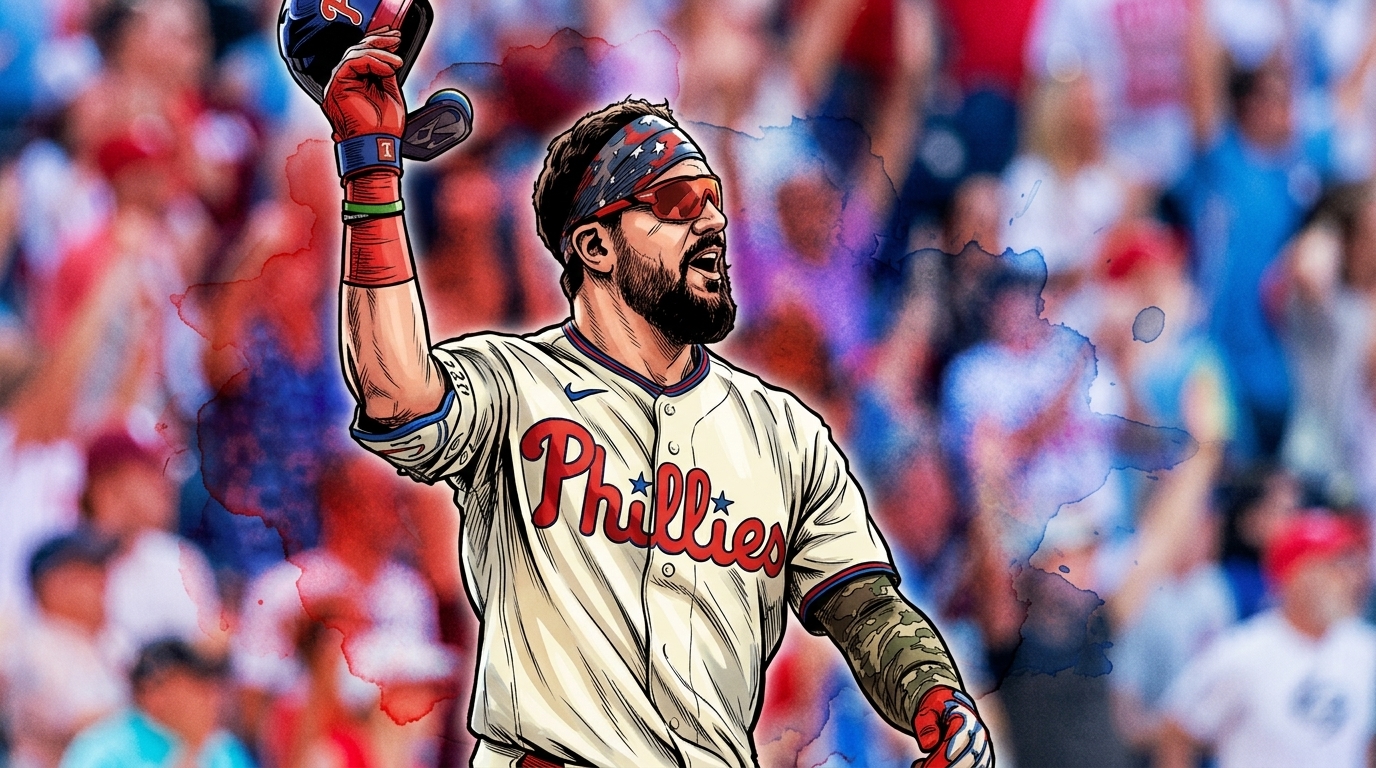
On Monday night at Citizens Bank Park, Bellinger hit a two-run single against Cristopher Sánchez in the top of the first inning, drove in two of the AL’s four runs in a 4-0 shutout, and walked away with the Ted Williams All-Star Game MVP Award. The crowd called it a comeback. My projection model filed it as a confirmation.
The Number That Changes the Narrative
The story the box score told about Bellinger’s Cubs era was brutal. The story the underlying peripherals told was different. His DRC+, per Baseball Prospectus (the most context-adjusted offensive metric available), held at 106–111 across 2023–2025. That number means a hitter producing 6–11% above league-average offensive value after controlling for park, defense alignment, and sequencing luck. Not a star, but not a broken player either.
His worst visible seasons correlated with a specific, correctable problem: plate discipline collapse against left-handed pitching. Per FanGraphs, his chase rate vs. LHPs hit 37% in 2024. His walk rate vs. LHPs that same year was 1.2%. Those are the numbers of a hitter who has lost the strike zone against a particular arm angle — not someone whose bat speed or swing mechanics have degraded.
That distinction matters enormously. Talent erosion is hard to reverse. Recognition and discipline patterns are something a good coaching staff can rebuild.
What the Yankees Actually Fixed
The Yankees identified the problem and went to work. By 2025, Bellinger’s chase rate vs. LHPs had dropped to 28% — a nine-point single-season improvement that almost never happens by accident. His walk rate vs. LHPs climbed from 1.2% to 7.4%. That’s not statistical noise. That’s a reprogrammed approach, the kind that requires both a willing hitter and a staff that knows where to look.
In 2026, the gains compounded. His overall walk rate is now 12.7%, per FanGraphs, nearly four points above his 8.7% mark in 2025. His wRC+ sits at 116 (16% above league average), and his xwOBA of .352 per Statcast suggests the production isn’t a hot streak; it’s structurally supported. And here’s the swing-path detail I find most compelling: his launch angle in 2026 is 18.4 degrees, almost perfectly matching his career average of 18.0 degrees. The swing shape was never broken. The mechanics were fine. The problem was always upstream — pitch recognition, zone management — and the Yankees fixed it.
The peripheral picture is unambiguous.
Why Was Anyone Surprised?
Genuine question. Bellinger’s 2023 Cubs season — 136 wRC+, 4.4 WAR — was a legitimately good year by any standard. The narrative around his Cubs tenure calcified into “bust” because 2024 erased some of that goodwill, and because the Dodgers non-tendering him after 2022 became the defining image of his decline. That roster decision was about dollars and payroll flexibility. The exit-velocity data never agreed with it.
I’ll admit the July timing had me checking my own model. Going into Monday’s game, Bellinger was slumping: .222/.255/.289 across 45 at-bats in July, an OPS of .544 that had nothing to do with the hitter his 2026 season profile described. That’s what made the All-Star moment work as drama — the surface-level narrative said struggling hitter, the underlying numbers said best version of himself. He resolved the tension in the first inning.
One at-bat, bases loaded, two outs, against a starter (Sánchez, 11-4, 2.62 ERA) who had been one of the NL’s best in 2026. Bellinger hit a two-run single and donated the bat to the National Baseball Hall of Fame afterward. The data said the hit was coming.
The Shutout Has a Subplot
The 4-0 final is worth annotating. It was the first All-Star Game shutout since 2013 — when Mariano Rivera, also a Yankee, won the MVP. The NL went 3-for-30 with 15 strikeouts, an All-Star Game record. Eleven AL pitchers combined for the result, with Dylan Cease (Blue Jays, 6-4, 2.62 ERA, 148 strikeouts in 91.1 innings) starting and setting the tone. Shohei Ohtani was absent with a knee injury, which removed the NL’s most dangerous bat before the first pitch.
Bellinger is now the fourth Yankee to win the Ted Williams Award: Derek Jeter (2000), Rivera (2013), Giancarlo Stanton (2022), Bellinger (2026). He and Ben Rice also became the first Yankees teammates to each collect an RBI in an All-Star Game since Roger Maris and Tom Tresh in 1962. This was Bellinger’s first All-Star appearance since 2019 — a seven-year gap, his third career selection overall.
https://x.com/SportsCenter/status/2077238678833729843
He had turned 31 the day before. “You never know when it’s gonna be your last,” he said afterward. “I just try to enjoy it as much as possible.”
The evidence suggests he’ll have a few more of these. His 2026 peripheral numbers — the walk rate, the xwOBA, the restored launch angle — don’t describe a player riding a hot month. They describe a hitter who found the version of himself that won an NL MVP in 2019 and built a more disciplined framework around it. The Yankees’ trade deadline picture will shape how far this team goes in 2026. But Bellinger being a legitimate offensive force? The data had that filed months ago. The All-Star Game just put it on the record.