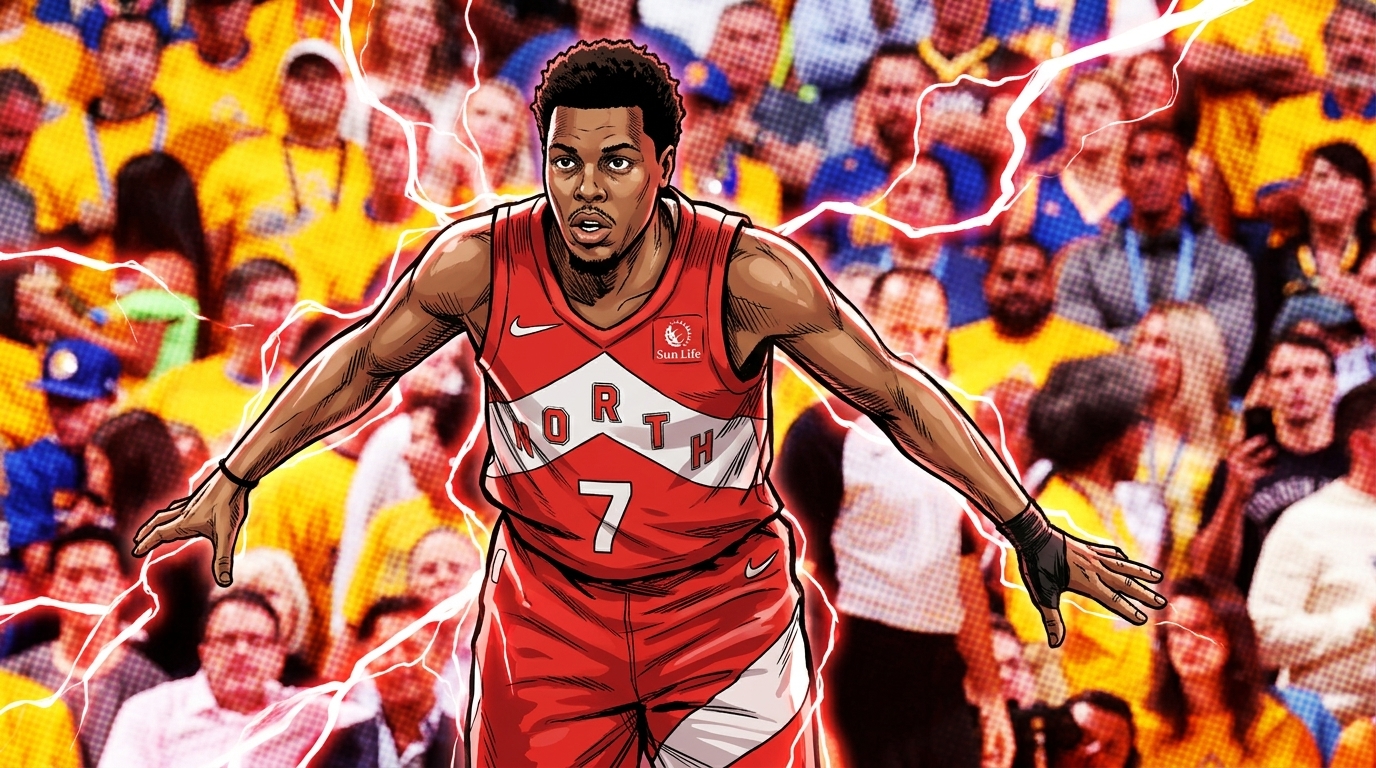

Steve Ballmer, worth more than $120 billion and owner of the Clippers since 2014, invested $60 million in a green banking fintech startup called Aspiration. Then that startup signed a $300 million naming rights deal for Ballmer’s arena. Then that same startup gave Kawhi Leonard a $28 million personal endorsement. Then the NBA started asking questions.
That sequence of events is why the Raptors cannot complete a trade for Kawhi Leonard right now. The deal is agreed: Brandon Ingram, Gradey Dick, a stack of picks — but it’s frozen because Toronto won’t sign a liability clause assuming the risk of future NBA penalties, and the Clippers say that clause is a dealbreaker. What the Raptors are being asked to absorb isn’t just financial uncertainty. It’s the blast radius of a scheme that, if the league’s outside counsel concludes it worked as designed, would represent the most efficient salary cap circumvention in the history of American professional sports.
The NBA’s salary cap exists to prevent exactly this. The logic is simple: you can’t just be richer than everyone else and buy a championship, because the cap equalizes what you can spend on players. What you cannot build a rule around is an owner who is wealthy enough to route money through a private entity he controls, watch that entity pay his best player millions, and then claim the payments have nothing to do with the team. The Clippers’ official position is that they are “victims of fraud” by Aspiration co-founder Joe Sanberg — who was, in fact, convicted of a $248 million wire fraud scheme and sentenced to 14 years in federal prison in June. A federal judge described the circumstances as “among the worst I’ve ever seen.” The Clippers are technically correct that Sanberg was a fraudster. What they cannot explain away is that Ballmer had already written a $60 million check to this man’s company before either the arena deal or Kawhi’s endorsement was signed.
There’s a name for that kind of arrangement. It isn’t victimhood.
The ESPN investigation reported the Kawhi Leonard investigation has been ongoing for months — tens of thousands of documents, dozens of interviews, Ballmer himself sitting down with Wachtell Lipton lawyers in New York in what sources described as “probably one of the final steps.” The NBA commissioner has said the probe needs to wrap up before next season. The potential penalties range from a 40-game suspension for Kawhi to a full-season ban, or contract voiding. Then HoopsHype reported that the investigation has since expanded: there is a second, previously unreported endorsement deal with another unnamed company. There are also questions about whether the Clippers covered expenses for Leonard without reimbursement. It keeps getting worse, which is the nature of these things.
https://twitter.com/ShamsCharania/status/2075293917118136739
An anonymous league executive summarized the stakes to Amin Elhassan with the kind of clarity that only anonymity produces: “If they don’t get dinged, my job becomes money launderer.” That quote is doing a lot of work. It means that anyone running a front office is now watching this investigation to learn what the actual rules are — not what the rulebook says, but what you can get away with if your owner is rich enough to absorb the legal fees of making it complicated. If the Clippers walk, the cap becomes a suggestion aimed at owners who can’t afford the infrastructure to route around it.
My brother works in city government. I spent eighteen months at a housing policy nonprofit after college watching developers run money through LLCs and subsidiary entities to circumvent affordability requirements, then show up at community meetings claiming they were committed to the neighborhood. The mechanism is identical: you don’t break the rule directly, you fund an entity that funds the thing the rule prohibits, and then when someone traces the money back you invoke the complexity of the structure as a defense. What’s allegedly happened with Aspiration isn’t a loophole. A loophole is an oversight in the law’s language. This is a tunnel — deliberately constructed, expensively maintained, designed to move value from one side of a rule to the other without technically crossing it.
Kawhi Leonard averaged 27.9 points per game across 65 games last season, a career high. He’s a seven-time All-Star and a two-time champion. He’s also, per the NBA’s investigation, potentially the beneficiary of a salary circumvention scheme that has now grown to include a second unreported deal. The Raptors want him badly enough to have assembled a real package. But they aren’t willing to bet their franchise on an unknown penalty that could void his contract or strip them of whatever compensation they shipped out. That’s rational. It’s also the clearest indicator of how seriously the league’s own teams take the potential findings here.
Ballmer cooperated. He handed over documents and sat for interviews. Whether that changes the outcome depends entirely on what the documents say. For our ongoing NBA coverage, the league’s conclusion here is the only story that matters — not because of Kawhi, but because the answer will tell every owner with nine figures in the bank exactly how much of their personal wealth they’re allowed to route through the competitive structure before the league does something about it.