
TNT Sports might not exist by Christmas. That is not speculation dressed as analysis. It is the logical conclusion of a $110 billion merger that has already entered its final regulatory phase, with CBS Sports president David Berson widely viewed as the leading candidate to oversee the combined division. When one brand’s leader is already being fitted for the throne, the other brand’s eulogy is being drafted in the same building.
The Consolidation Arithmetic
The Paramount-WBD deal values Warner Bros. Discovery at $31 per share. The combined entity would control the NFL, March Madness, the MLB postseason, NHL playoffs, the College Football Playoff, The Masters, NASCAR, the French Open, and exclusive UFC rights. That is essentially every major American sports property except the NBA, the one league that already walked away from TNT in a $76 billion deal with ESPN, NBC, and Amazon.
https://x.com/awfulannouncing/status/2039863606427160873
The merger math is straightforward. You cannot maintain two fully staffed sports divisions (one in New York, one in Atlanta) when the entire rationale for the deal is synergy savings. Barrett Media reported the CBS-TNT merger could happen as soon as Q3 2026. TNT Sports Chair Luis Silberwasser’s line, “we are operating as two separate companies until the transaction is completed,” reads less like corporate discipline and more like a man aware of the countdown clock above his desk.
What TNT Sports Lost Before the Merger Even Closed
The NBA was TNT Sports’ identity. Not just a rights package, but the spiritual center of the brand. When that 11-year, $76 billion deal excluded TNT from live game coverage starting in 2025-26, the network lost its reason for existing in the public imagination.
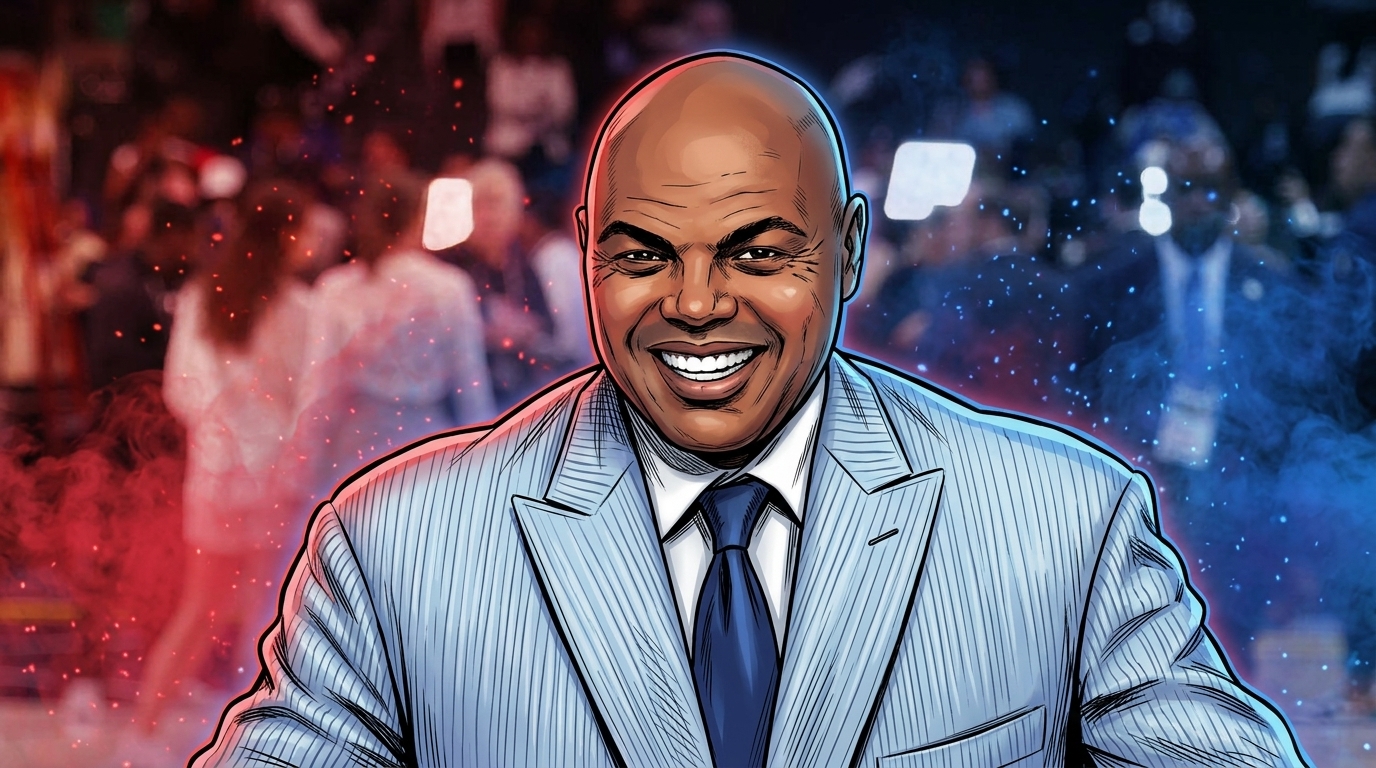
Yes, Inside the NBA moved to ESPN. Yes, TNT still produces the show from Atlanta. But the show is now licensed content on someone else’s platform. A tenant, not a homeowner. Charles Barkley, Shaq, Ernie, and Kenny Smith still sit at the desk, but the desk belongs to Disney now. The show airs on ESPN’s schedule, around ESPN’s games, under ESPN’s brand umbrella.
What remains in TNT Sports’ portfolio? MLB playoffs, NHL, NASCAR, the French Open, UFC, and Big 12 football. Respectable programming. But not a brand identity. Not a cultural institution. Not a reason for viewers to associate “TNT” with sports the way they once did.
At its May 2026 upfront presentation, WBD promoted coverage of Dunkman, a professional dunk league backed by Shaquille O’Neal. That is where TNT Sports is now: promoting a dunk contest spinoff while the NBA Finals air on someone else’s network. WBD co-head of sales Ryan Gould acknowledged the obvious at the same event: “Everyone here knows that there’s change ahead and that there’s change in our company.” He was not wrong.
The Zaslav Signal
David Zaslav told investors in September 2025 that sports “hasn’t been a real driver for streaming consumption on Max.” That is the CEO of the company that owns TNT Sports publicly devaluing the thing TNT Sports does. When WBD announced plans to split into two companies (Streaming & Studios versus Global Networks), TNT Sports was placed in the Global Networks basket alongside CNN and Discovery’s cable channels. The message was clear: sports programming is legacy infrastructure, not growth engine.
The Paramount acquisition superseded WBD’s planned corporate split, but the Zaslav signal remains instructive. The man who ran WBD viewed TNT Sports as a cost center to be managed, not a brand to be grown. WBD shareholders reinforced that sentiment by rejecting an $886 million compensation package for Zaslav related to the merger. The investors who own this company do not believe its sports assets justify executive enrichment. Paramount inherits that calculus.
The Regulatory Wildcard
Six Democratic senators, led by Maria Cantwell, have raised national security concerns about the deal. The sticking point: 49.5% of the merged entity would be foreign-owned, with approximately 38.5% held by sovereign wealth funds from Abu Dhabi, Qatar, and Saudi Arabia. Federal law limits indirect foreign ownership of TV stations to 25%.
This is the only scenario in which TNT Sports survives as a distinct brand: regulators block or substantially restructure the deal. But even the most skeptical observers expect some version of the merger to close. The Trump administration has signaled comfort with the transaction, and Paramount has built in financial penalties ($0.25/share ticking fee per quarter) that create momentum toward completion.
What Actually Dies
TNT Sports the brand dies. The programming does not. It migrates under the CBS Sports umbrella. The studio shows, the broadcast teams, the production infrastructure in Atlanta may survive in some reduced form. But the three letters that once meant basketball every Thursday night? Those are headed for the same graveyard as ESPN Classic, Fox Sports 1’s ambitions, and NBC Sports Network.
The real loss is not corporate. It is cultural. TNT Sports — specifically, the NBA on TNT — represented something increasingly rare in sports media: a broadcast identity built on personality rather than rights inventory. The EJ-to-Chuck-to-Shaq-to-Kenny chemistry was unreplicable precisely because it was never corporate product. It was four people who genuinely liked each other on television.
That show still exists. But the brand that gave it a home? The merger math says no.