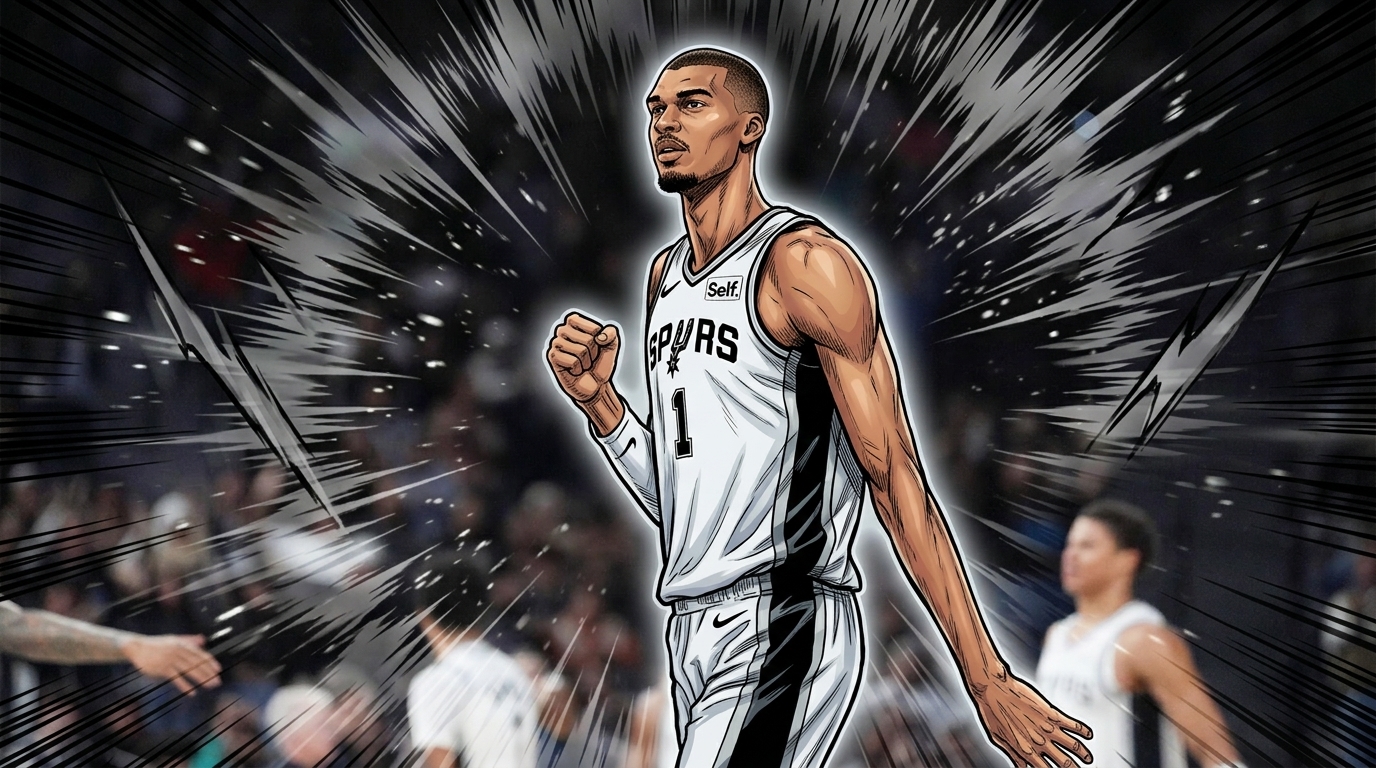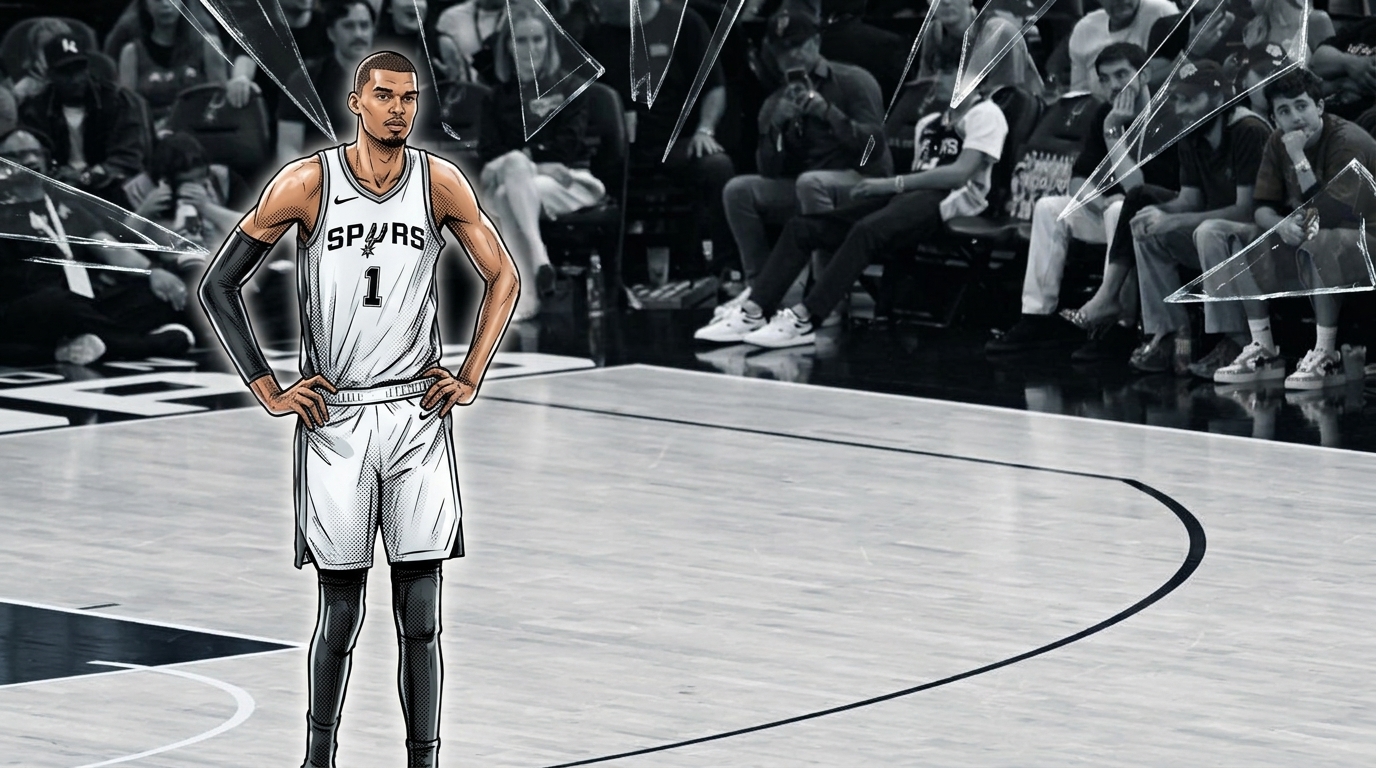

I am not here to debate whether Victor Wembanyama owed anyone a handshake — Jess Navarro already wrote whether the skip was defensible and I will not re-litigate her turf. What I want to talk about is what it means that a 22-year-old, in the middle of the worst night of his professional life, made a deliberate choice about who he is going to be for the next fifteen years.
That choice was: cold. And I think it is the best thing that has happened to the NBA in a decade.
The Spurs held double-digit leads in every game of this Finals series. They were up 29 in Game 4. Up 16 in the fourth quarter of Game 5, in their own building, with a chance to force a Game 6. They lost 94-90 and got eliminated 4-1. So when Wembanyama walked toward the postgame handshake line and then simply kept walking, head down, body already somewhere else, and when his exit interview ended with “Appreciate y’all. See y’all…never,” most observers read it as grief. Raw, unprocessed, 22-year-old grief.
That’s not wrong. But it’s also too small a read.
https://x.com/ForTheWin/status/2066004415551529310
Draymond Green went on his podcast and said what Draymond always says when he sees someone younger than him showing backbone: that by not looking your killer in the face, you let them “own you forever.” This is the kind of wisdom that sounds like accountability and is actually a dominance display. Draymond has spent his entire career manufacturing reasons to be angry, and now he’s annoyed that someone else figured out the trick. Jay Williams defended Wembanyama, because Jay Williams is correct about this one.
The myth we’ve built around Jordan is “and I took that personally.” The grievance factory. Real slights, invented slights, it didn’t matter — Jordan fed on all of it. Kobe absorbed that blueprint and made it meaner. When Jordan took what was supposed to be his ceremonial farewell shot at the 2003 All-Star Game, Kobe looked at him and said “Nah, not yet” and made sure the game kept going. That is the specific kind of cruelty a superstar manufactures on purpose. You don’t do that by accident at 24. You decide to do it.
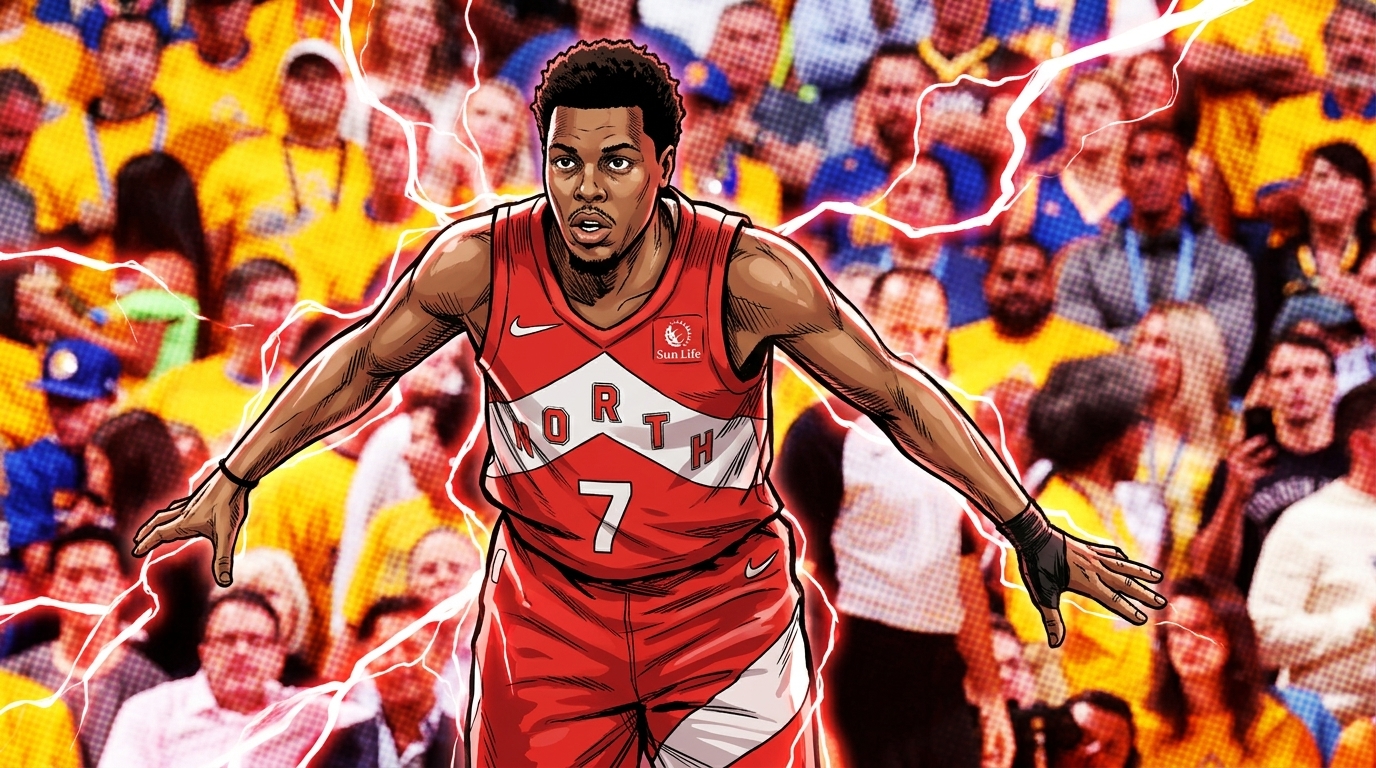
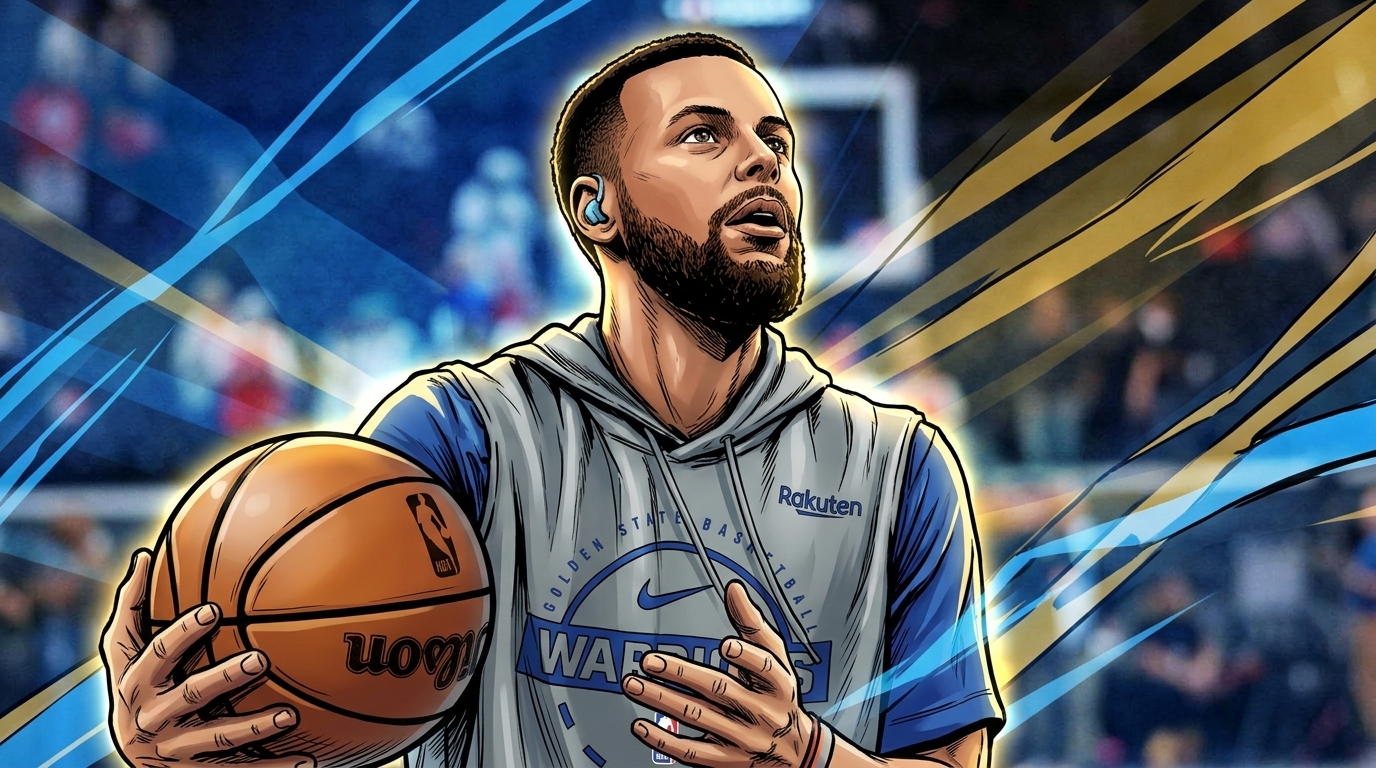
KD’s departure from Oklahoma City was executed in near-total silence. No apologies, no press tour, a single Players’ Tribune essay that felt like it was written by a man already gone. People called it cowardly. What it actually was is someone refusing to perform emotions he didn’t have.
Here is what separates Wembanyama from all of them: Jordan had his rings before he perfected the villain persona. Kobe had his Shaq titles before “Nah, not yet.” Durant was 28 years old and had an MVP and a Finals appearance when he went to Golden State. They all built their darkness from a position of strength, or at least from a position of having already arrived.
Wembanyama is doing it from a loss. At 22. Before the prime. Before the ring. He is deciding who he is going to be before he’s gotten there yet, which is a thing so few people have the discipline or the coldness to actually do.
The Wembanyama villain arc does not begin after he wins something. It begins here, on the court at San Antonio, walking away from Jalen Brunson’s extended hand, filing a mental invoice that he intends to collect with interest. Every great sporting villain needs an origin. Tyson had it when his manager died. Kobe manufactured his constantly because he couldn’t stop. Jordan built his mythology backward, in the editing room of his own memory, decades after the fact.
Wembanyama is doing it live. In real time. At the exact moment of maximum vulnerability, he is choosing not to be gracious, not to be sportsmanlike, not to be the kind of generational talent who shakes hands and says “great series, you guys earned it.” He is choosing to let this burn.
I worked around enough institutions to know what the NBA front office actually wants: it wants compliant superstars who are great and grateful and easy to sell. Wembanyama just told them to go to hell, politely, with a “see y’all never” and a locker room exit. The league has not had a real villain — someone who earns the title through sustained menace rather than a TV suspension or a flagrant foul — in years. It needed one badly.
The Spurs are coming back next season with a score to settle and a 22-year-old who has already decided, somewhere between the handshake line and the exit interview, exactly who he’s going to be when he gets there.
The Knicks should probably be worried. Everyone else should be grateful.
This is going to be fun. Or at least it would be, if fun were still a thing the sport allowed itself.
It isn’t. But the Wembanyama villain arc is the closest we’re going to get.