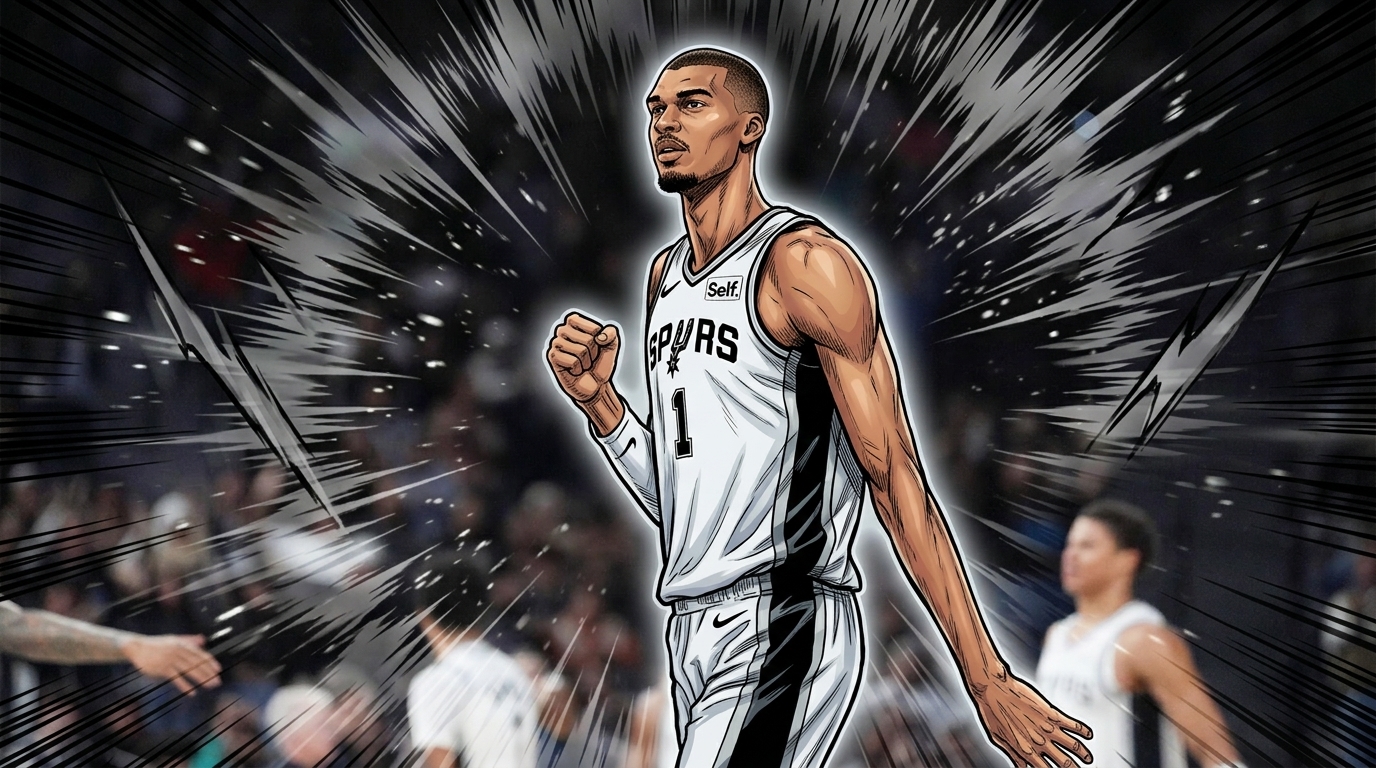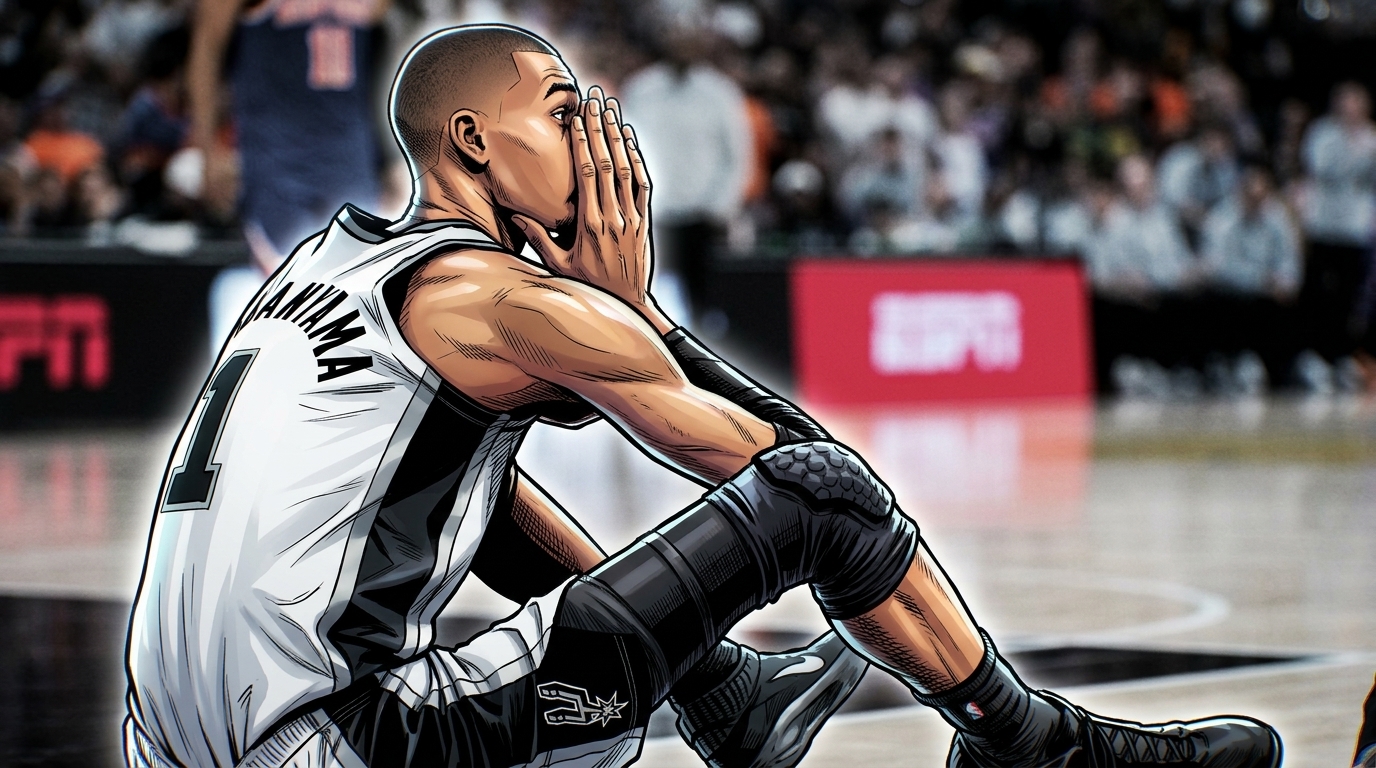

Victor Wembanyama walked off the court the moment the buzzer sounded in Game 5, past the Knicks, past the handshake line, directly to the locker room, and somewhere in the process gave every hot-take merchant on the internet exactly the amount of content they needed to fill a Tuesday night. The discourse arrived fast: classless, disrespectful, the NBA needs to say something — and it was wrong in approximately every direction.
The handshake line is not a rule. It is a custom, the kind that exists so that losing teams can perform graciousness at the exact moment they feel the least gracious, so television gets its closing tableau, so everyone can say the right things and go home. Wembanyama decided he was not going to perform anything. He processed the loss privately, on his own terms, and went to the locker room. The NBA has not commented. They are wise not to.
Draymond Green, on his podcast, made the case for the tradition: “If you leave the court and you don’t look me in my face and I just beat you, I actually know that I own you forever because you couldn’t look me in the face.” That is exactly the kind of framing Wembanyama would find insulting, and exactly why it doesn’t apply here. Draymond is describing a specific psychology, deference encoded in avoidance, that has nothing to do with what happened Sunday. Wembanyama did not slink away. He walked off like someone who had already decided what came next. Those are different movements.
https://twitter.com/ForTheWin/status/2066004415551529310
The actual story is the press conference, not the exit. Wembanyama finished Game 5 with 19 points on 7-of-19 shooting, 14 rebounds, 5 blocks — and was outscored 15-3 in the fourth quarter while Jalen Brunson put up 45. He averaged 26 points, 11.2 rebounds, and 3.6 blocks across the Finals. He won Western Conference Finals MVP. He is 22 years old and he went to a podium afterward and said: “What I’m pissed about is there’s probably a hundred games before we can be back in the Finals.”
That sentence should terrify New York.
Not triumphant. Not “we’ll get ‘em next year.” Pissed. Specifically, measurably pissed about the distance between now and the next opportunity to do this again. Then: “This is the biggest lesson of my life.” Then: “I’m not running away from that. I’m using it to fuel me.” These are not things a sore loser says. They are things a person who has already converted the pain into trajectory says. His playoff numbers this spring matched historical company of only Kareem Abdul-Jabbar and Hakeem Olajuwon at the same age. He is not a cautionary tale about a kid who couldn’t handle losing. He is a warning about what that loss becomes.
I’ve watched enough sports to know the difference between a player who skips the handshake because they can’t handle defeat and a player who skips it because they’ve already moved past it. The former is pettiness. The latter is a kind of cold focus that, frankly, is more unsettling to the team that just beat you. Wembanyama was not disrespecting the Knicks. He was already somewhere else. Follow our NBA coverage closely this summer, because the next chapter of this rivalry started the moment he left that court.
The Knicks won their first championship since 1973 in five games, and the Spurs’ 22-year-old center couldn’t be bothered to shake anyone’s hand about it.
The Knicks should sleep on that.