
The celebrity gossip industrial complex has a tell. When it wants to cover something it doesn’t fully understand, it reaches for the word “alongside.” She attended the match alongside her husband. She was photographed alongside the other wives. Alongside, as if presence were the whole story, as if showing up were the extent of the accomplishment. I’ve been watching the way the World Cup press handles Georgina Rodriguez and Antonela Roccuzzo for the past three weeks, and “alongside” is doing a lot of heavy lifting that the facts don’t support.
What the framing reveals about the audience reaching for it is pretty specific. There’s a large cohort of sports fans who have genuinely no idea that the WAG economy (a phrase that sounds like tabloid shorthand but is actually a real media infrastructure with real revenue) has grown into something that operates independently of the men it’s nominally attached to. The conversation about Georgina and Antonela being at the same World Cup tends to be framed as a subplot, a color note, a fun fact for the lifestyle section. That framing is a few years out of date.
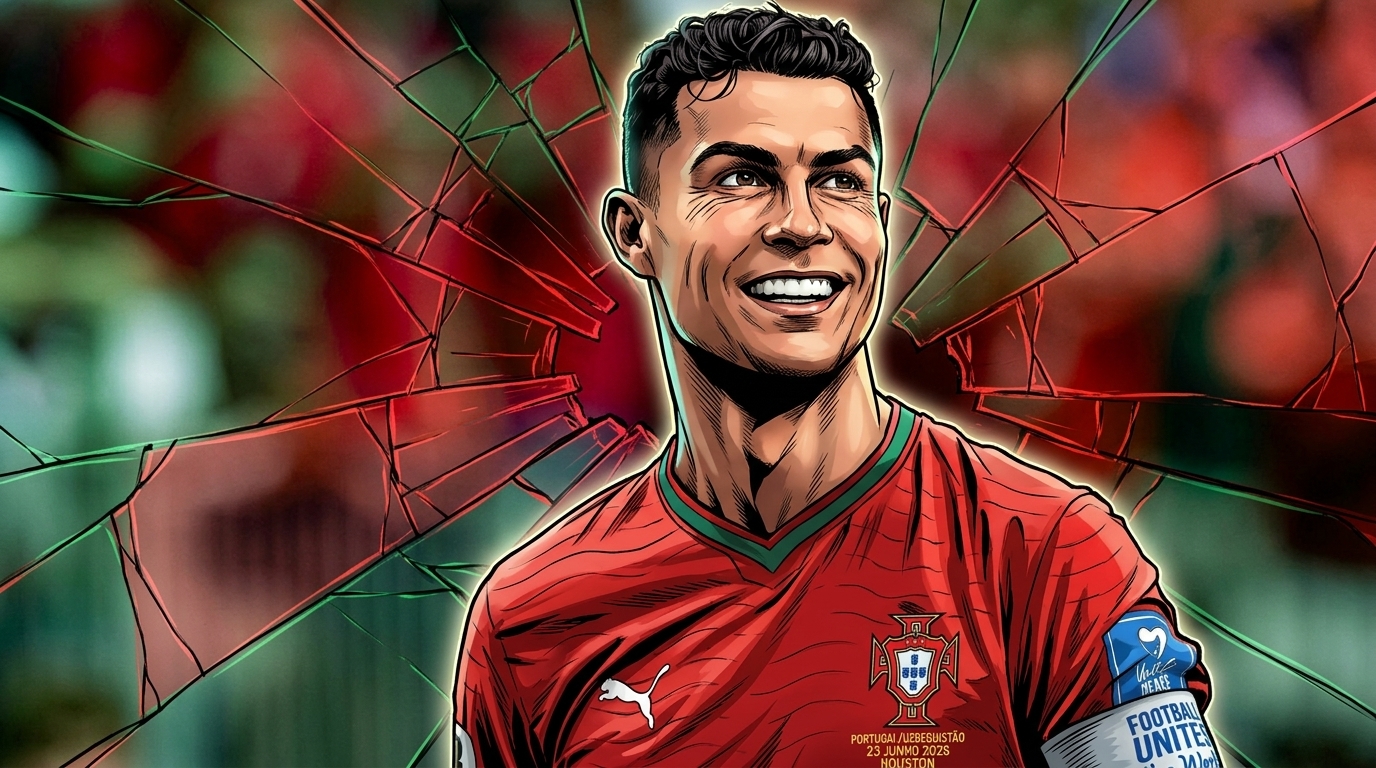
Georgina Rodriguez has 73.2 million Instagram followers. Antonela Roccuzzo has 40 million. Their combined audience is larger than the entire population of France. Both women are in the United States for the 2026 World Cup. Both are watching partners who have scored in group play: Messi put up six goals in three matches, making history in ways our World Cup coverage has tracked; Ronaldo scored twice against Uzbekistan in a 5-0 romp. The football is real and the football is remarkable. It is also, from a pure media economics standpoint, not the only show running.
A Georgina Rodriguez sponsored Instagram post is currently valued at $716,000. An Antonela Roccuzzo post runs about $391,000. These are not numbers attached to women who are famous because of their partners. These are numbers attached to women who have built brand ecosystems that carry their own gravitational pull. Antonela holds deals with Adidas, Alo Yoga, Tiffany & Co., Stella McCartney, and Louis Vuitton. Her net worth is estimated at $20 million. The Messi association matters, historically. The Antonela brand, at this point, would endure if it didn’t.
https://www.instagram.com/p/DZ5snbamD1C/
The clearest evidence of how fully independent these brands have become is what Georgina did in the middle of the group stage. While Ronaldo was preparing for Portugal’s final group match against Colombia, Georgina announced her Harper’s Bazaar España cover — “My dream cover,” she wrote. The launch was deliberate, timed, entirely her own. This is not a woman pausing her career for the World Cup. This is a woman running her career through the World Cup, using the global media attention as ambient infrastructure while pursuing something completely separate from the scoreline.
https://www.instagram.com/p/DZ2szlSjECl/
The hashtag #wagaesthetic has accumulated 1.7 million TikTok views. Classic Football Shirts published research specifically analyzing WAG influence across Instagram followers, Google search demand, and TikTok activity. There is an entire parallel coverage infrastructure (content creators, fashion editors, beauty brands, brand strategists) that has built its own economy around this World Cup, one that the sports press mostly treats as a distraction from the real event. The audience for that parallel coverage knows the score. They are watching both feeds simultaneously. They do not need permission from the sports section to treat one as equally valid.
The moment that broke through even the sports-only corners of the internet was quieter than any of this. Antonela Roccuzzo left a heart emoji comment on a Georgina Rodriguez Instagram video of Georgina’s daughter singing. That’s it. The reaction was immediate and enormous, precisely because it punctured the narrative that these two women exist in opposition, representing factions in a larger tribal war between their partners’ fan bases.
https://twitter.com/TeamCRonaldo/status/2068975040318816670
The Messi-Ronaldo rivalry is one of the most durable audience organizing principles in sports history. It has structured debate, driven engagement, and sold jerseys for nearly two decades. And it is, increasingly, a framework that the men’s actual families have declined to participate in. The ❤️ comment didn’t perform diplomacy — it just behaved normally, which felt radical by contrast. What it actually revealed was how thoroughly the rivalry-industrial complex depends on the two camps maintaining mutual hostility, and how little interest the principals have in maintaining it for the audience’s benefit.
You see this same dynamic in the WAG economy at the NBA Finals, where the women attached to players become part of the media story in ways that are now fully legible as independent brand activity rather than adjacency. The question isn’t whether Georgina or Antonela is “winning” the World Cup WAG coverage. The question is why we keep reaching for competition as the only frame we have.
There will be knockout rounds. One of these teams will advance, one will exit. Portugal’s draws left them shakier in group play than Messi’s Argentina, which topped Group J undefeated. Whatever happens will generate enormous coverage, enormous emotion, enormous stakes. And throughout all of it, two women with a combined 113 million followers will continue building something that does not depend on any particular result to keep running. The tournament has a bracket. Their brands don’t.
The discourse around the backlash around Yamal’s girlfriend earlier in this World Cup showed how quickly the sports internet collapses into moralism when women at tournaments behave in ways that don’t fit the supporting-role script. Georgina and Antonela don’t fit it either, but they’re operating at a scale that makes the script hard to enforce. When your Instagram audience is larger than France, the footnote framing starts to look a little strained. Not wrong, exactly — just a few years behind what’s actually happening.