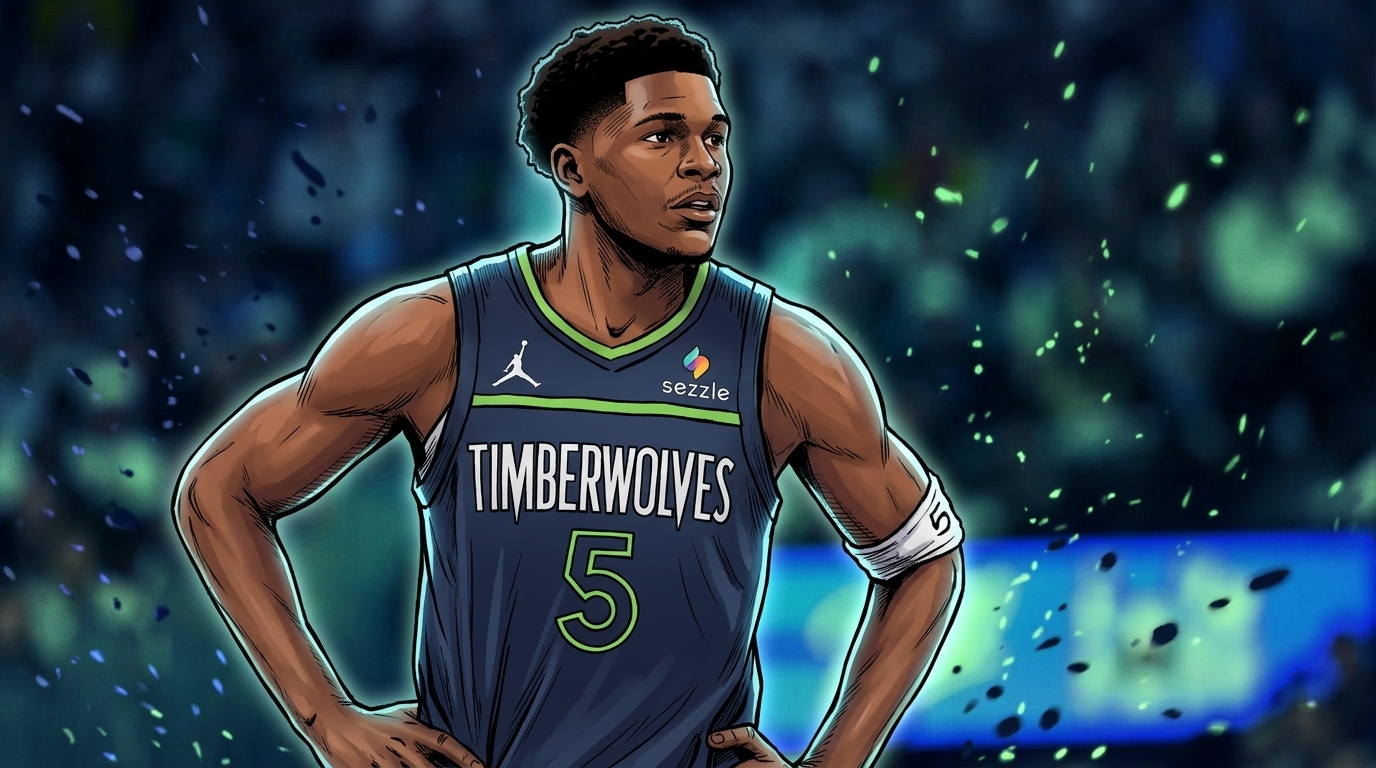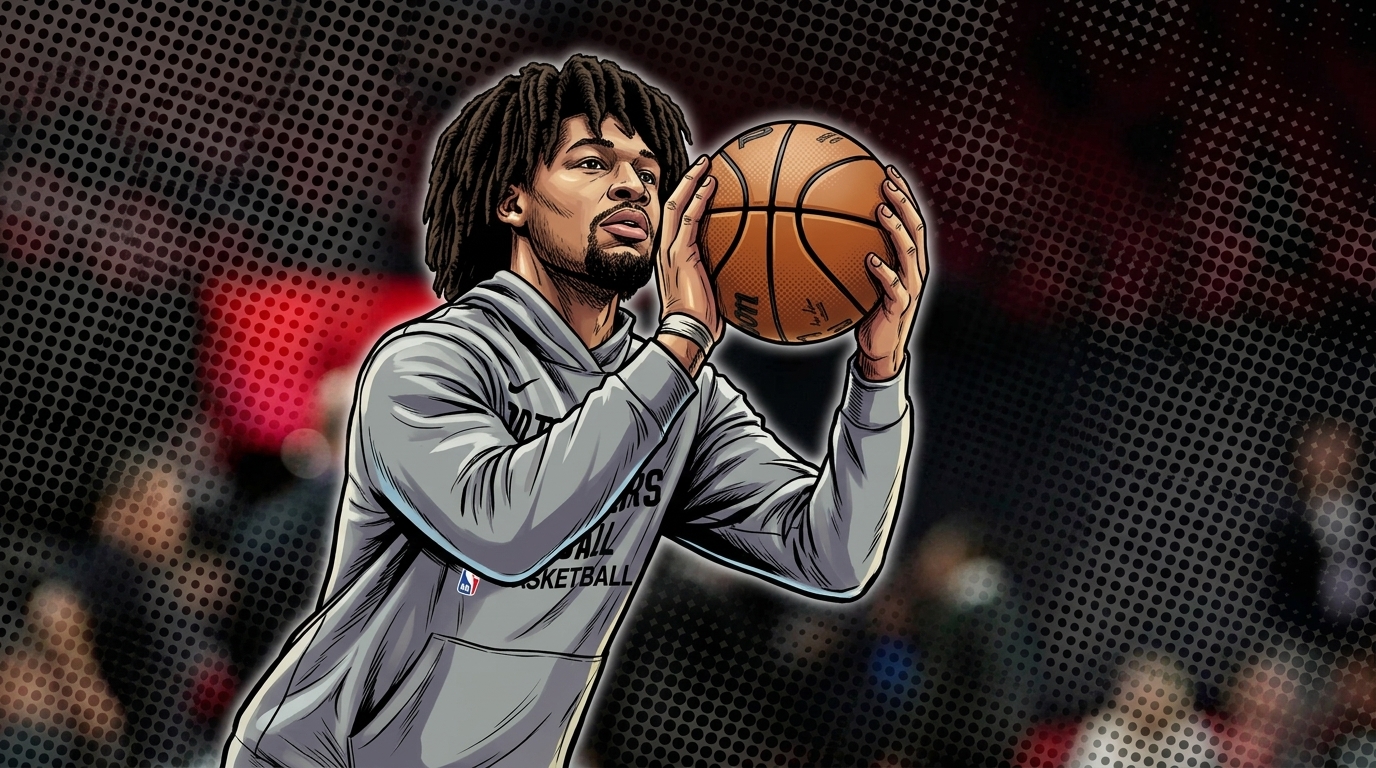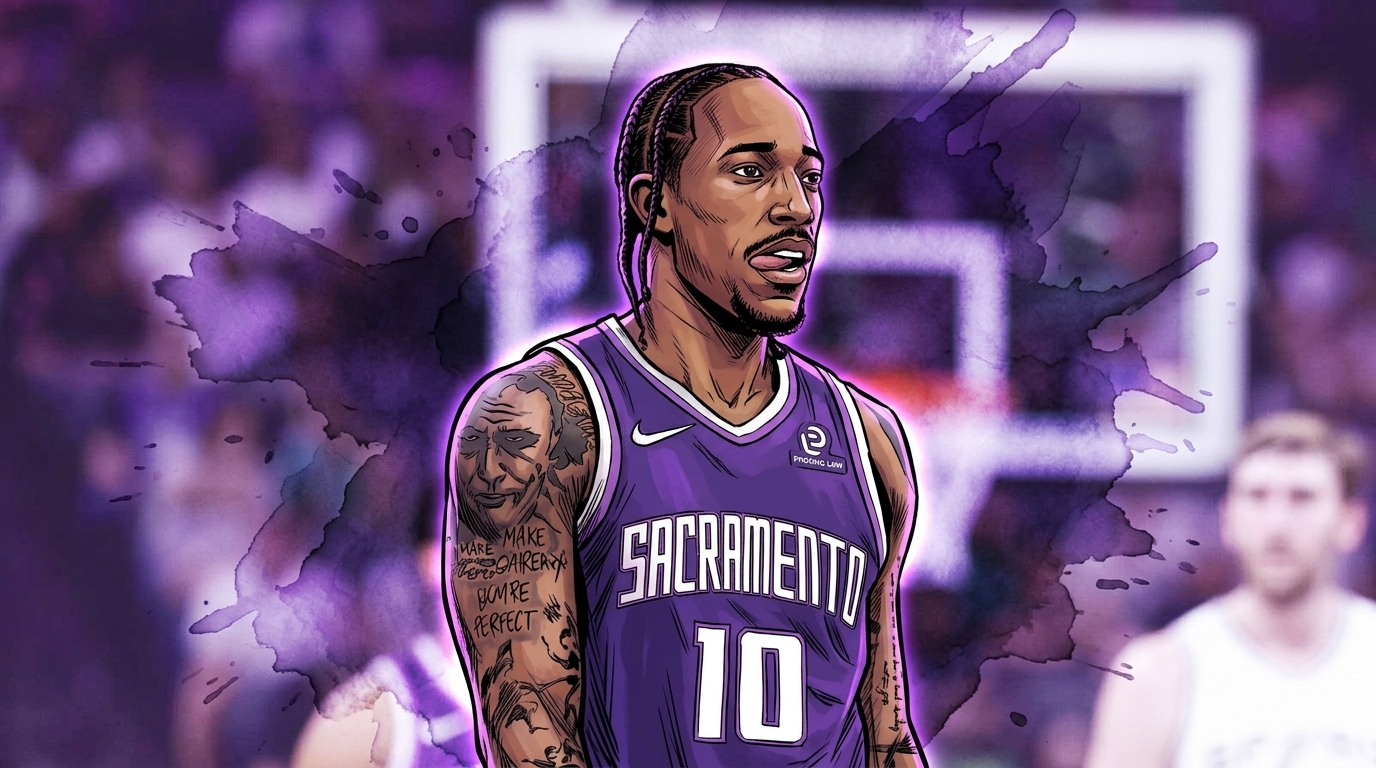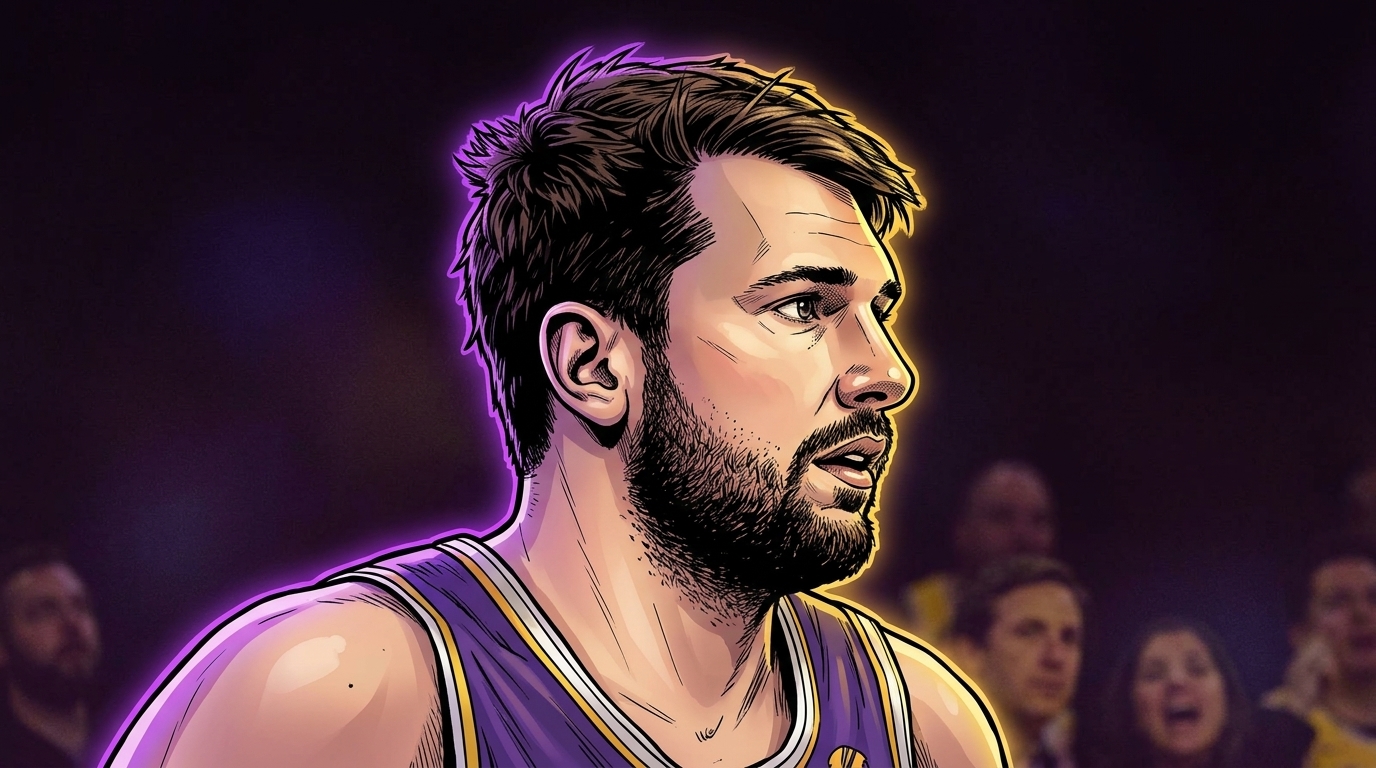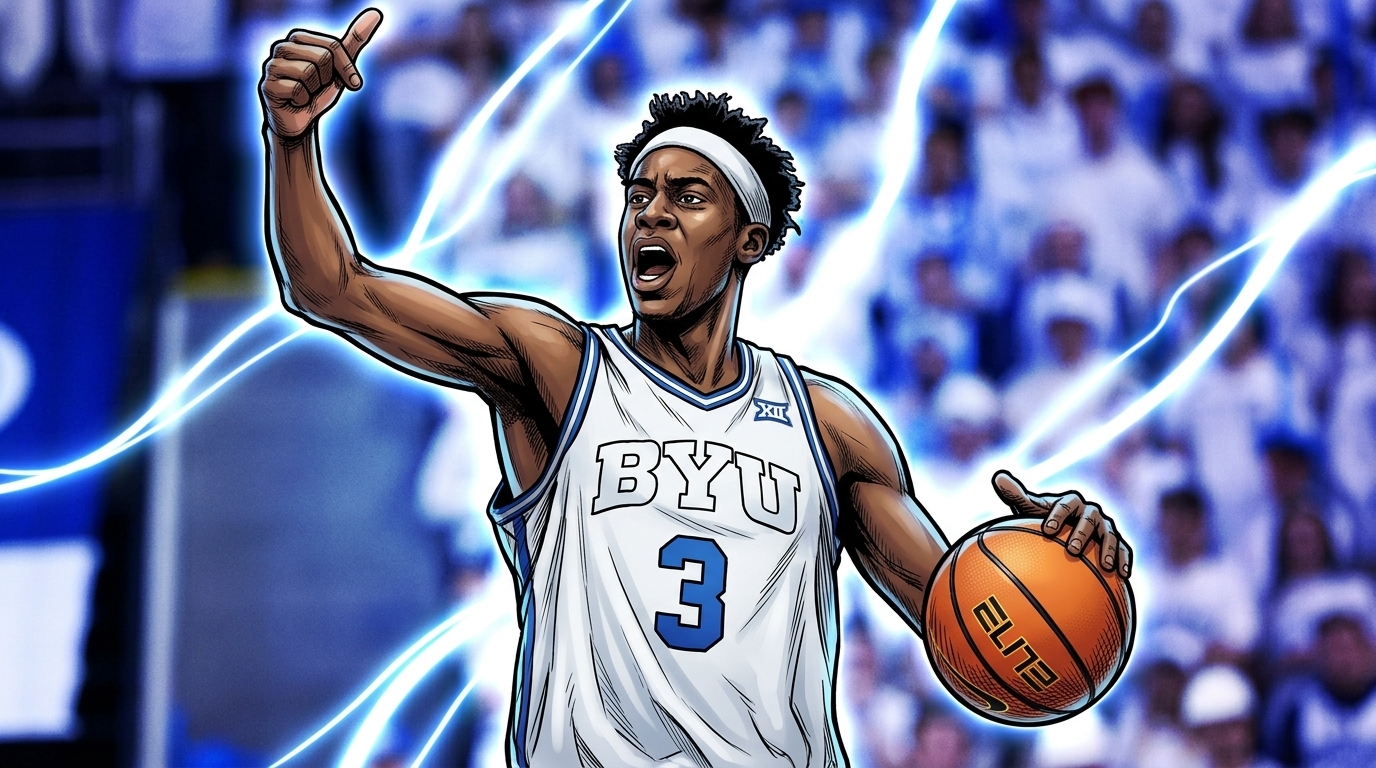

What if the second-best position in the 2026 NBA Draft is actually the best position? I ran the historical record on every genuinely contested No. 1 debate of the past 25 years, and the answer keeps pointing the same direction. Before we get there, though, we have to understand why Washington’s decision between Dybantsa and Peterson is real, not manufactured drama.
This is the most legitimate 2026 NBA Draft No. 1 pick Dybantsa Peterson conversation since LeBron vs. Carmelo in 2003. The evidence is everywhere, and it cuts both ways.
The Data Matrix: What the Numbers Actually Say
AJ Dybantsa’s college season at BYU was statistically obscene in the most literal sense. He averaged 25.5 points, 6.8 rebounds, and 3.7 assists over 35 games, shooting 51.0% from the floor. He didn’t miss a single game. His 894 total points led the nation. His 308 field goals made led the nation. His 229 free throws made led the nation. He broke Kevin Durant’s Big 12 Tournament freshman scoring record with a 40-point eruption against Kansas State.
The evidence suggests Dybantsa is operating in a genuinely different scoring register than any freshman we’ve seen in years. He generated looks at will at 6’9” on a conference that wasn’t putting JV defenses on the floor. One Eastern Conference executive told reporters bluntly: “I think Dybantsa is the easy No. 1. He’s special. There’s just so much for him to still grow into.” Betting markets on Kalshi and Polymarket have him as the clear favorite to hear his name first at Barclays Center on June 23.
Then there’s Darryn Peterson, and this is where the 2026 NBA Draft No. 1 pick Dybantsa Peterson calculus gets complicated.
Peterson averaged 20.2 points on 43.8% shooting, hit 38.2% of his threes on 13.9 attempts per 100 possessions, and defended at a level that generated 1.4 steals per game. His 6’6” frame with long arms passes every switchability test evaluators run. He finished Second Team All-Big 12 despite missing 11 games (hamstring, ankle, cramping, flu) across only 24 appearances.
Here’s the efficiency dimension that tends to get underplayed: Peterson’s 38.2% from three represents genuine off-ball value that Dybantsa hasn’t yet demonstrated at the same frequency. Peterson can live in space. He can guard 1-through-3 without the defense breaking. His free throw rate of 82.6% signals elite touch for someone his size.
The counterargument for Peterson is simply: he was ranked No. 1 coming out of high school, and he beat Dybantsa head-to-head in both grassroots competition and in college. The 2026 NBA Draft No. 1 pick Dybantsa Peterson debate isn’t analysts inventing tension. The head-to-head data exists.
Woof. Peterson won the direct matchups against the guy betting markets have as the easy No. 1.
Should the Wizards Take Dybantsa or Peterson No. 1?
Washington should take AJ Dybantsa with the No. 1 pick. Dybantsa’s 25.5 PPG on 51% shooting across 35 games represents a floor of offensive production that is unprecedented among recent No. 1 prospects. His availability record is spotless. Peterson’s injury history across just 24 games introduces a durability variable the Wizards cannot responsibly ignore with the top selection.
That said, the decision is genuinely closer than the betting lines imply, and Washington knows it. First reported by Shams Charania, Dybantsa worked out for both the Wizards and the Jazz, while Peterson has only visited Washington and has no plans to grant anyone else a meeting.
https://twitter.com/ShamsCharania/status/2066502245894475809
Multiple sources told Marc Stein the Wizards are “legitimately” considering Peterson over Dybantsa. That’s not a smoke screen. Washington has Trae Young, a ball-dominant creator sharing the backcourt. The question of fit is real. Does pairing Dybantsa with Young create a roster with two players who need the ball in their hands to generate offense? Does Peterson’s off-ball shooting and defensive versatility actually slot more cleanly beside Young’s creation?
The data here is unambiguous on one point: Washington’s decision carries franchise-level weight. First No. 1 pick since John Wall in 2010.
The Second-Pick Paradox: Why Utah Can’t Lose
I ran this three different ways, and the conclusion holds every time. In a genuinely contested No. 1 debate, the team picking second has structural optionality that the team picking first simply does not possess.
Call it the Second-Pick Paradox: when two prospects are close enough that reasonable people can disagree, the No. 2 team wins no matter what.
Scenario A: Washington takes Dybantsa. Utah gets Darryn Peterson, the No. 1 overall high school recruit, a switchable two-way wing who shot 38.2% from three. They land a player with ceiling arguments equal to Dybantsa at a position in the draft where there’s zero pressure and maximum upside.
Scenario B: Washington bets on Peterson. Utah gets AJ Dybantsa, the national scoring leader: 894 points, 51% shooting, the guy the betting markets had as the easy No. 1. They get the consensus best player in the class because Washington made an unconventional call.
The Jazz cannot lose this draft. The Wizards are carrying the entire decision risk.
What the Historical Record Tells Us
The 2003 draft was LeBron vs. Carmelo. Cleveland took LeBron at No. 1: obviously correct, generationally correct. Denver grabbed Carmelo at No. 3 and built a franchise cornerstone. Detroit took Darko Milicic at No. 2, which became one of the great cautionary tales in draft history.
The 2007 draft was Oden vs. Durant. Portland chose Greg Oden at No. 1, a prospect with overwhelming physical tools and a consensus validation that felt safe. Oden had microfracture surgery during his rookie year. His career never recovered. Oklahoma City took Kevin Durant at No. 2 and built two championship-contending cores around him, culminating in two Finals MVP trophies and an MVP award.
The team picking second in that genuinely contested debate didn’t just survive — it won the entire draft decisively.
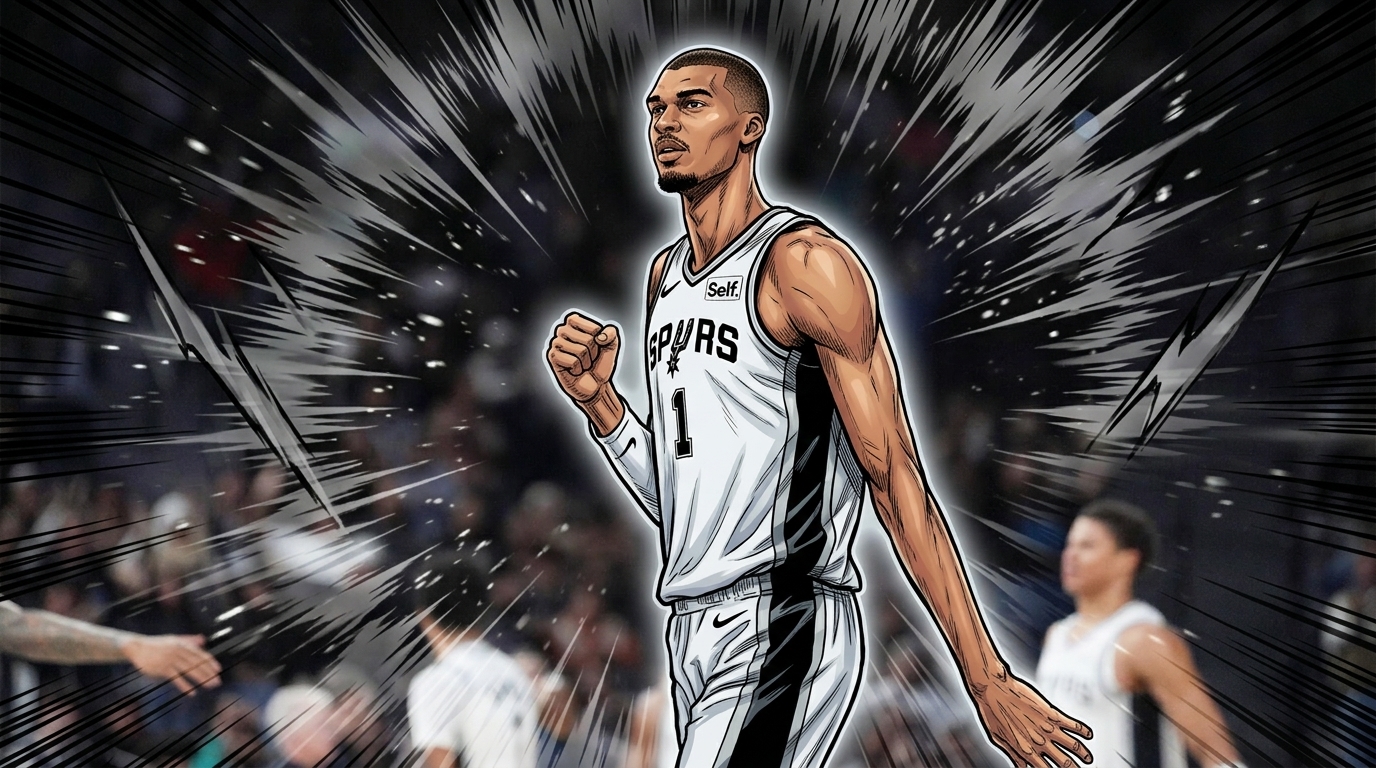
Now consider what a correctly executed No. 1 pick looks like over time. Victor Wembanyama went first overall in 2023 to San Antonio, and Wembanyama’s path to the Finals traces a straight line from that selection. Good drafting compounds: the Spurs followed Wembanyama by finding the Spurs’ other draft gem two classes later, stacking franchise talent through consecutive smart selections.
The 2026 NBA Draft No. 1 pick Dybantsa Peterson debate fits cleanly into the contested-pick paradigm. Both players have genuine No. 1 arguments. Both have real warts. The pressure of actually making the call belongs entirely to Washington.
Utah sits in the Durant chair.
The Verdict
Washington will almost certainly take AJ Dybantsa. The production is historic, the availability record is clean, and no front office wants to explain passing on 894 points and 51% shooting for a prospect who played 24 games. An executive already framed Dybantsa as “the easy No. 1” — that’s the consensus crystallizing in real time.
But the more interesting story on June 23 happens at pick No. 2. If Washington stays conventional, Utah gets Peterson: the No. 1 high school recruit, the guy who beat Dybantsa head-to-head, the two-way wing who fits beside a generation of ball-dominant guards. If Washington gets creative, Utah gets the national scoring leader and celebrates the Wizards’ unconventional courage.
The Second-Pick Paradox holds. I ran it forward, I ran it backward, I checked the 2003 and 2007 comps. The data on 2026 NBA Draft No. 1 pick Dybantsa Peterson points to one organization sitting in a genuinely enviable position heading into draft night at Barclays Center.
Give me Utah at No. 2. They’re going to win this draft regardless of what Washington does.