
I did the math on what it actually costs to watch every NFL game this season, legally, and I need Roger Goodell himself to walk me through it like I’m five, because the league he runs built a paywall maze and started calling it programming, and that’s a hell of a thing to do to the sport that markets itself as America’s game.
Ten subscriptions. That’s the number that won’t leave me alone. Not “some games are behind a paywall” — ten distinct logins, ten separate charges landing on your card at ten separate points in the calendar, just to watch every regular-season game the NFL is contractually allowed to show you. Add it up across a season and the real NFL streaming cost this year pushes past a thousand dollars, not because anyone asked for premium everything, but because that’s the floor now.
The checklist looks like this. Amazon Prime Video, because Thursday Night Football lives there, fifteen games a year. Netflix, because it grabbed a Thanksgiving-eve game and Christmas Day football like it’s launching a prestige drama instead of airing a football game. Peacock, for the one primetime game it picked up in late December. Then NBC, CBS, ABC, ESPN, NFL Network, and Fox, because somehow after all that fragmentation the old broadcast networks are still required reading too. And at the bottom, like the final boss, NFL Sunday Ticket, routed through YouTube TV, for the out-of-market Sunday games your local affiliate simply isn’t airing that week.
Nobody asked for this. The guy who wants RedZone on and a Sunday to himself didn’t lobby for a tenth login. He’s the one eating the toll every time a rights package gets sliced thinner so the league can wring one more fee out of one more platform. WWE just ran the same play: fans there now need three separate subscriptions and nearly a grand a year to watch everything the company puts out, and that means this isn’t a football problem, it’s live sports deciding fragmentation is the business model instead of the glitch in it.
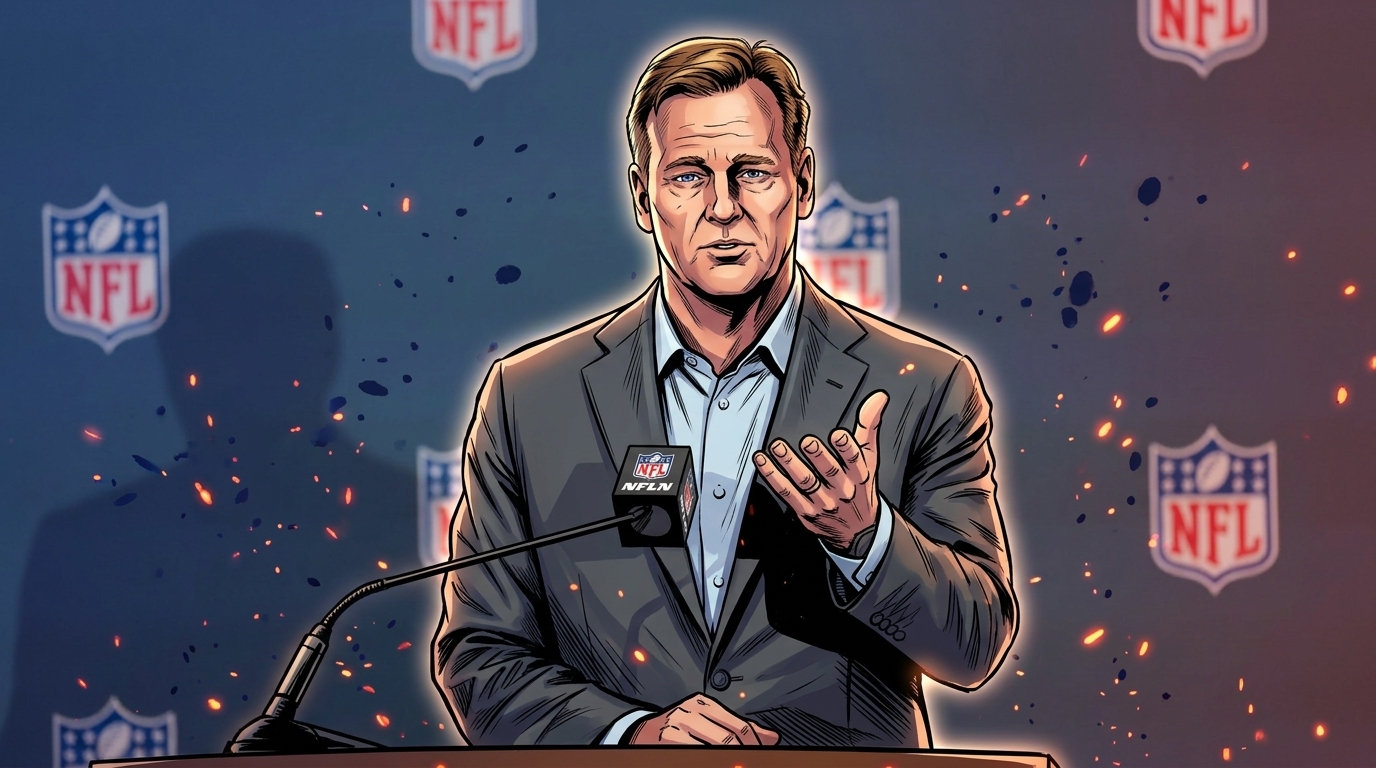
Which is what makes it worth noticing that Brendan Carr, the actual sitting chairman of the actual FCC, is now asking out loud the question fans have been muttering into their cable bills for two years:
“Does the NFL still benefit from the antitrust exemption when they’re negotiating for carriage of games not on a sponsored telecast, but on a streaming service? That’s a very live, very ripe question.”
That’s not throwaway phrasing from a bureaucrat killing time at a podium — it’s doing real work. The NFL has operated for six decades under the Sports Broadcasting Act of 1961, a law that let 32 competing businesses pool their broadcast rights and sell them as one national package instead of getting sued for collusion, on the understanding that the games would stay accessible on free over-the-air television. That’s the whole deal. Carr is pointing out, in careful FCC-chairman language, that Netflix and YouTube TV are not free over-the-air television, and asking whether an exemption survives once its own foundation has drifted somewhere else entirely.
He kept going:
“There’s a live question at this point about whether putting games on Netflix or YouTube TV or other entities like that … is that a sponsored telecast or is that something else? If it’s something else, then it’s not clear that the antitrust exemption applies.”
And then the line that should actually worry the league office:
“If the NFL teams were able to collectively negotiate, should the broadcasters, perhaps, be able to collectively negotiate as well?”
That’s not a talking point. That’s a federal regulator floating the idea of unwinding the legal architecture that lets the NFL sell itself as one product instead of 32 fighting for shelf space. Brendan Carr’s NFL streaming warning is already rattling around the league’s own coverage:
https://twitter.com/ProFootballTalk/status/2037575200200438252
“Collapse” is a strong word for a government official to use about your business model, and it’s not one the league spins its way out of with a highlight reel. The Washington Examiner laid out just how far the math has drifted from the 1961 bargain, and Yahoo Sports itemized the subscription-by-subscription toll fans are now expected to pay just to follow their own team through a full season.
None of this happened by accident. ESPN’s $3 billion purchase of NFL Network was the signal that broadcast rights are now inventory to be sliced and resold to whichever streamer bids highest, and every fragmentation decision since has followed the same math: rights fees up, platforms up, subscriptions up, bill mailed straight to the fan. It’s the billionaire-owner math fans already do in their heads every time a ticket price jumps or a stadium lands a new naming-rights check — the money is moving somewhere, and it sure isn’t moving back toward the guy paying for ten logins.
I don’t need the league to fix this by Sunday. I need somebody in that building to admit, out loud, that they know exactly what they built. The answer to “how do I watch my team every week” is currently a spreadsheet, and a league that still calls itself America’s game shouldn’t need a chairman’s office to notice the bill got out of hand.