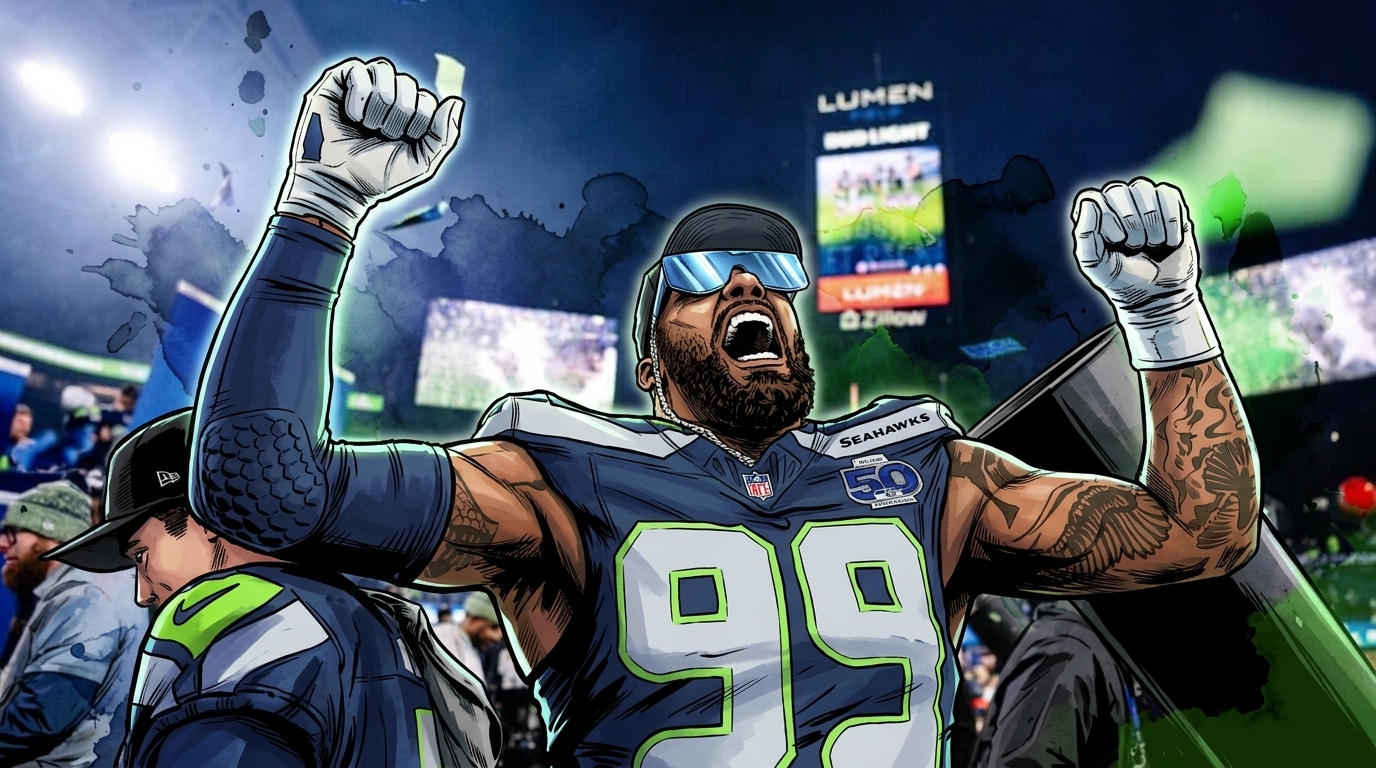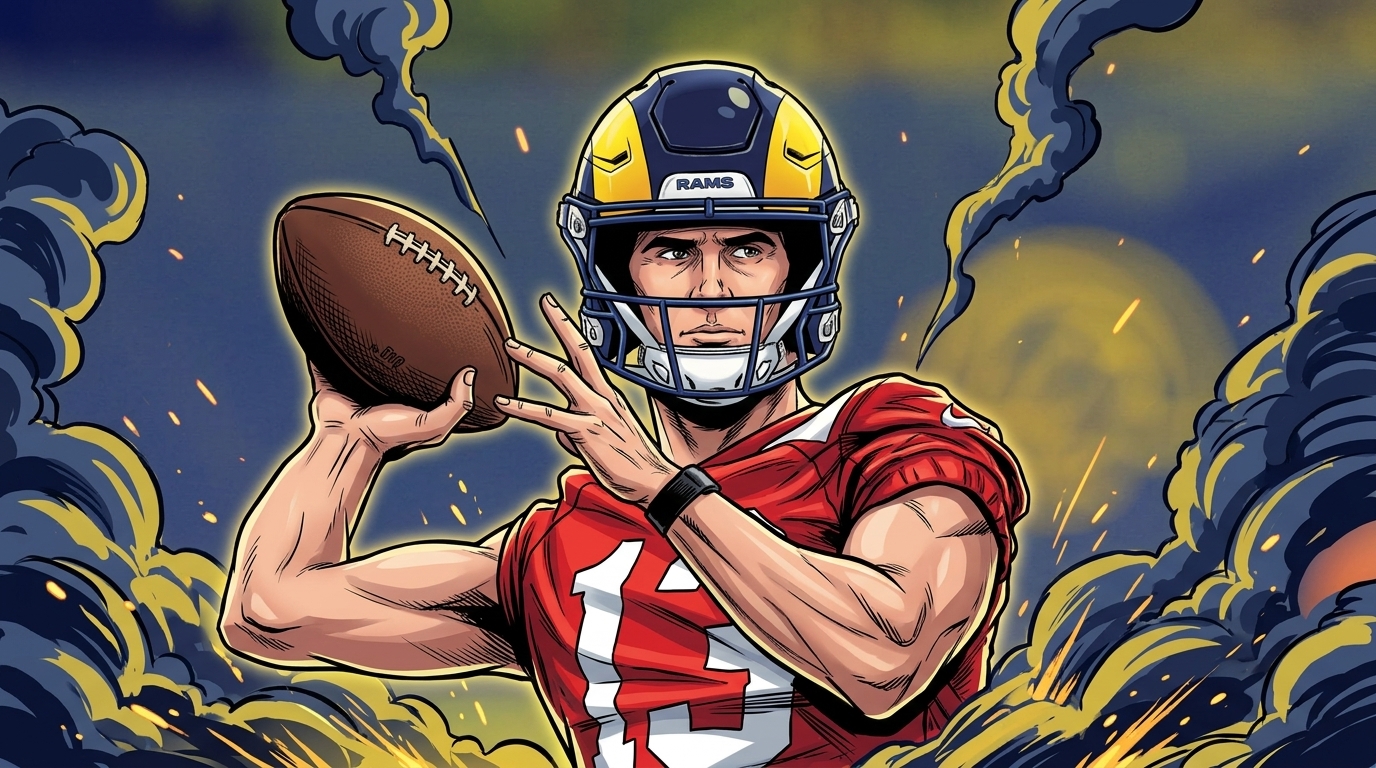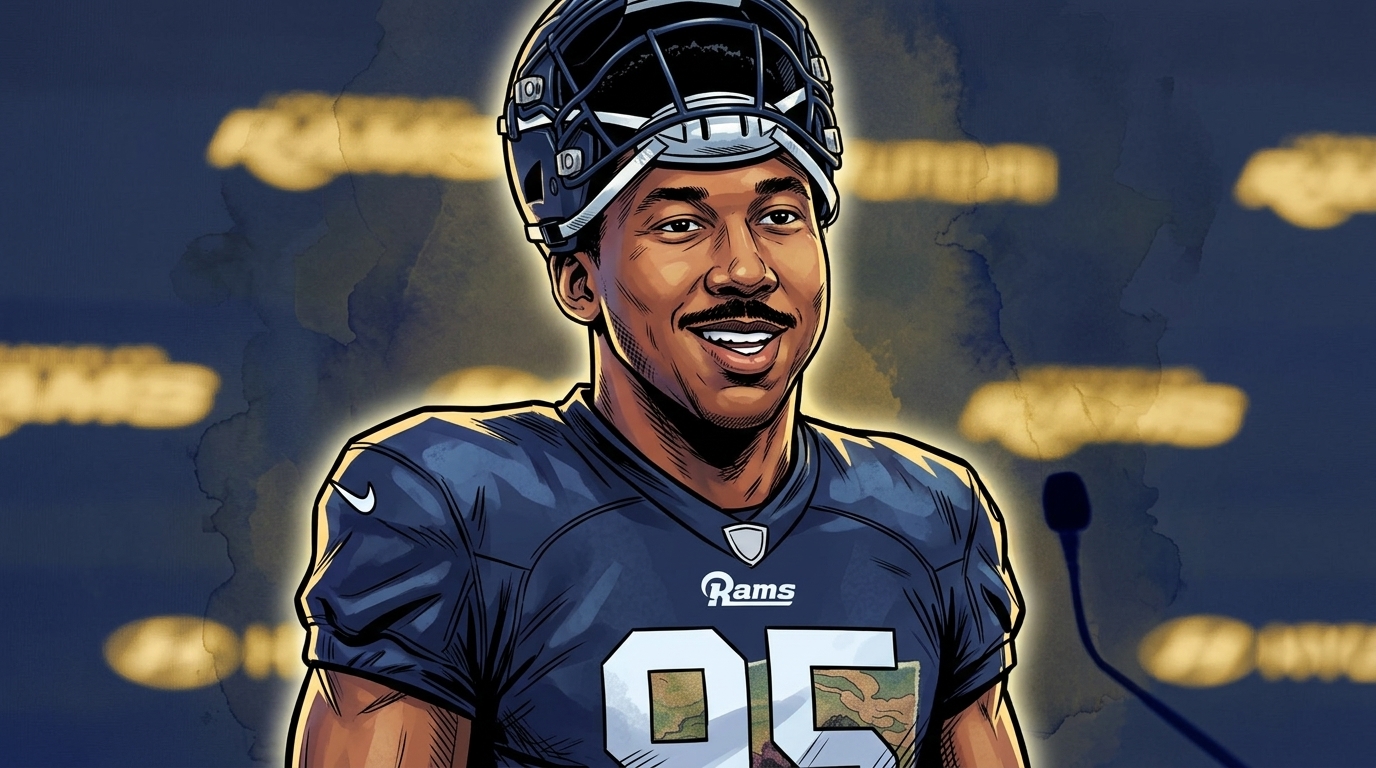

On Wednesday night at Lincoln Center (the David H. Koch Theater, which is a very fancy place to watch a professional football player hold a trophy that belongs to another city), Myles Garrett accepted the Best NFL Player ESPY wearing a Los Angeles Rams uniform. Then he accepted the Best Record-Breaking Performance ESPY, also in a Rams uniform. Then he kissed his girlfriend on stage. The Cleveland Browns issued no statement, because what would they even say.
Garrett’s 23-sack season, a single-season NFL record that snapped the mark shared by TJ Watt and Michael Strahan, happened in Cleveland. The sacks happened in Cleveland. The film rooms, the practices, the nine years of being the best player on a franchise that perpetually failed to build anything around him: all of that happened in Cleveland. On June 1, 2026, the Browns traded him to the Los Angeles Rams for Jared Verse, a 2027 first-round pick, a 2028 second, and a 2029 third. The ESPYs, apparently, were not included.
https://x.com/ESPNNFL/status/2077133091043164403
The Browns are, at this moment, a museum that donated its centerpiece. The building is still open; the lights are on; there are people walking through the NFL offseason galleries, and somebody is running a quarterback competition right now to determine who lines up under center in 2026. The institution persists. But the thing you drove an hour to see, the thing that made the visit feel like it meant something, is in Los Angeles, accepting awards. The museum didn’t close. It just got a hell of a lot less interesting to visit.
This was entirely predictable, and the Browns’ front office knew it. General Manager Andrew Berry had publicly called Garrett “untradeable” before trading him; then the 2025 season ended 5-12, the Deshaun Watson dead cap hit landed at $86.2 million, and the competitive window shifted to 2028 at the earliest — at which point Garrett would be 33 years old. The math is not difficult. The Rams offered Jared Verse and a haul of picks, and the Browns took it, and they were probably right to do it. Being right about the transaction, though, does not mean you didn’t lose something you cannot get back. Those things can both be true simultaneously; one does not cancel the other. What happens when a franchise fails the player it built around is not undone by receiving fair compensation.
What makes the ESPYs specifically brutal is the category. Best NFL Player is not a statistical award; it is a recognition of the kind of player who makes a franchise feel like it has a reason to be great. Garrett was the first defensive player in the history of the award to win it. He deserved it — he probably deserved it in two or three of the previous seasons he spent in Cleveland while the Browns built nothing around him and then traded him. He won it in a Rams jersey. That’s not a detail. That’s the whole story.
The counterargument is that Garrett winning as a Ram is clean vindication of the trade: he’s exactly as good as advertised, and the Browns extracted maximum value at precisely the right moment. Sure. The problem with this framing is that “maximum value” describes what the Browns received, not what they lost. You can receive maximum value and still end up holding picks while someone else holds trophies. The math of the trade is fine. The math of what it means to be the Cleveland Browns right now is a separate equation entirely, and it doesn’t resolve as cleanly.
Myles Garrett is a member of the Los Angeles Rams. He is also, as of Wednesday evening, the Best NFL Player on the planet, by formal institutional consensus. The Cleveland Browns are still a professional football team.
They’re holding training camp and everything.