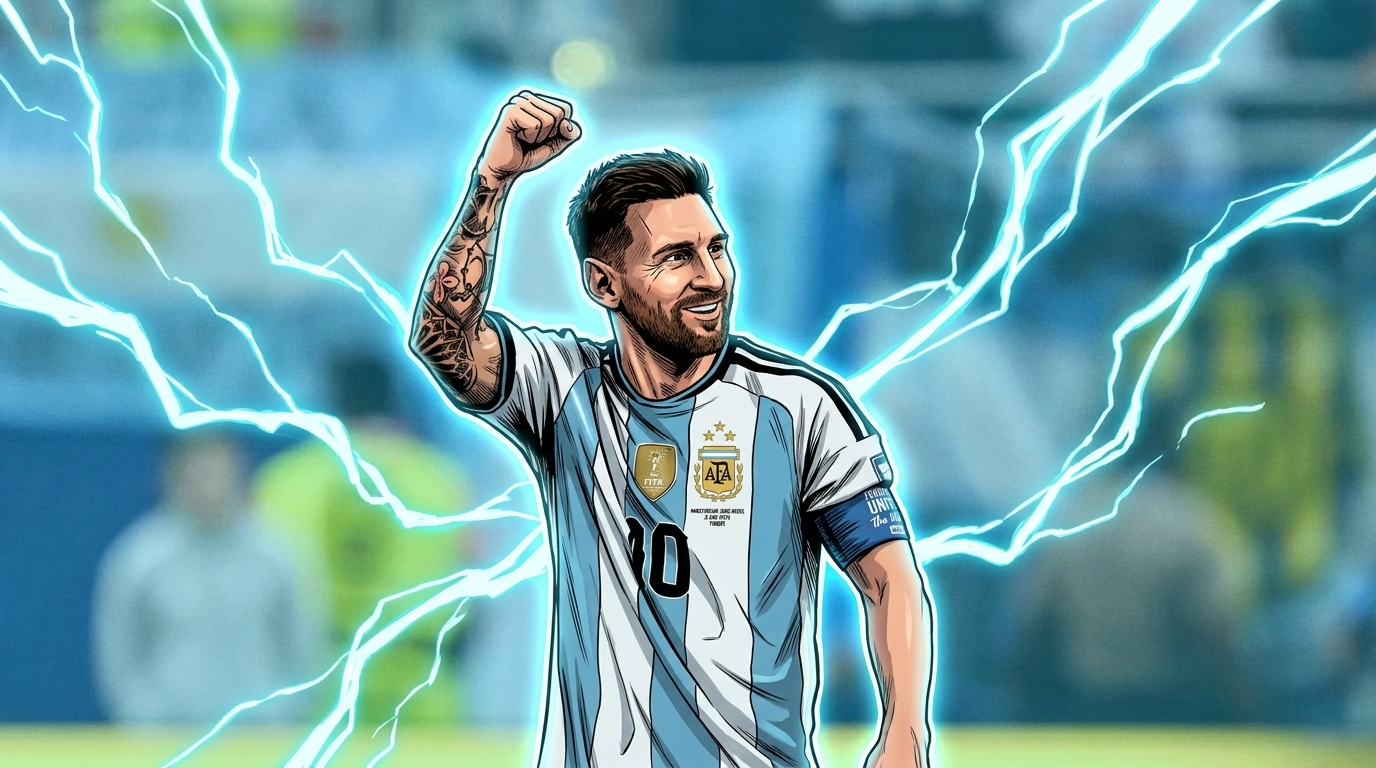

The internet spent four years constructing a scandal out of eye contact. What the mixed-zone clip from after Argentina’s 3-2 extra-time win over Cape Verde reveals isn’t anything about Lionel Messi’s private life. It reveals exactly what a portion of the audience needs from him. I’ve watched enough fan communities to recognize the shape of this particular hunger: the need to catch someone extraordinary at something ordinary. To find the crack in the legend.
Messi walked up to Sofi Martinez — Argentine sports journalist, thoroughly professional, nationally recognized — and, smiling, said: “If I look at you, it’s because I look at you; if I greet you, it’s because I greet you.” Six words of tautology that did what four years of denials could not. He made the machinery look ridiculous by treating it as the joke it is.
Martinez replied that she valued it a lot. And then, in theory, it was over.
The rumors trace back to Qatar 2022. After Argentina’s final win, Martinez conducted an emotional post-match interview with Messi, and the internet, scanning the footage for subtext, decided that the way he looked at her meant something. By 2026, a new wave claimed Antonela Roccuzzo had issued a silent ban preventing Argentine players from speaking to Martinez. When Messi appeared to acknowledge ex-player Maxi López on camera without greeting her during a press segment, the rumor machine logged it as evidence.
https://x.com/FOXSports/status/2071076943399723013
This is the audience the discourse exposes: people who need Messi’s story to contain a betrayal. It’s not malice, exactly: it’s closer to what happens in fandoms when parasocial ownership hits a ceiling. Worshipping someone who remains steadfastly faithful and focused is, narratively speaking, a dead end. So the imagination fills the space. I follow K-pop fandom dynamics precisely because the pattern is identical: the most devoted followers sometimes generate the most damaging rumors about the very artists they claim to love. The machinery needs drama to sustain itself.
https://www.instagram.com/p/DaX6p68jgI4/
What the coverage largely buried under the joke itself was Antonela. Before the clip went viral, she had already privately texted Martinez: “Sofi, don’t worry, ignore the nonsense.” She didn’t post about it. She didn’t perform the supportive wife for a public gallery. She sent a direct message to a woman whose family had been affected by fabricated speculation and said the thing that needed saying. That’s the detail that shifts the whole story. She opted out of the performance entirely.
Martinez has been noting for years that the rumors exist because she is a woman. “Leo has good vibes with a lot of journalists,” she said. “The only difference is that I’m a woman, so they make a big deal out of it.” That observation deserves more attention than it typically gets in our World Cup 2026 coverage. The coverage tends to treat the rumor as a puzzle to solve rather than as evidence of something structural about how female journalists get read in proximity to famous men.
https://www.instagram.com/p/DY2FtY9jkz4/
The counterargument worth sitting with: Messi’s joke wasn’t a reckoning. It was charm — and charm is its own kind of deflection. He made people feel good about him, which he has always been extraordinary at, and moved on without naming anything. Whether that counts as handling it or merely surviving it is genuinely unclear to me.
But the tautology stays. “If I look at you, it’s because I look at you.” In the context of everything swirling around this World Cup, this moment will age better than almost anything produced around it. Not because it settled the discourse, but because it identified exactly who that discourse was for. The people parsing whether the hug lasted too long are still going to parse. The rest of us (following this story as part of the wider culture coverage of what sport fandom actually reveals) already know the answer wasn’t the point.
The point was the question. It always is.