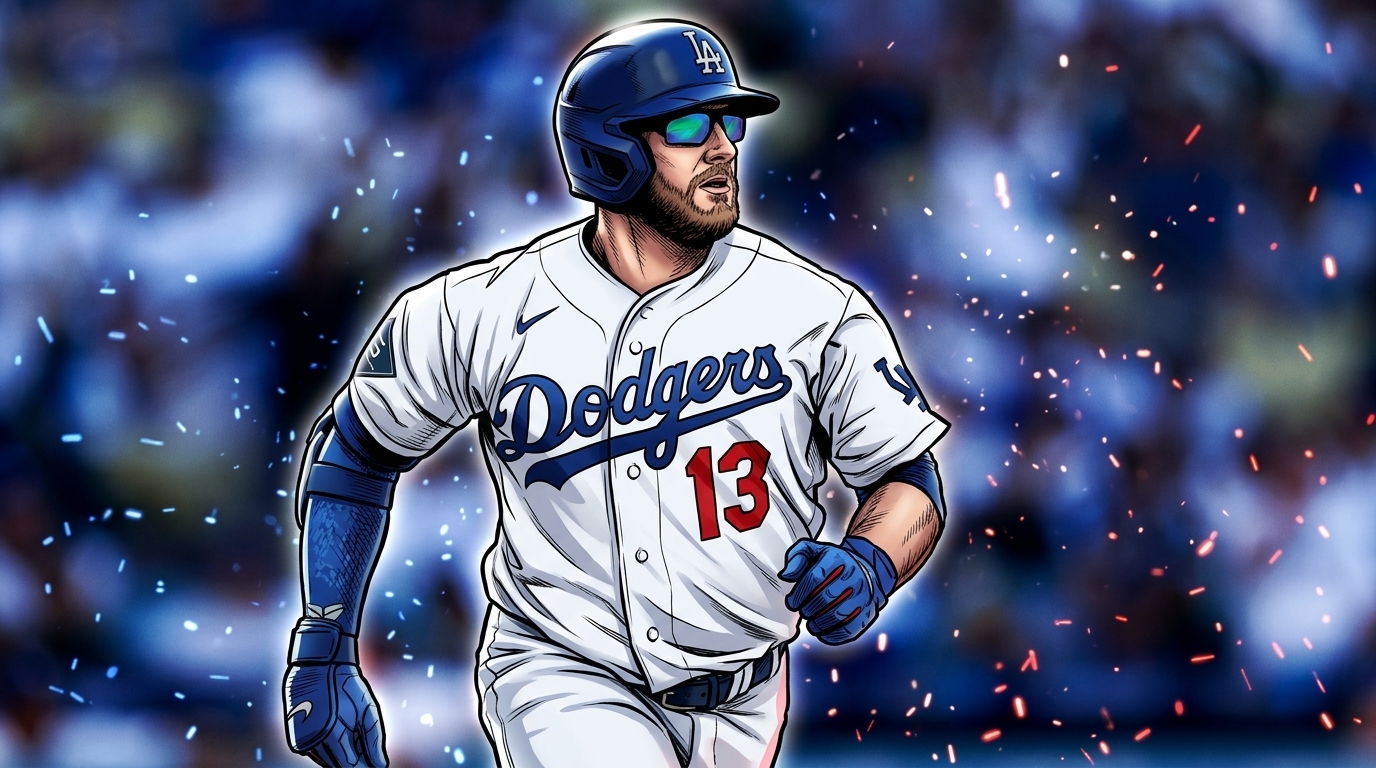

There’s a number sitting in Thursday night’s box score that explains eight years of Dodgers baseball better than any highlight reel could, and it belongs to Max Muncy. His pinch-hit, three-run homer off a Milwaukee Brewers reliever in the sixth inning made him the all-time home run leader at Dodger Stadium, passing Eric Karros for a record that had stood since 2002. The Athletics released Muncy for nothing in 2017. The Dodgers turned him into a mark that has now outlasted two decades of players who came through that ballpark. That gap between what one team saw and what actually happened is the whole story here.
How Many Home Runs Does Max Muncy Have at Dodger Stadium?
Muncy hit his 131st career home run at Dodger Stadium on Aug. 13, a pinch-hit, three-run shot off Milwaukee Brewers reliever Antonio Senzatela that Statcast projected at 426 feet to center field. It passed Eric Karros’s total of 130, a Dodger Stadium record that had stood since Karros’s career ended in 2002.
Context matters here. It was Muncy’s first pinch-hit home run since 2018, which is its own small piece of trivia. Coming off the bench cold and turning around a reliever’s pitch for 426 feet isn’t something most hitters do even once a season, let alone once every eight years. The blast gave the Dodgers a 4-2 lead in the sixth. It did not hold. Closer Edwin Diaz blew the save in the ninth, and Los Angeles lost 5-4 anyway. That’s this Dodgers season in miniature: a historic individual swing, buried under a familiar late-inning collapse.
The record itself belonged to a broadcaster before Muncy took it. Karros, calling the game for SportsNet LA, made the record his own moment too: “You did it Munce, you did it! Now the all-time home run leader at Dodger Stadium, Max Muncy. Congratulations, brother.” Watch the swing that did it:
https://twitter.com/MLB/status/2088112568745222375
A guy who played his whole career in that stadium handing off the record in real time, on air, is a better sendoff than a press release ever could have written.
The A’s Let Him Walk for Nothing
Rewind to January 2017. Oakland designated Muncy for assignment, then released him outright that April, near the end of spring training. He was a fifth-round pick who’d never been a top prospect, and across parts of three seasons with the Athletics, he’d hit .195 over 245 plate appearances. By the numbers the A’s had in front of them at the time, cutting him was defensible. He looked like organizational filler.
The Dodgers signed him to a minor-league deal weeks later. Muncy spent all of 2017 in Triple-A Oklahoma City, unremarkable enough that nobody outside the org was tracking him. Then 2018 happened: he led the team in slugging at .582 and hit 35 home runs, and the light-hitting infielder Oakland had non-tendered into free agency became a middle-of-the-order Dodger. From 2018 through 2025, Muncy posted an .843 OPS in Los Angeles. That’s not a fluke season propped up by one hot summer. That’s eight years of production the A’s watched from the outside.
Eight Seasons, One Ballpark, One Very Consistent Swing
Here’s the part that actually interests me more than the record itself. Muncy didn’t just have one big year and coast on reputation. He built the single highest home run total in the history of a specific ballpark over eight-plus seasons, largely with the same uppercut, pull-heavy swing he brought with him from Oakland. That’s a swing-to-park fit question, and it’s exactly what my own fantasy baseball model treats as noise until a player proves otherwise. Muncy proved otherwise for the better part of a decade.
Dodger Stadium’s dimensions and marine-layer air reward exactly the lift-and-pull contact Muncy generates, and the sample size backs it up. This is eight-plus seasons of accumulated production in the same building, well beyond the .582 slugging season that first made him a middle-of-the-order Dodger, through injuries, platoons, and a batting order rearranged around him a dozen times, including, this season, stretches like the Dodgers’ six-game skid earlier this month that had the whole lineup looking lost. Muncy’s power at home never really went anywhere during any of it. That level of consistency is a data point, not an anecdote.
What Oakland’s Models Missed
Every front office runs some version of a swing-and-park-fit model now. The public versions, the ones fans and writers like me can poke at, didn’t see a franchise cornerstone in a .195 hitter with a funky uppercut swing in 2017 — and neither, evidently, did Oakland’s internal one, or they wouldn’t have released him outright instead of trying to trade him for a bag of balls.
That front office isn’t the one running the Dodgers today. The version of this organization that let a change-of-scenery case walk for nothing in 2017 looks nothing like the one that pulled off the Skubal trade this summer. Which makes the Muncy record less a nostalgia piece and more a reminder: outside models miss on swing-and-park fit constantly, and so do the front offices with better information than the rest of us. Muncy just spent eight seasons and 131 home runs proving it at the same address. Give the Dodgers credit for finding him. The A’s still have to live with letting him go, and with Muncy still an everyday presence in that lineup, the record isn’t done growing.