
Every generation of baseball analytics has its pace-tracking obsession. The 60-HR Clock is the oldest and strangest of them — a running projection that haunts front offices and fills August column inches and, every few years, actually means something. Right now, in late June 2026, the clock is running again. And almost nobody has noticed.
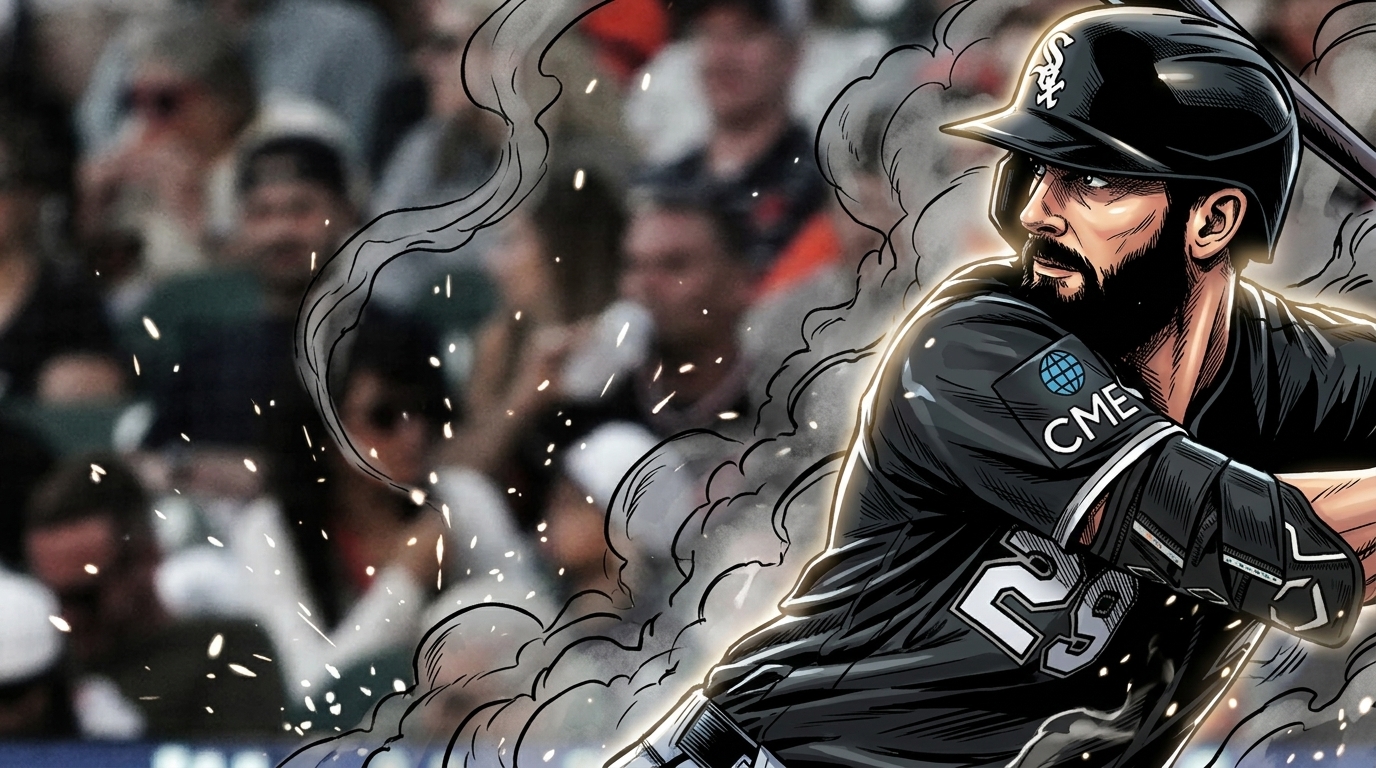
Kyle Schwarber has 29 home runs through 74 games. That is leading all of baseball with a .603 slugging percentage and 170 total bases. Linear projection — 29 divided by 74, multiplied by 162 — spits out 63.5. Talkin’ Baseball’s hot-window calculation, which weights recent rate rather than season average, gets to 67. The range worth taking seriously is 63 to 67 home runs. Barry Bonds’ all-time record is 73.
Before we talk about whether Schwarber can actually get there, let’s sit with the fact that this conversation is happening at all.
Is Kyle Schwarber Actually On Pace to Break the Home Run Record?
The cleanest benchmark I know for early-season HR pace is what I’ll call the May 20 Checkpoint — the date by which a player’s HR total predicts full-season outcomes with meaningful accuracy. Historically, reaching 20 home runs before May 20 correlates almost perfectly with 50-homer final seasons. Schwarber hit his 20th home run on May 15, 2026. Barry Bonds reached his 20th on May 19, 2001 — his 73-homer year. Schwarber was four days ahead of him at that checkpoint.
Four days. Against the most controversial record in sports.
The weekend of June 20-21 moved the number substantially. Four home runs against the Mets across two days, including three in a single game on Saturday — two of them in the same inning (913 combined feet on those two third-inning shots alone), followed by a 418-foot three-run blast on Sunday. That’s not a hot streak in the statistical sense. That’s load-bearing data.
Woof.
The sustainability question is real, and I want to address it honestly. Schwarber’s career home run percentage — home runs as a share of plate appearances — is 6.4%. Among players with sufficient PA samples, that figure trails only McGwire, Judge, and Ruth. His fly ball rate in 2026 ranks third among qualified hitters. His three true outcomes rate sits at 56.8%, which means he is either walking, striking out, or hitting the ball out of the park on more than half his plate appearances. His batting average is .249, which will make some people nervous and should make nobody nervous who understands how this particular player generates value.
The mechanism is stable. The exit velocities are real. The fly ball rate isn’t a hot-month artifact — it’s a structural feature of how Schwarber has been hitting since 2025, when he hit 56 home runs and broke the Ryan Howard Phillies franchise record of 58. He then broke his own franchise record before the calendar turned to July.
Put the projection range in sequence: Sosa’s 1998 total was 66. McGwire’s was 70. Judge’s 2022 American League record was 62. Cal Raleigh’s 2025 total was 60. Schwarber’s own 2025 total was 56. The floor of Schwarber’s current projection clears all of them except Bonds and McGwire. The ceiling clips McGwire. I ran this three different ways and got the same answer: the number is real.
Why Is Nobody Talking About This?
I have a theory, and it’s uncomfortable for baseball.
The FIFA World Cup is happening right now, in American stadiums, and it is consuming the sports media oxygen that a record chase would normally inhale by mid-June. Every television package, every sports-adjacent Twitter conversation, every bar television on a weekday afternoon — it’s all soccer. This is not a complaint. It’s a structural explanation. The attention economy has a finite ceiling, and the World Cup is eating most of it.
The NBA Draft lands this week. That’s the second gravitational event pulling coverage sideways. Teams are trading picks, prospects are giving interviews, mock drafts are cycling every six hours. The sports cycle has two massive non-baseball events running simultaneously, and baseball’s potential record chase is sitting quietly in the background like a process running in a terminal window nobody has open.
There’s also the Schwarber factor specifically. He’s a designated hitter, which means he generates almost no defensive highlight content. He doesn’t give quotable postgame speeches. He doesn’t have a celebrity girlfriend generating sidebar coverage. His demeanor after his three-homer game last Saturday was, per reporting, essentially: “it was a good day.” He is, by every observable measure, a professional who hits baseballs very hard and goes home. The media infrastructure that turned the 1998 McGwire-Sosa race into a national event required personalities who generated storylines beyond the box score. Schwarber is not that. He’s the box score.
There’s also the absence of suspicion. The 1998 and 2001 seasons are permanently asterisked in the cultural imagination. Any conversation about the all-time home run record carries that weight — and yet the conversation about Schwarber has been notable for not generating it. Jesus Luzardo, a pitcher who has faced him, put it simply: “There’s a lot of words to describe Schwarbs. It’s just remarkable to see.”
That’s it. No narrative complexity. No andro in the locker room. Just a 32-year-old left-handed hitter from Middletown, Ohio doing something that has never been done clean.
What the Data Says About Whether He Can Sustain It
The honest analyst’s answer is: we don’t know, and the uncertainty cuts both ways.
Home run pace projections have a well-documented regression-to-mean problem. Players cool off. The league adjusts. Pitchers stop throwing strikes. The All-Star break disrupts rhythm. Every historical comp for a player on this kind of pace includes at least one two-week window of drought that made pace-trackers nervous. Bonds hit a wall in August 2001 before closing hot.
What the data does say is this: Schwarber’s underlying contact quality hasn’t shown the soft-contact creep that typically precedes a power outage. His exit velocity distribution in 2026 is essentially identical to his 2025 distribution. The fly ball rate is consistent. He doesn’t appear to be in a hot-month statistical aberration — he appears to be operating at a sustainably elevated level of performance, one that happens to be historically anomalous.
The skeptical case rests on two variables: first, opposing pitchers will eventually stop giving him anything to hit, which inflates his walk rate and suppresses his HR rate; second, a left-handed DH with a 56.8% three true outcomes rate will always carry some vulnerability to extended slumps. Both are real. Neither is disqualifying.
I’m putting the most likely final outcome somewhere in the 57-63 range — pace projections have always been more useful as attention signals than as actual forecasts. But the point isn’t what he’ll finish with. The point is that a player is on pace to challenge the most controversial record in sports during a summer when the country is watching someone else’s sport, and nobody is running the ticker.
The 60-HR Clock is running. The evidence suggests you should be watching.
https://twitter.com/TalkinBaseball_/status/2054338160214040754
Schwarber has 88 games left. At his current rate, that’s 34 more home runs. The math is not complicated.