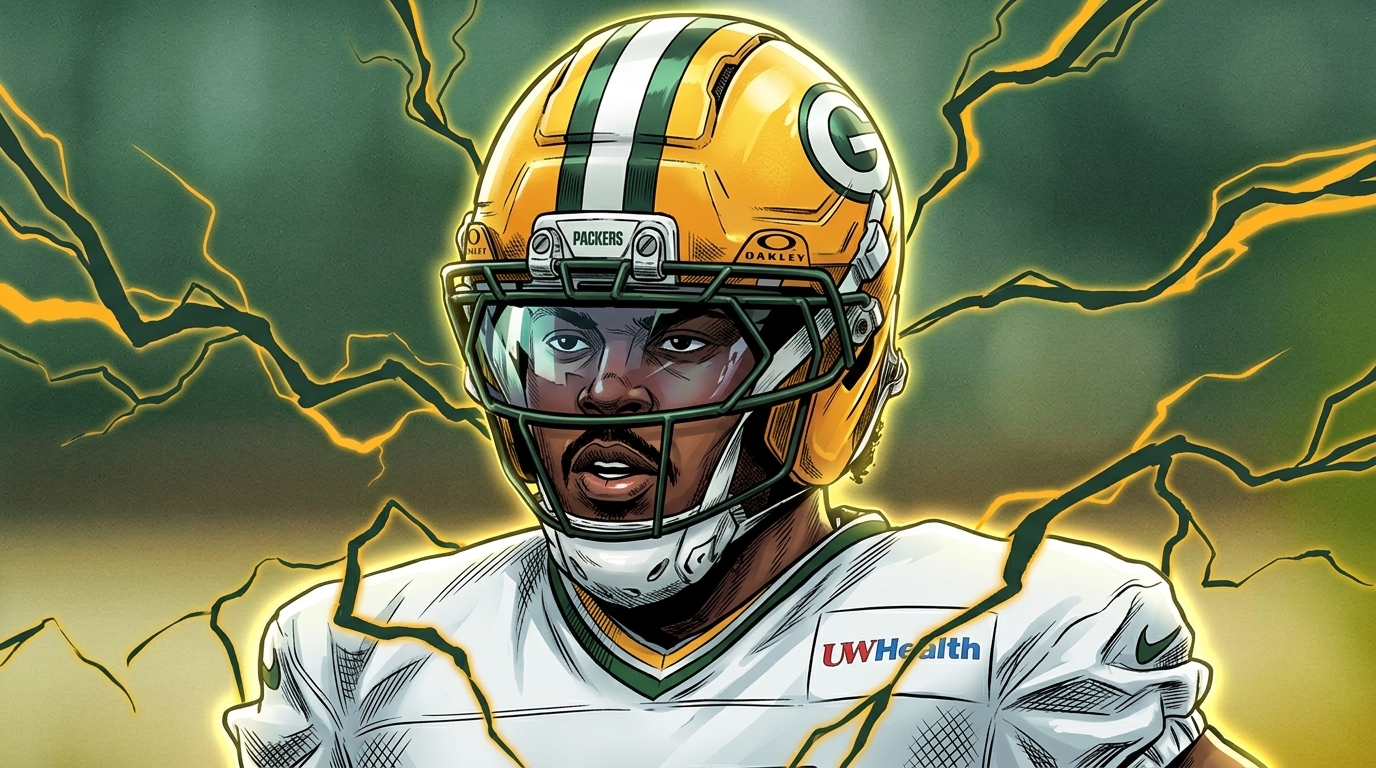

Last season, Justin Herbert absorbed 268 pressures — more than any quarterback in the NFL. He took 54 sacks. He played at an average time-to-throw of 2.90 seconds, 11th slowest among starters. His pressure rate reached 43.3%, third highest in the league. None of that is a coincidence. And none of it points cleanly at one cause.
That’s the problem Mike McDaniel is trying to solve in a parking lot in Costa Mesa, with a two-handled green water ball and no receivers in sight.
What McDaniel Is Actually Changing — And Why
The specific intervention sounds minor until you understand what it eliminates. McDaniel has switched Herbert from a right-foot-forward shotgun stance to a left-foot-forward stance — non-throwing foot forward — and the goal is to remove a false step that was costing him roughly half a second before every release.
Half a second sounds trivial. In 2025, it was the difference between the 11th-slowest time-to-throw in the league and something McDaniel targets at under 2.4 seconds. At 2.4 seconds, you’re beating defensive reaction windows on quick passes and RPO decisions before linebackers can commit. At 2.9, you’re already behind.
McDaniel has been studying this stance variation since 2007, when he was with Kyle Shanahan on the Houston Texans staff. He told reporters the approach isn’t a diagnosis of dysfunction: “It wasn’t like I was trying to fix something that was like, ‘This is broke.’” He called it margin hunting. “I’m trying to find the margins.” Early in his career, only Tom Brady and Brett Favre used the non-dominant-foot-forward stance consistently. It wasn’t taught; it was stumbled onto.
The training protocol is specific. One day per week, no live throwing. Green water ball drills — the two-handled OatesSpecialties ball — footwork only, mechanics encoded into muscle memory before defenders enter the picture. Herbert described the logic simply: “Thinking about it now, so you don’t have to think about it during the game.”
Will Mike McDaniel’s Footwork Change Help Justin Herbert?
The honest answer is: it should help, and the pressure data gives you confidence. What 268 pressures and 54 sacks tell you is that Herbert was living dangerously behind an offensive line that wasn’t protecting him, yes — but also that he was holding the ball long enough to give rushers extra time to arrive. The false step was one contributor to that. Fix it and you’ve addressed a real variable.
But here’s the part that should give Chargers fans pause. Herbert’s interceptions went from 3 in 2024 (under Jim Harbaugh’s system) to 13 in 2025. That’s not a footwork stat. That’s a decision-making stat. And when you look at his play-action numbers — 74.7% completion rate, 1,617 yards, 8 touchdowns against just 2 interceptions — a different picture emerges. Herbert processes reads brilliantly when those reads are pre-determined. The scramble for 498 rushing yards (a career high, mostly under duress) tells the same story: he’s improvising constantly, and he’s good at it, but improvising shouldn’t be the plan.
My sister spent three hours arguing with me over text that the interception jump was scheme-based, not mechanical, and she wasn’t wrong. There’s real evidence that Herbert’s processing under pressure — not his release point — drove the turnover spike. If the bottleneck is cognitive, teaching his feet something new doesn’t move the needle on what matters most.
https://x.com/alexinsdorf99/status/2061916473275175168
The Matt Ryan Comp Is Real — With One Catch
McDaniel is drawing on a specific proof of concept here. Matt Ryan in 2016 — the year McDaniel was working under Shanahan in Atlanta — posted 4,944 passing yards, 38 touchdowns, and a 117.1 passer rating. He won MVP. The system, the mechanics coaching, and the play-action architecture Shanahan ran that season became a template. Tua Tagovailoa in 2023 led the NFL in passing yards (4,624) running a version of the same offense under McDaniel in Miami.
What Atlanta did to Ryan’s mechanics and decision bandwidth in 2016 was part of what made that offense historic. The point isn’t just what the system does for a quarterback — it’s what the system does when the quarterback is fully operating inside it, not reacting to chaos.
Herbert is more talented than Tua. He’s a different physical profile than Ryan. The comp is real but it’s not automatic — Ryan came into that system already working on the stance; Herbert is learning it from scratch in May and June, before training camp, with no pads and a water ball.
What the Data Says Herbert’s Real Problem Is
The resolution I keep landing on: the footwork fix addresses a genuine variable, and probably not the primary one.
The data here is unambiguous on at least one thing — Herbert holds the ball too long, and the consequences are catastrophic. Getting his time-to-throw under 2.4 seconds would reduce sacks, reduce pressure opportunities, and give the offensive line fewer windows to fail. That’s worth doing even if it isn’t the whole answer.
What it doesn’t fix is the read-progression speed on non-play-action dropbacks, where the INT data is loudest. McDaniel seems aware of this. “Ultimately trying to take advantage of the space that defenses gives,” he said. That sounds less like mechanical coaching and more like a philosophical reframe of how Herbert is supposed to see defenses — which is a different project than stance work, running in parallel.
Herbert’s buy-in is total. “Mike just talked about how he saw the quarterback position being played and why he thought that was the best way. Jumped on board,” he said. The emphasis, per Herbert, is on getting the ball out before receivers are even looking for it — timing throws, not reaction throws. That’s a system-level change on top of the mechanical one.
What It Means for the Chargers’ 2026 Season
If both pieces land — faster release, cleaner reads inside the system — Herbert at 28 with McDaniel’s infrastructure could be a genuine MVP conversation. The talent has never been in question. The pressure absorption and turnover numbers from 2025 were symptoms of a quarterback playing outside his optimal environment, not a ceiling.
If only the footwork lands and the decision-making doesn’t sharpen, the Chargers get a faster version of last year’s Herbert: more efficient on quick passes, still vulnerable when coverage holds and the pocket collapses. Functional improvement, not transformation.
The split matters enormously for Los Angeles. One outcome makes them a contender. The other makes them a 9-win team with a talented quarterback and an interesting offense. For more on the AFC West picture as training camp approaches, check our NFL coverage.
McDaniel isn’t fixing something broken. He’s hunting fractions of seconds in a sport where fractions determine everything. Whether the fractions he’s hunting are the right ones — that’s the question that won’t be answered until live bullets start flying.