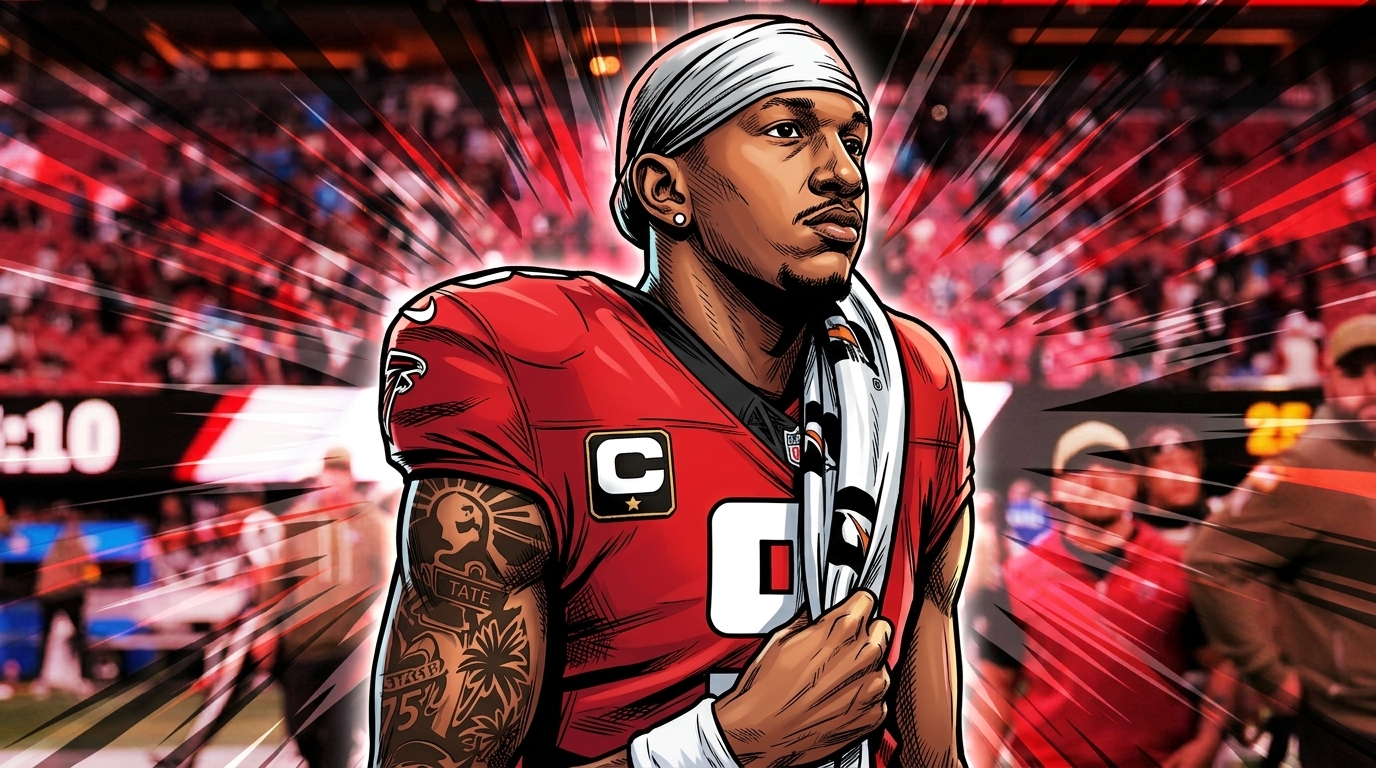

The Atlanta Falcons used a top-10 pick on Michael Penix Jr. in 2024, then watched him suffer a partially torn ACL, then signed Tua Tagovailoa to compete with him — and now, seventeen days before training camp opens, no one in the organization will tell you who their starting quarterback is. This is not a competition. It is a confession that nobody made a decision, and now the calendar is forcing the issue.
https://x.com/AdamSchefter/status/2031106705187074283
The venture capital logic here is hard to miss. You take a flier on one promising asset; when it cracks, you don’t double down — you diversify. Penix was the 8th overall pick, the franchise declaration, the guy you commit to through the bad days. Then Week 11 of last season happened, a partially torn ACL against Carolina, and Atlanta apparently decided that waiting for their investment to recover was for suckers. So they called Tua Tagovailoa, who the Dolphins had just released while still on the hook for his $54 million guaranteed salary, and signed him for the veteran minimum: $1.215 million. Miami writes the real check; Atlanta gets the option.
It is, on pure financial grounds, one of the shrewder moves of the offseason. It is also, as organizational philosophy, completely incoherent.
The portfolio strategy works in tech. You buy ten companies, nine fail, one exits at a hundred times your money, and you tell the story about the one. It doesn’t work at quarterback because you can’t run two quarterbacks simultaneously; eventually you have to hand one of them the ball. The Falcons are in the middle of the pitch deck right now, slides full of optionality and upside, with camp starting in seventeen days and neither man cleared for full practice.
Kevin Stefanski, in his new role as head coach of a situation, offered this in June: “not giving out any jobs in June.” This is technically true of every NFL team in June, but Stefanski said it as though it explained something, as though the calendar rather than the org chart is what’s holding up the announcement. Quarterbacks coach Alex Van Pelt was more candid about the actual problem: “It’s tough to have a competition when both guys aren’t competing at the same level right now.” Penix is doing 7-on-7 only; he says he expects clearance by camp, but Stefanski has declined to confirm that. Stefanski says he’ll be “very intentional” about splitting first-team reps drill by drill once camp begins.
The words “very intentional” are doing extraordinary work in that sentence. They mean: we have no damn idea.
To be fair, and the counterargument deserves a moment, Tua Tagovailoa is a reasonable insurance policy for a team that just traded away its 2026 first-round pick and cannot afford another lost season. If Penix’s knee doesn’t hold, you don’t want to find out in Week 3 that your backup is a guy who couldn’t win the job in camp six weeks earlier. Signing Tua for minimum wage while Miami covers the rest is a sensible hedge.
The problem isn’t the signing. The problem is what comes after it, which is apparently nothing. Stefanski said his plan has “always been to create competition across our roster.” Both quarterbacks are left-handed, which at least ensures the offensive line won’t have to adjust their footwork. Beyond that, the plan appears to be: show up in late July, split reps “intentionally,” and let the process reveal the answer. The process. In seventeen days. For a position the franchise took in the top ten two years ago.
Penix put it cleanly: “I’m running my own race. I can’t look into another lane.” This is a gracious thing to say about a competitor who arrived because your employer lost faith in your knee. It is also the quote of a man who understands the situation with more clarity than anyone in the front office is currently demonstrating.
I’ve watched the Cleveland Browns’ version of this situation play out for the better part of a decade — the sunk cost in one guy, the desperation signing of another, the manufactured optimism about “competition” that everyone understands means “we panicked.” The difference is that Cleveland’s quarterbacks were genuinely bad; the Browns had reasonable grounds for looking elsewhere. Atlanta drafted Penix knowing who he was. They made the commitment. Then they got scared and hedged. The Browns were incompetent. The Falcons chose this.
Kirk Cousins is gone. Two left-handed quarterbacks are standing in different practice fields seventeen days before everything starts, and the head coach is being intentional about something he hasn’t defined yet. The market will resolve this question because the market always does. The Falcons are just hoping it doesn’t cost them another season to find out the answer they should have known when they made the pick.
QB competitions where front offices refuse to commit always end the same way: eventually someone takes a hit, or throws an interception at the wrong moment, and the decision gets made by circumstance instead of conviction. The Falcons have constructed exactly that situation, dressed it up as a plan, and are now explaining the dress to the media. Seventeen days.