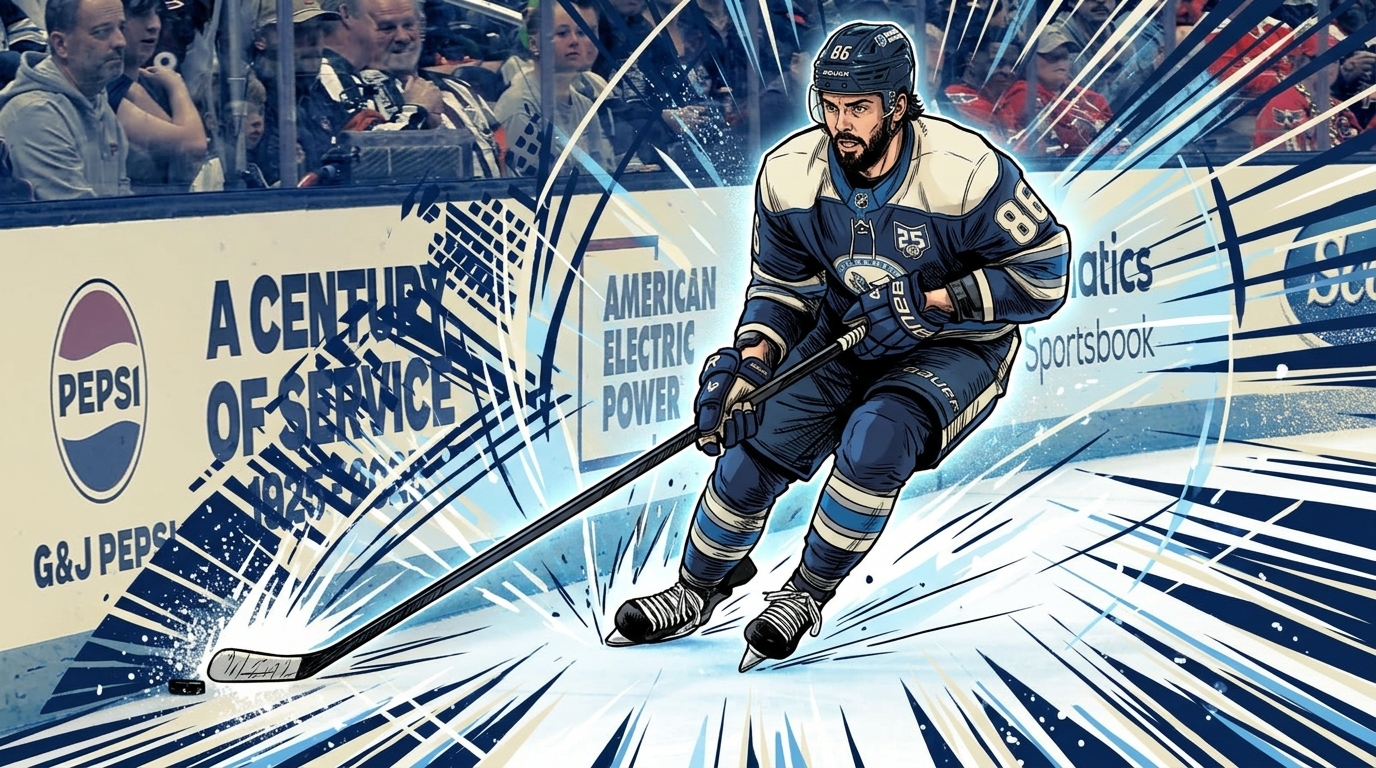

On July 4, Nico Hischier — the New Jersey Devils captain, first-overall pick, franchise cornerstone currently under contract at $11.7 million per year — waded into the Aare River near a dam in Bern, Switzerland and helped pull a family of four off an inflatable rubber raft, and the entire NHL did not find out about it until five days later because Hischier did not tell anyone.
He joined police and bystanders at the Engehalde weir footbridge after a family with two adults and two children became unable to exit the dangerous dam area on their own. Everyone was guided to safety. Nobody was hurt. When asked about it, Hischier said: “In this situation, everyone is grateful for support, and we were all relieved that no one was hurt in the end.” That’s it. That’s the statement. The franchise center who led the NHL in faceoffs taken last season, who won 55.8% of them and broke the Devils’ single-season faceoff record, apparently applies the same operational logic to river rescues as he does to face-offs: be where you’re supposed to be, do what the situation requires, don’t miss.
Three days before the rescue — July 1 — Hischier had signed a five-year, $58.5 million extension with New Jersey. $11.7 million per year. For context, the going rate for a franchise center at the top of his age curve is somewhere north of $13 million AAV; Hischier left somewhere between $7 and $12 million on the table over the life of the deal. His explanation was not complicated: “My biggest goal is winning a Cup with New Jersey, and that hasn’t changed.” He added that Jersey had become home, and that he wanted to be “part of the solution and not run away.”
This is where you are legally permitted to be cynical. The cynical read is that Hischier’s brand of conspicuous restraint — discount contract, river rescue, no-comment modesty — is itself a form of production, the most efficient personal branding operation in professional sports because it requires no apparent intention at all. The counter-argument is that this is an insane thing to say about a man who waded into a Swiss river dam on a holiday weekend and then didn’t mention it.
The captain archetype that actually works in professional sports looks something like a reliable plumbing system; you only notice it when it fails, and its value is precisely that it doesn’t draw attention to itself. Most franchise players operate more like decorative fountains — expensive, impressive, pointed at, designed to be seen. Hischier signed below market and said he wanted to be part of the solution. Then he went home and was, immediately, part of a solution, and did not feel the need to frame this as a narrative. The plumbing model is rare not because players are bad people but because the incentives point everywhere else; the market rewards the decorative fountain, the highlight, the leveraged exit, the public maximalism of making your contract decision feel like an event.
The story spread when Devils beat writer Amanda Stein shared it on July 9 and described it as “the most Nico story of all time.” She is correct. It promptly went everywhere.
https://twitter.com/Sportsnet/status/2075222617225621558
Compare this to the way other stars have managed their public exits and entrances — the Ovechkin re-signing, for instance, generated its own media infrastructure — and the contrast is not that Hischier is better than other players; it’s that he appears to be operating from a different set of premises entirely. The question isn’t whether this is admirable. The question is whether a professional athlete can sustain this posture in an environment specifically engineered to monetize every surplus unit of attention. The answer so far, through six seasons as captain, 82 games last year, a franchise faceoff record, and one July river rescue: apparently yes. For more, there’s NHL coverage here if you’d like to watch whether this holds.
The most Nico story of all time will end the same way the contract did, and the same way the rescue did: with him already somewhere else, working on the next thing, mildly surprised that anyone is still talking about it.