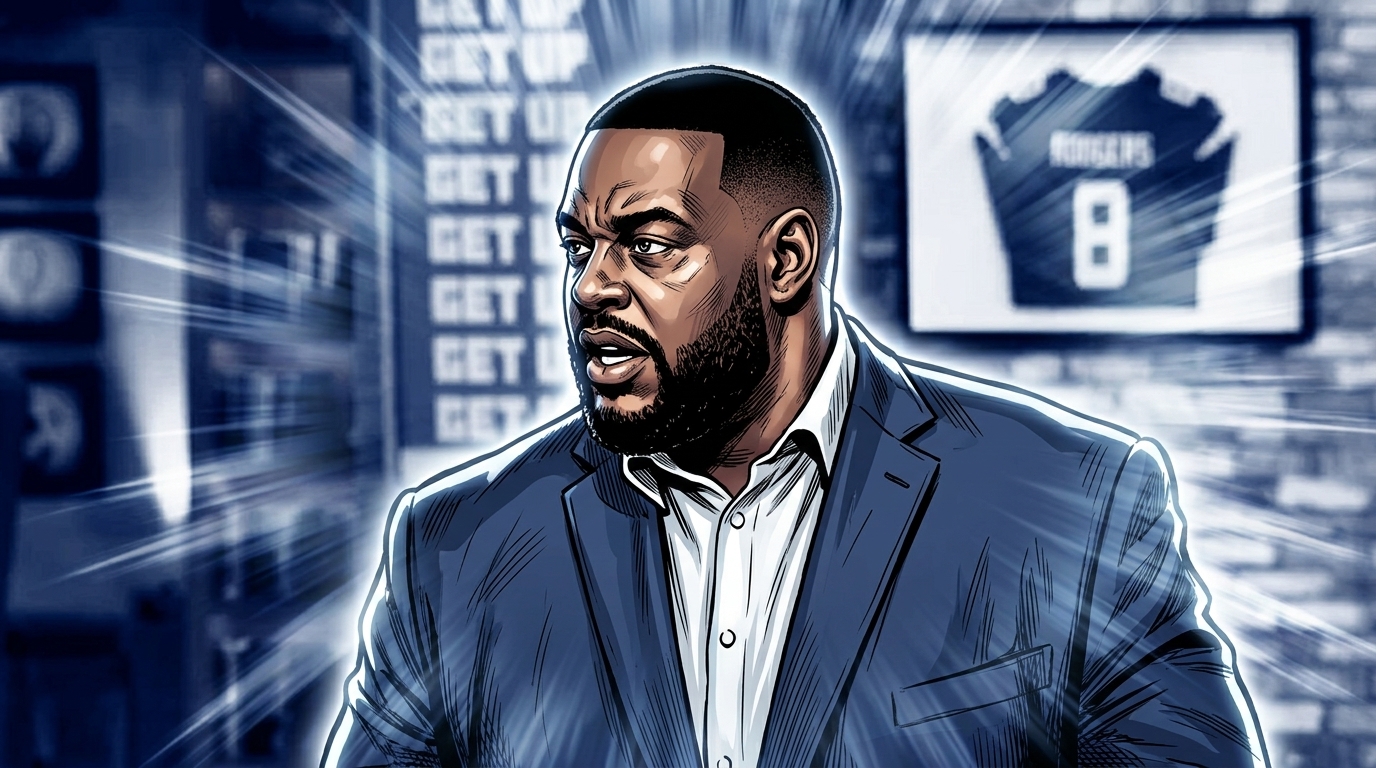

Damien Woody spent fifteen years making himself one of the most listenable people in sports television, and when ESPN finally told him it was over, the best explanation the network could produce fit into three sentences of HR fog about “organizational structure.” I spent college reading language exactly like this (labor politics was basically what my poli-sci degree was for), and I can tell you what it means when a company gets this vague about cutting someone loose: they’ve decided you don’t get the real reason.
Here is what actually happened. Woody, a two-time Super Bowl champion offensive lineman who won his rings with the Patriots before finishing his career with the Jets in 2010, will not be retained by ESPN when his contract runs out. ESPN and Woody discussed an extension and couldn’t reach one, and he’s choosing to stay on air through late August rather than walk out the door early, which tells you something about the guy: fifteen years as a regular on Get Up, First Take, Fantasy Football Now, and SportsCenter, and his instinct on the way out is to finish the shift. “Being at ESPN for 15 years, it’s been an absolute joy,” he said, which is either the most professional thing a departing employee has ever said about a company that wouldn’t keep him, or proof that ESPN got lucky with who it chose not to extend.
Woody said his own goodbye on X, and it’s worth reading in full because it’s the opposite of everything ESPN gave the public:
https://x.com/damienwoody/status/2087599110345953719
That’s a man thanking his colleagues and naming his own speech impediment as part of his proudest professional accomplishment. ESPN, meanwhile, offered this from chairman Jimmy Pitaro in a staff memo: “Over the past several months, we’ve made significant progress integrating the NFL assets that we acquired into ESPN. Throughout this process, we have taken the time to carefully evaluate our collective teams, resources and organizational structure to best position us for the future. As a result, we had to make some difficult decisions about job impacts.” He added that “most of the job impacts are tied to the acquisition,” and that’s the whole explanation: no names, no criteria, just corporate bullshit about a deal that folded NFL Network, RedZone distribution, and NFL Fantasy into ESPN and handed the NFL a 10 percent stake in the company that now employs the reporters it used to compete against for scoops.
I want to be careful here, because it would be easy to invent a villain where the record doesn’t support one. ESPN never called Woody’s exit a “redundancy”: that word only shows up in outside reporting, and only about Tom Pelissero, whose NFL-insider beat now sits awkwardly next to newly-extended insiders Ian Rapoport and Adam Schefter. That’s reporters doing math, not ESPN admitting anything. What ESPN actually said about the wave that also swept out Ryan Clark, Cam Newton, Karl Ravech, Bart Scott, and Charles Davis was the same three sentences of nothing it gave everyone else.
And that’s the part that gets me, because ESPN clearly knows how to do this with some dignity when it wants to. Ryan Clark found out he was done while he was sitting on the set of NFL Live, live, on a Monday. Woody got advance notice, a graceful runway to late August, and the chance to write his own send-off instead of having ESPN write it for him. A network capable of handling one departure like a human resources case study and another like a public execution doesn’t get to plead helplessness about the vague part. ESPN knows how to tell someone why, and it knows how to give someone time. It just chose not to do either for a fifteen-year employee, and the silence about the actual criteria (who stays, who goes, what “organizational structure” even measures) isn’t an accident of corporate caution. It’s a choice about who’s worth the effort of an honest conversation.
It isn’t a total wasteland out there for the people who got the bad version of this. Charles Davis landed on his feet, set to be CBS’s lead college football analyst alongside Brad Nessler this fall, which is more than plenty of downsized industries can say. And ESPN isn’t the only network fluent in this dialect: CBS ran a nearly identical playbook with Tony Romo, quietly handing JJ Watt the No. 1 booth while calling Romo’s status “indefinite” instead of just saying what it meant. Woody’s next stop isn’t public yet. Given fifteen years of build-up and a going-away message that name-checked God before it name-checked bitterness, I’d bet on him landing somewhere that deserves him.
ESPN will keep calling this “organizational structure” for as long as reporters let them get away with it. The rest of us can just call it what Ryan Clark found out live on television and Damien Woody found out with enough notice to say a proper goodbye: the same decision, delivered to two different people like they belonged to two different companies.