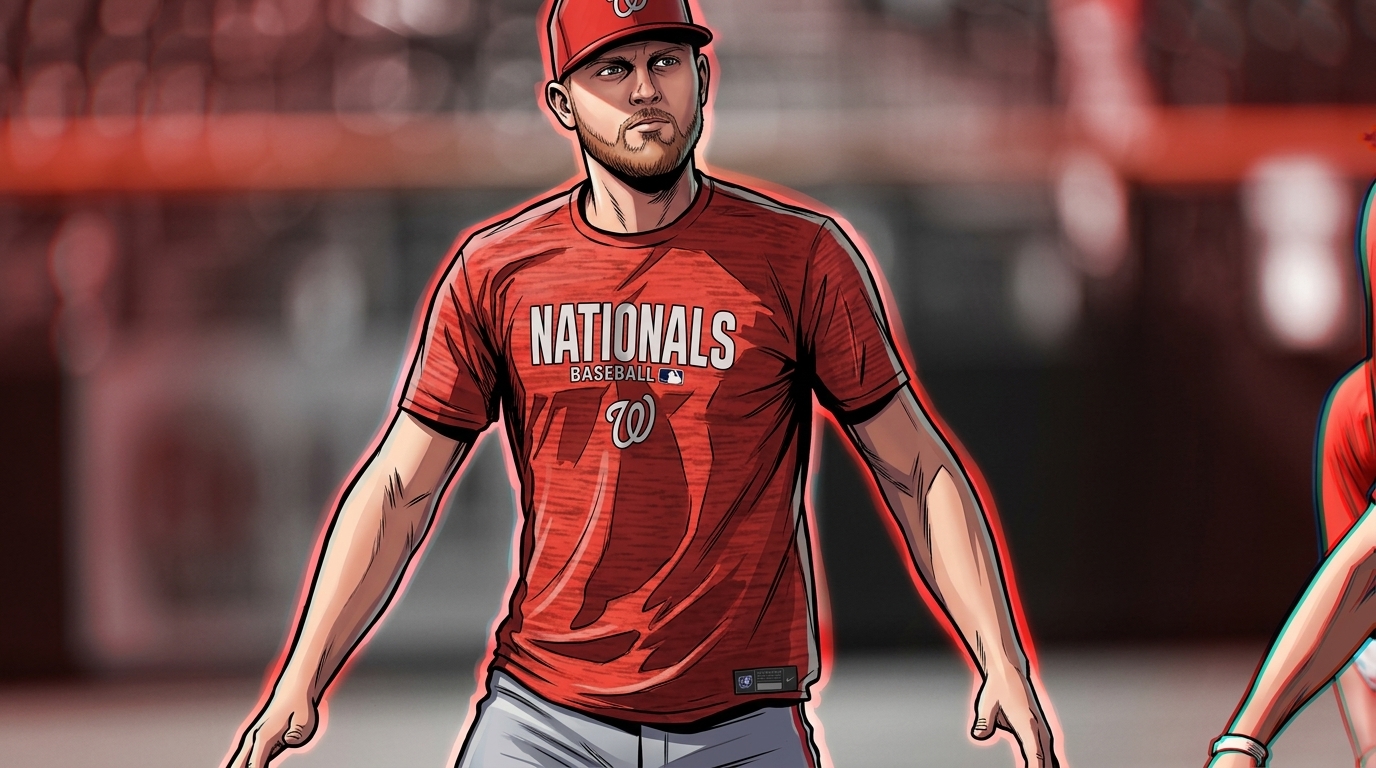

We’ve been rehashing the Connelly Early-Curtis Mead trade since the news broke earlier today, and the detail everyone keeps skipping past is that Curtis Mead has now changed organizations three times since March. Designated for assignment by the Chicago White Sox in spring training, claimed by the Washington Nationals for a catcher within days, and now shipped to the Red Sox as the return for a big league left-hander — that isn’t the transaction history of a player both front offices value the same way. It’s the history of a player one organization keeps deciding it can do without. CBS Sports handed Washington an A on the trade grade and Boston a B, and the public reaction has split along similar lines, part of the league thrilled for the Nationals and plenty of Red Sox fans convinced they got fleeced. (Trade grades published within hours of a deal are usually reviews of the headline return, not the roster context behind it, and this one was no exception.) That reads like a disagreement about talent. I don’t think it is. I think it’s two front offices admitting, in different ways, how urgently each one believes it needs to win right now, and only one of them is being straight about it.
Start with why Washington made the call, because it’s the whole argument in miniature. Mead was hitting .233 with three home runs across stints in Tampa Bay and Chicago last season when the White Sox designated him for assignment, a fringe roster afterthought by every measure that mattered at the time. The Nationals claimed him, sent catcher Boston Smith back to Chicago, and watched him hit .254/.352/.500 with 17 home runs over 87 games, a 12 percent walk rate and a swinging-strike rate under seven percent that suggests the plate discipline was never the fluke. That’s the version of Mead that Washington is now trading away, four months and one waiver claim later, for an injured left-hander. (Three organizational changes in four months for one 25-year-old infielder is not, generally, how a team treats a player it considers part of next year’s core.) If the Nationals believed in the breakout the way the raw numbers suggest they should, they’d be building around it. Instead they’re treating baseball’s highest-scoring offense and a surprise playoff push as too fragile to survive on offense alone, betting that rotation help beyond Foster Griffin and Cade Cavalli is the harder thing to find in August.
Word of the swap came from Jeff Passan first, as it usually does:
https://twitter.com/JeffPassan/status/2081216002952454222
The particulars matched what ESPN and NBC Sports had both been circling for hours: Early to Washington, Mead to Boston, a straight swap with no other names attached. It’s a clean trade in that sense, which made the grading discourse afterward feel almost beside the point.
Boston’s version of urgency looks different on paper and rhymes underneath. The Red Sox have ridden a long winning streak built almost entirely on pitching, with Garrett Crochet and Ranger Suarez up top and Payton Tolle and Jake Bennett stacked behind them, while ranking near the bottom of the majors in runs scored and watching Trevor Story, Marcelo Mayer and Isiah Kiner-Falefa all land on the injured list at once. Boston Red Sox manager Chad Tracy didn’t dress it up: the club had “a clear and obvious need about how our team improves offensively,” and Mead is expected to hit in the top half of the order almost immediately. Early, for his part, is currently a name on the injured list with left elbow inflammation, not a pitcher throwing bullpens. Reports describe it as inflammation only, nothing torn, which matters, but it also means Boston is answering a real and specific lineup gap with a hitter whose best 87 games happen to be the only 87 games anyone has liked him for. Tolle, who came up through the minors alongside Early, has said he assumed the report was fake until he saw the tweet himself, then called his former teammate to stay in touch, a detail that tells you more about how fast this business moves than any trade grade does.
The fan reaction has been about as split as you’d expect, and about as unreliable a guide to who won as fan reaction usually is. “There’s no shot the Red Sox paid that much????” one fan posted, with a disbelief that assumes Boston’s roster is more precious than it might actually be. Others called it an ideal pairing. JustBaseball’s read is probably the most accurate one out there: the “lopsided” framing is overstated, since both sides dealt from organizational strength instead of desperation. This trade, and this week’s other deadline moves, will keep getting graded on names and prospect pedigree when the more useful question is what each front office actually believes about its own window.
I don’t think either grade answers the right question, and the CBS split mostly confirms it by scoring assets instead of intent. Washington’s intent is legible: win with the offense that’s already working, and stop asking a rotation short on proven arms beyond Griffin and Cavalli to hold up through October. Giving up a player they’d owned for four months, for the second time, to fix that reflects conviction — a front office that already decided this year’s roster is worth spending on, not one drifting through the deadline. Boston’s intent is muddier. Having enough pitching depth to deal some away isn’t the same as being desperate, but turning that surplus into Curtis Mead specifically, instead of into a more proven bat, reads like a front office solving for the headline of an offensive upgrade instead of the actual shape of the problem: a lineup that ranked near the bottom of the sport even before three infielders got hurt. Tracy’s “clear and obvious need” is real. Whether four months in Washington is enough evidence that Mead is the answer to it is a separate question, and Boston is currently answering with more conviction than the sample size has earned.
Watch what Washington does with the rotation spot it just opened up, and watch whether Mead actually climbs into the top-half-of-the-order role Tracy has promised him — that’s where this grade either holds up or falls apart. The rest of deadline season will produce louder trades than this one. It probably won’t produce a cleaner test case for the difference between a front office that knows what it’s doing and one that’s still finding out.