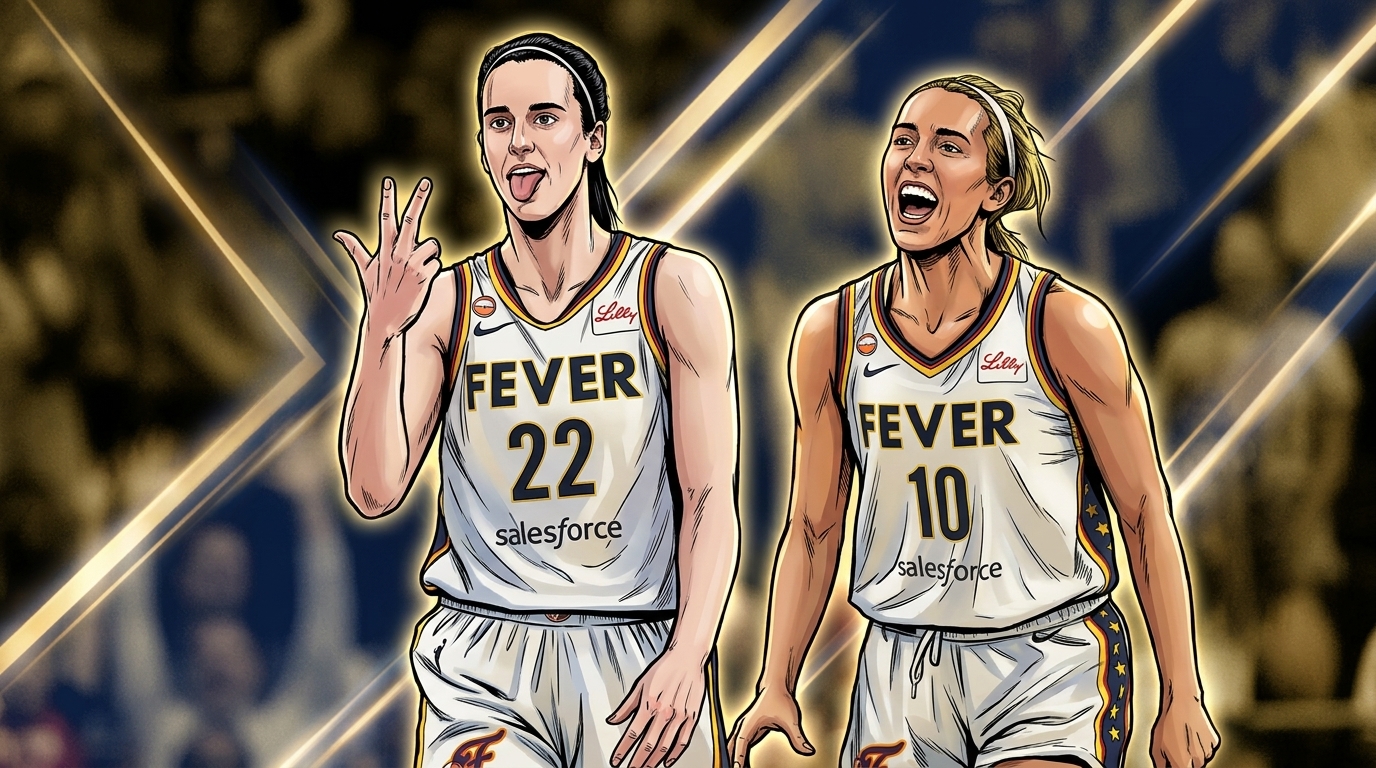

We’ve been waiting for this moment without quite knowing we were waiting for it. The draw was already established — the ratings, the sellouts, the 2.49 million viewers who tuned into ABC for Clark versus Bueckers on opening weekend. What we hadn’t gotten yet was the moment where the legend snaps into focus. Where the protagonist earns the word.
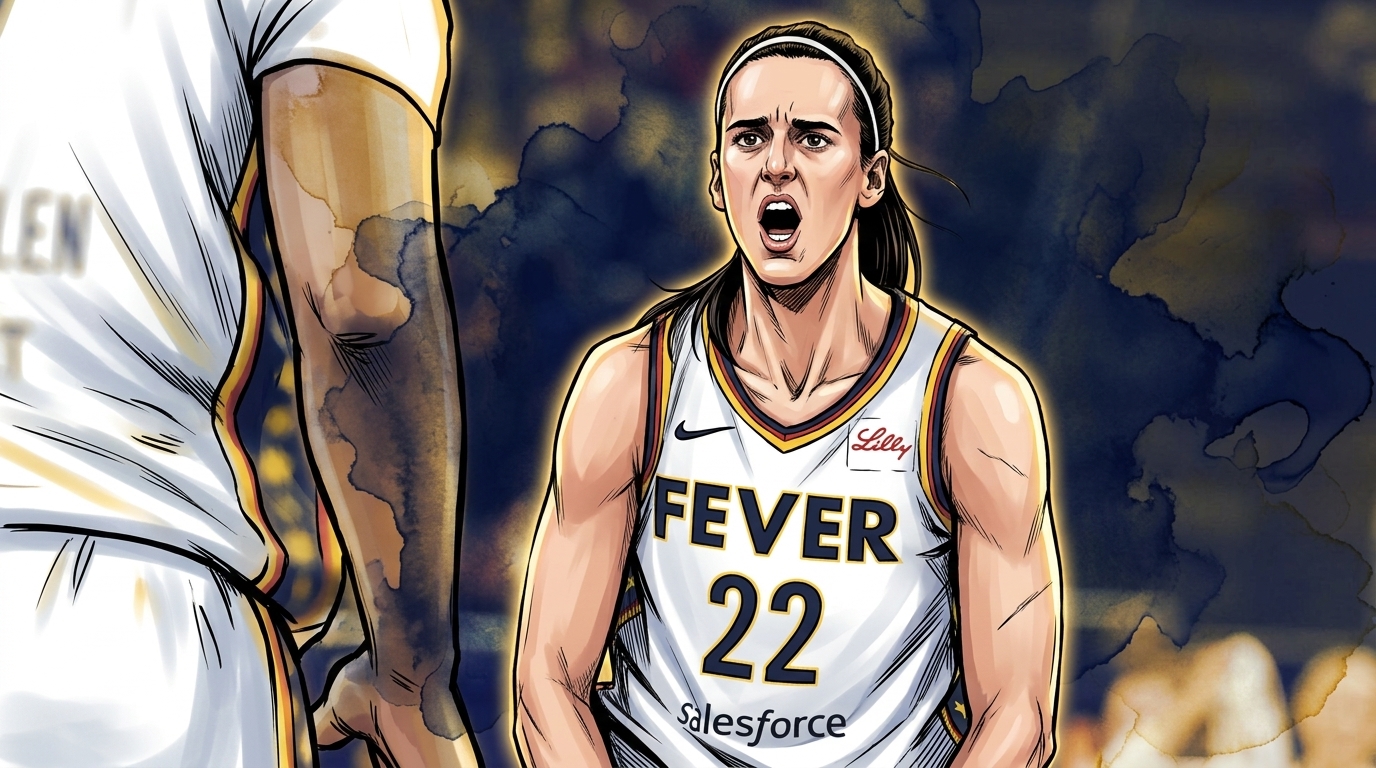
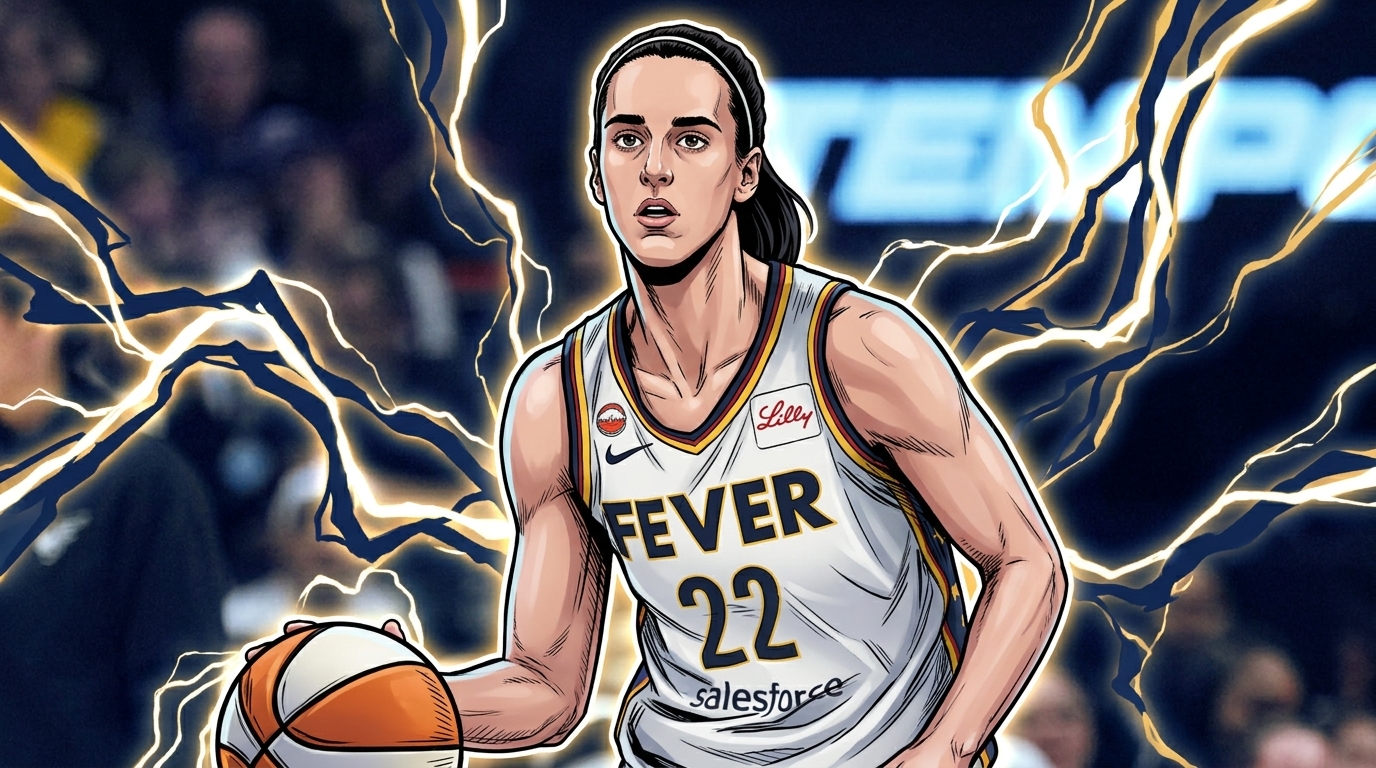
On June 8, 2026, with 1.2 seconds left in a game the Indiana Fever had nearly given away, Caitlin Clark caught a cross-court inbound pass from Sophie Cunningham and released a 31-foot three-pointer over the Washington Mystics defense. It went in. Fever 78, Mystics 76. First career game-winner.
The shot was the exclamation point. The reaction was the paragraph.
When Did Caitlin Clark Hit Her First Career Game-Winner?
Caitlin Clark hit her first career game-winner on June 8, 2026, burying a 31-foot three-pointer with 1.2 seconds remaining to lift the Indiana Fever to a 78-76 victory over the Washington Mystics at CareFirst Arena. It was the first go-ahead basket of Clark’s career in the final minute of a game.
The Shot, the Pass, and the Play That Actually Worked
The setup for this shot had a chaotic origin story that resolved cleanly. Sophie Cunningham threw a cross-court inbound pass to Clark — the kind of delivery that looks improvised on replay and has commentators reaching for the word “rogue.” Cunningham herself posted on Instagram suggesting they’d gone off-script. She clarified on X hours later that it was exactly what the coaching staff drew up. (Which is either true, or the best possible version of the story, or both.)
Clark caught it, gathered, and shot from somewhere between 31 and 32 feet. CBS Sports confirmed this as her first career game-winner — the first time she had put Indiana ahead in the final minute of a WNBA game. She had 1.2 seconds to work with. She used roughly 0.8 of them.
Context that matters: the Fever had led by 17 at one point. Then they didn’t. Sonia Citron hit two free throws with 4.3 seconds left to put Washington up 76-75, and CareFirst Arena had the quiet of a building that had just watched something flip. Then Cunningham’s pass found Clark, and it flipped back.
Clark’s final line — 19 points, 5 assists, 3 rebounds, 4-of-10 from three, 5 turnovers — is the stat sheet of a player having a complicated game that ends in the best possible way. (That fifth category, the turnovers, will not appear in any highlight package. The shot and the turnovers coexist. That’s the more honest account of the evening.) Aliyah Boston put up 14 points, 10 rebounds, 3 assists, 2 steals, and 2 blocks and was quietly extraordinary. The Fever are 6-5. The Mystics fell to 4-6.
What the Broadcast Moment Means for the WNBA’s $3.1 Billion Deal
The WNBA’s new media rights structure — $3.1 billion total, $200 million annually against the previous $50 million — was always built on a premise: that the product would keep delivering moments worth paying for. Per Just Women’s Sports and Yahoo Sports, the new deals with Disney/ESPN/ABC, NBC, Amazon, CBS, ION, and USA Network represent a 4x increase in annual rights value. All 44 Indiana Fever games are on national television in 2026.
That last number matters here. A buzzer-beater from the league’s marquee player, on the road, in a game she nearly lost — this is exactly the content that justifies the rights investment. If you’re a network executive running numbers on what a $200 million annual commitment to women’s basketball looks like as a content proposition, June 8, 2026, is a chapter in your pitch deck.
The shot also lands at a specific moment in Clark’s public narrative. TIME named her to the 100 Most Influential People in Sports 2026 list. She was already the draw — the player who moved tickets, moved ratings, moved the needle on every metric the league tracks. What she hadn’t been yet, narratively, was a protagonist. Draws get featured. Protagonists get legend-building moments. The categories aren’t the same, and this shot crossed the line between them.
The Reaction Layer: Bird, Cunningham, the Internet
Sue Bird’s reaction in the NBC broadcast booth — measured, composed, a quiet smile while Cheryl Miller leapt and LaChina Robinson cackled — went viral faster than most of the replays, per Yahoo Sports. (This is its own story: Bird played 21 WNBA seasons, won four championships, and has seen versions of this moment from multiple angles. Her calibration of how big this was is probably the most informed one in the building.) Miller’s physical reaction and Robinson’s laugh are the correct responses. Bird’s calm is the one that means something.
On social media, the Indiana Pacers X account posted “Caitlin Clark called game 😮💨” — notable mostly because it represents the NBA’s sibling franchise acknowledging that the relevant sports news in Indianapolis on Sunday evening came from the other arena. Lexie Hull’s Instagram story — “oh em gee” — is the player reaction that doesn’t try to editorialize.
Cunningham’s Instagram/X pivot from “we went rogue” to “we ran it exactly right” is the content gift that keeps giving. Either she genuinely thought they’d improvised and then rewatched the film, or the play looked improvised because Clark’s release looked improvised, or — most likely — when a play works from 31 feet at the buzzer, everyone involved wants to claim they drew it up.
Clark signed autographs for kids after the game. This detail appears in multiple reports and is included here because it is genuinely the kind of thing that doesn’t require analysis. Some things are just right.
The Broader Frame: From Ratings Engine to Protagonist
Two years of watching Clark has established a pattern — the Fever’s rocky stretch and the bench controversy last week generated real debate about whether Indiana had figured out how to use her, and the Commissioners’ Cup matchup earlier this week was treated as a referendum on the league’s two biggest personalities sharing a stage. The throughline in all of it: Clark as the subject that the league’s narrative keeps returning to.
What June 8 changes is the verb tense. The question was always whether Clark would have a moment that felt definitional — not just “Clark was excellent” but “Clark did the thing you remember.” Every player in the conversation about all-time greats has a shot, a play, a sequence that functions as shorthand. Jordan over Ehlo. Bird stealing the ball. The specificity is the point. You can describe the action and people who weren’t watching know exactly what you mean.
A 31-foot game-winner over a defense that knew she was going to shoot, with 1.2 seconds and a lead already surrendered — that is specific enough. It has a location (CareFirst Arena, Washington D.C.), a date (June 8, 2026), and a mechanics profile (catch, gather, release) that people will reconstruct for years.
What to Watch for Next
The Fever at 6-5 are in a playoff race, not a coronation. The five turnovers on Sunday aren’t incidental — they’re a version of Clark that still exists in games where the margin goes sideways. The question for Indiana’s coaching staff is whether a roster that nearly gave away a 17-point lead can sustain the kind of efficiency required in a league that has genuinely closed the gap on the Fever’s 2025 version.
For the league, the question is simpler: does a moment like this build toward something cumulative? The broadcast infrastructure is in place. The rights partners are all in. The Fever are nationally televised 44 times. What the WNBA needed, beyond the infrastructure, was the content.
https://twitter.com/IndianaFever/status/2064192925500633544
Clark gave them one version of it Sunday night. The 32 feet of air between her hands and the basket held for just long enough — and then it didn’t have to anymore.