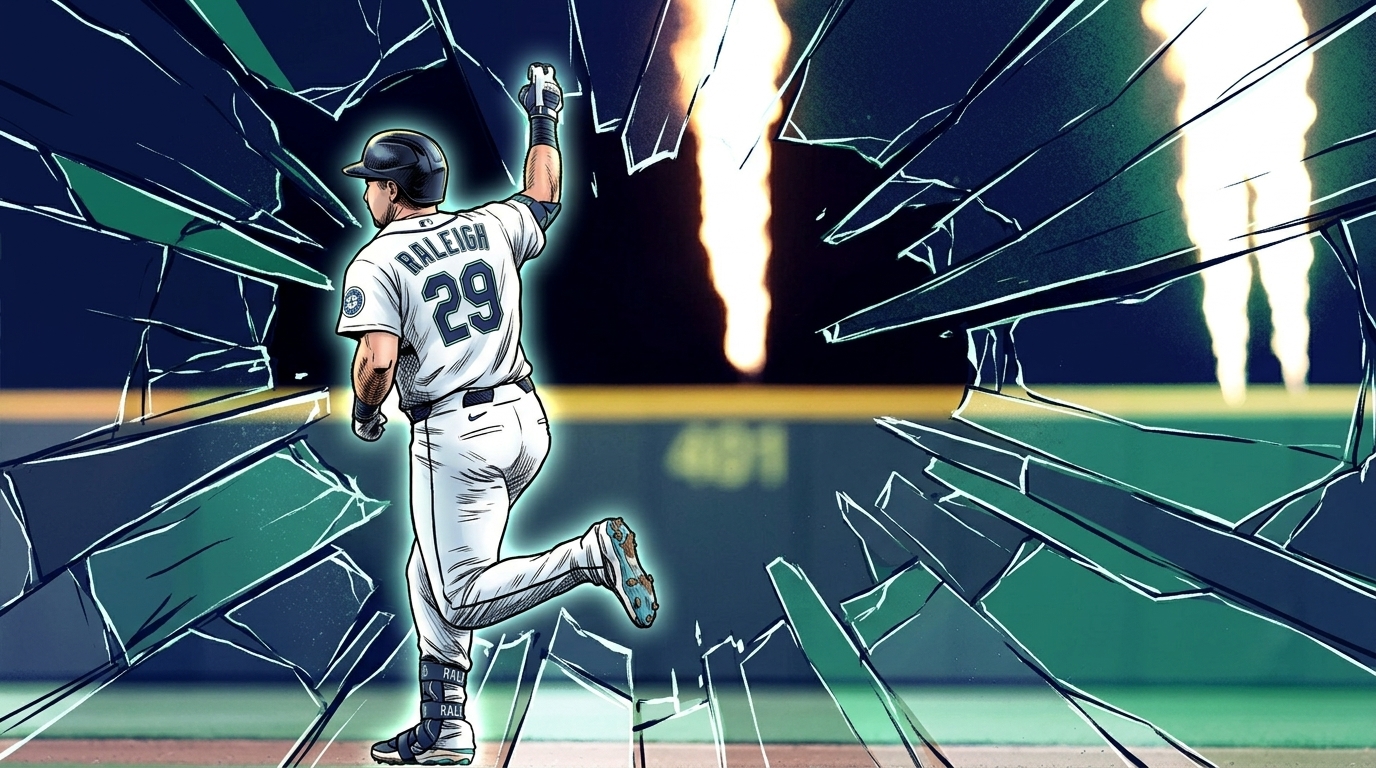

Somewhere in an MLB server room sits a system precise enough to clock a baseball’s location to within a quarter inch, and on the night it mattered most, nobody pointed it at the ball. I watched Pete Alonso hit a shot down the left-field line that should have put Baltimore ahead of New York for good, and I watched MLB’s own replay office admit, on the record, that it had no idea whether the thing landed fair. The ball wasn’t some unsolvable mystery. The camera that could have settled it didn’t exist at that ballpark.
Rewind to the sequence, because it deserves the full accounting before anyone reaches for “that’s just baseball.” Alonso already had a home run in the book, an opposite-field shot off Will Warren in the third, his 29th of the year, part of an 11-game streak that has him hitting .373 in August. Score tied 3-3 in the seventh, Alonso squares up a Brent Headrick pitch and sends it down the line. Third base umpire Will Little calls it foul in real time. A crew chief review follows, and the call stands. Alonso himself said afterward he was told that overturning it requires two confirming camera angles, and the one angle that could have settled this, the camera trained straight down the left-field line, wasn’t available at this ballpark. Alonso strikes out on the next pitch. New York scores twice in the eighth. The Yankees win 5-3, their third straight, and the Baltimore Orioles spend the rest of the night doing math on a season that just got smaller.
The MLB Replay Operations Center’s statement is the whole scandal in one sentence:
“After viewing all relevant angles, the Replay Official could not definitively determine that the ball left the playing field in fair territory.”
Not “we reviewed it and it was foul.” “We didn’t have enough to know.” A review that ends there isn’t a review. It’s a shrug with a title.
A shrug is defensible when the evidence genuinely doesn’t exist. It’s a lot less defensible when the evidence exists fifteen feet away. Orioles manager Craig Albernaz said as much afterward:
“It’s 2026. Technology has advanced pretty good. I don’t know why we don’t use it.”
He’s describing an iPad. Orioles staff had their own real-time ball-tracking readout showing the ball fair, in the same building, at the same moment the league’s official reviewers were staring at a hole in their own coverage. The Orioles dugout iPad already had the answer. MLB’s replay center didn’t have the technology to get this right, and per BaltimoreBaseball.com’s full account of the loss, the correct answer was sitting in the building the whole time.
Alonso’s own proposed fix is almost embarrassingly modest: “I feel like, for us, we could easily have a laser or a camera that shoots straight up.” That’s not a moonshot. The NFL solved an identical problem years ago with a camera bolted to a pylon. Alonso wasn’t alone in saying so, either — Orioles players ripped the league’s technology gap on the record within hours of the final out.
MLB hasn’t installed one anyway, and pitcher Chris Bassitt gave the only honest answer anyone in this saga has offered: “Because it would cost money. That’s it.” Not a technical limitation, not a physics problem — a line item somebody decided wasn’t worth funding, on a system that, per MLB’s own technical breakdown of the Hawk-Eye setup, already runs twelve high-speed cameras per park and tracks the ball to within a quarter inch everywhere except, apparently, the one foul pole where a game got decided.
This isn’t the first time MLB’s replay infrastructure has embarrassed itself at the exact moment it exists to prevent embarrassment — ask anyone who sat through a scoreboard glitch that took 17 minutes to sort out and still let the run count. And it’s one more gut-punch for a Baltimore Orioles fanbase that already watched the front office that quit on a playoff race in one afternoon this summer. At some point “unlucky” stops covering it.
Fans were, predictably, incandescent about it in real time, and one post from the Orioles corner of the internet summed up the mood better than anything the league office put out:
https://twitter.com/Baltimore_MJD/status/2090245355333915131
They’re not wrong to be angry. A fanbase doesn’t need Statcast to know when it just watched a season shrink by one missing camera.
A league that sells broadcasters quarter-inch precision every single night doesn’t get to plead poverty the one time a fair-or-foul call hands the New York Yankees a win they didn’t have to sweat for. The Baltimore Orioles didn’t lose to bad luck Wednesday night. They lost to a budget meeting nobody outside the league office will ever see the minutes of.