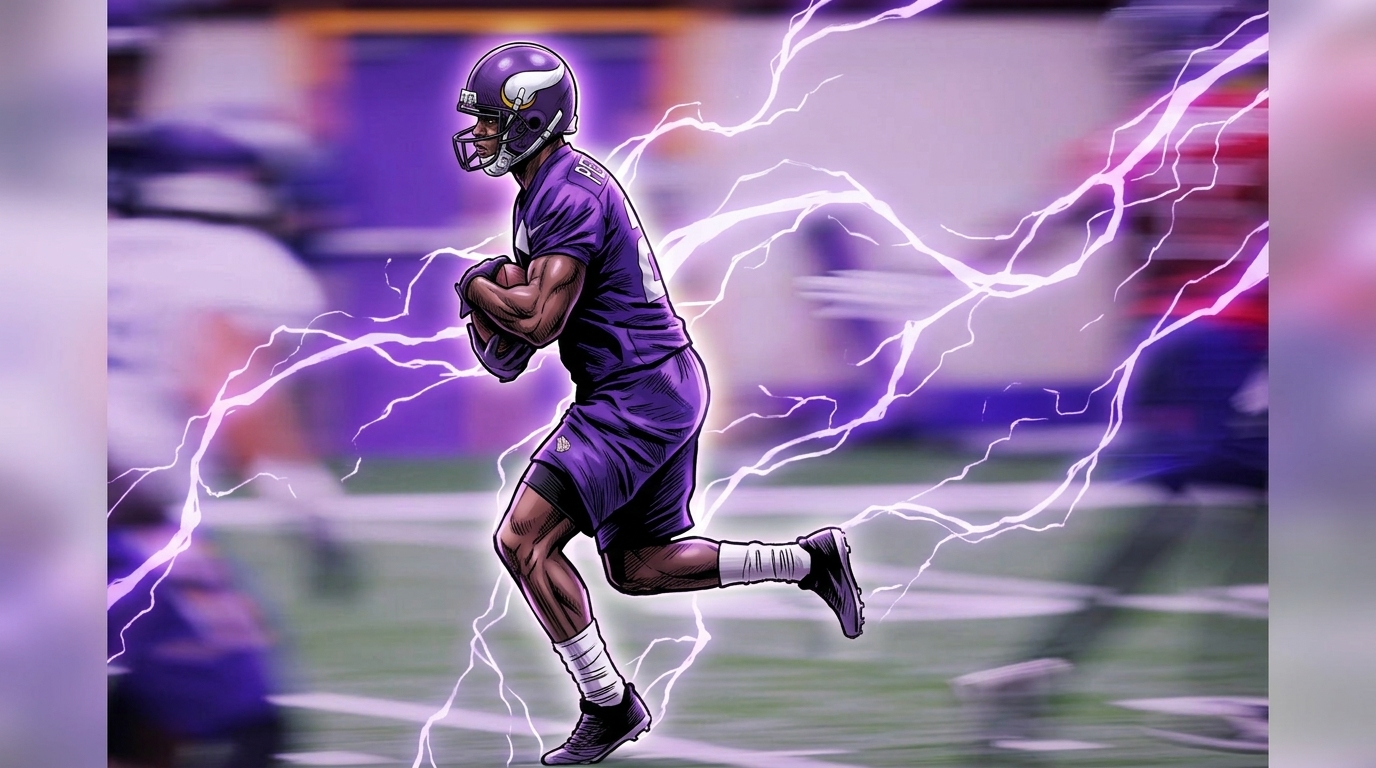

Adrian Peterson ran for 2,097 yards in 2012, eight short of the single-season rushing record, on a knee that had been surgically rebuilt eight months earlier, and it’s still not going to be enough to get him into Canton on the first ballot.
This was never really a debate about production — it’s a referendum on whether voters let one of the greatest peak seasons a running back has ever produced outweigh a declining position and a personal history they clearly haven’t forgotten.
The rest of his career stats back that peak up. That 2012 run earned him NFL MVP and Offensive Player of the Year honors on 348 carries, an absurd workload for a back one year removed from major knee surgery. Add seven Pro Bowl selections, seven All-Pro nods (four of them first-team), and three rushing titles, plus a spot on the NFL’s All-Decade Team for the 2010s. He set the single-game rushing record as a rookie, 296 yards against San Diego, a mark that still stands almost two decades later. He finished with 14,918 rushing yards and 120 touchdowns, good for fifth all time. Stack it up and the Adrian Peterson HOF case looks like the easiest yes the Hall’s Class of 2027 ballot will offer all year.
History mostly backs that read, too. Three of the four running backs ahead of Peterson on the all-time rushing list, Emmitt Smith, Walter Payton, and Barry Sanders, all went in on the first ballot. If precedent were the whole argument, Peterson gets his gold jacket in year one and nobody blinks.
But precedent isn’t the whole argument this year. Peterson debuts in a loaded class alongside Ben Roethlisberger and Rob Gronkowski, with automatic-finalist holdovers like Terrell Suggs, Willie Anderson, and Marshal Yanda still waiting on slots. The running back market has made it plain that voters increasingly value the position less than they used to, and a crowded 2027 Hall of Fame class means Peterson isn’t just competing with his own tape.
Then there’s 2014. Peterson pled no contest to misdemeanor reckless assault after a felony child-injury indictment, and the NFL suspended him for the rest of that season. Hall of Fame bylaws formally bar off-field conduct from disqualifying a candidate. Voters have discretion anyway, and they’ve used it before to quietly slow-play a player a class or two rather than vote no outright.
I ran my usual lakefront loop turning this over and it didn’t get any easier by the fourth mile: the rules say one thing, and the room that actually writes history says another.
Look at how voters have handled recent Hall of Fame classes and the pattern holds — a strong résumé gets slow-played more often than the stat sheet says it should. Canton snubs happen to resumes that look like locks, too, and Peterson’s case has more working against it than most locks ever do.
Even a sportsbook’s own rundown of the résumé reads like a layup, which says everything about the case and nothing about how a room full of voters actually behaves.
https://x.com/FDSportsbook/status/2086833951562457097
A stat sheet doesn’t have to sit in a room and decide whether to forgive somebody.
The numbers make him a lock — the room will still make him wait.