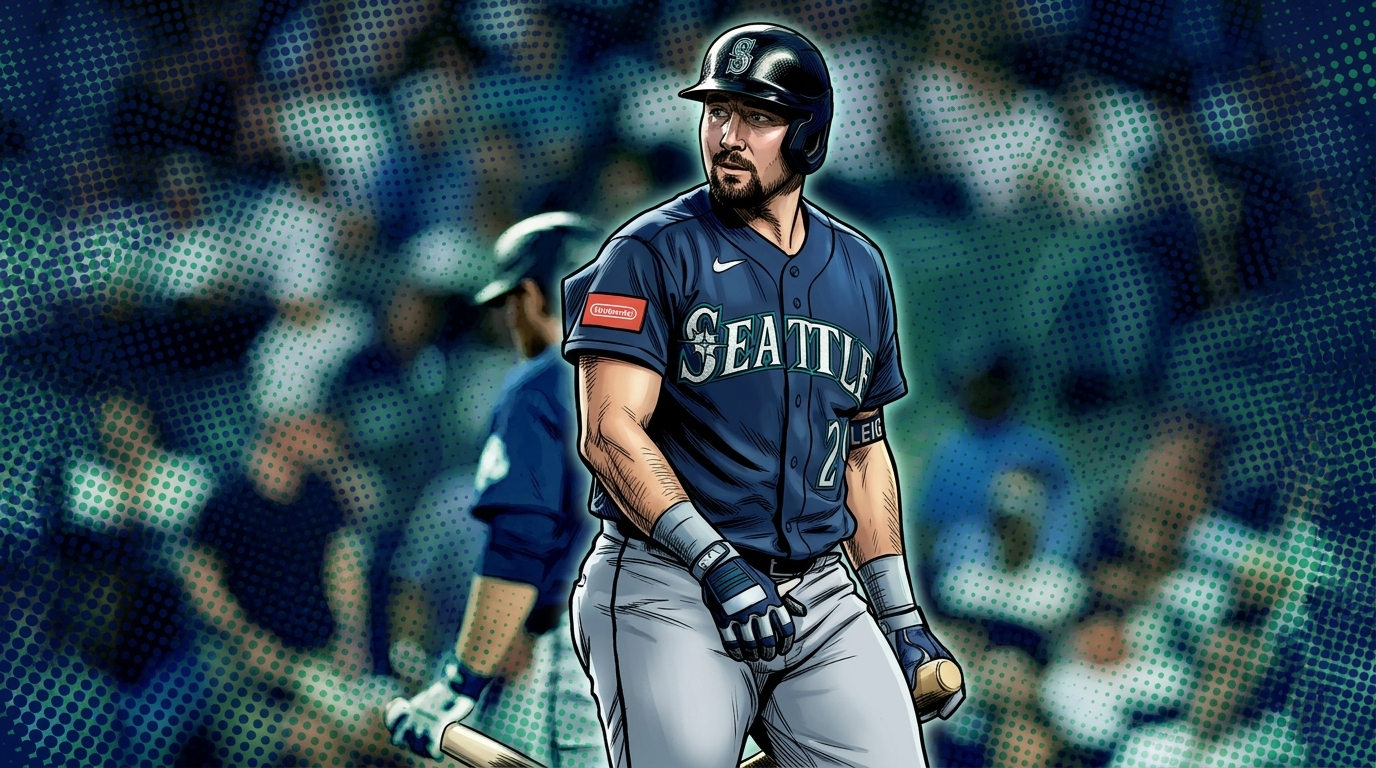

There’s a number that decided more of Sunday night’s game between the Mets and Dodgers than the 96 mph fastball that started it: two. Automated Ball-Strike review confirmed that home plate umpire Malachi Moore blew a call on a 1-1 pitch to Brett Baty in the sixth inning at Citi Field. Then the review didn’t matter, because Los Angeles had already burned both of its challenges earlier in that same inning. The system built to eliminate human error caught one anyway. It just wasn’t allowed to fix it.
Worth saying up front: this isn’t a story about a stolen game. The Mets won 8-3, a comfortable enough margin that no single ball-strike call moved the outcome, and Baty grounded out later in that same at-bat anyway. What actually happened is smaller than a blown call costing a team a win, and more interesting. MLB built a review system that is almost perfectly accurate, then wrapped it in a rule that has nothing to do with accuracy at all.
What Actually Happened at Citi Field
Dodgers reliever Evan Phillips threw a 96 mph four-seamer to Baty on a 1-1 count. Moore called it a ball. Catcher Eliezer Alfonzo asked for a review, and ABS agreed with him: the pitch was a strike, no contest. That should have flipped the count to 1-2.
Instead, the challenge came back marked unsuccessful, not because ABS was wrong, but because the Dodgers had nothing left to spend. They’d used their final challenge minutes earlier in the same inning, when Teoscar Hernandez struck out looking and Los Angeles unsuccessfully challenged that call too. That challenge failed. By the time Alfonzo wanted a second look later in that same inning, Los Angeles had no appeals available, correct or not.
The blown ball call stood on the field. The count moved to 2-1 in Baty’s favor, and he grounded out later in the same at-bat. The reaction afterward leaned hard into outrage from Dodgers fans over the whole exchange — real anger, aimed at a rule instead of a person.
Jomboy Media had the sequence broken down soon after:
https://twitter.com/JomboyMedia/status/2081755557501743503
Watch it back and the absurdity isn’t the missed call. It’s the several seconds everyone spent confirming a call that nobody on the field was allowed to change.
How Many Challenges Does Each MLB Team Get?
Every MLB club starts a 2026 game with two ABS challenges. Win one, and you keep it — a successful challenge gets refunded, not spent. Lose one, and it’s gone for good. Only the pitcher, catcher, or batter can call for a review, immediately after the pitch, with no help from the dugout. Run out, and you’re done asking until extra innings, when a team sitting at zero gets one fresh challenge per frame.
That refund clause is the entire design of the system; it’s also the source of Sunday’s problem. A successful challenge costs a team nothing, so in theory nobody should ever run dry on good information. In practice, Alfonzo and the Dodgers spent a challenge on the Hernandez call, and it lost. That challenge vanished because it was wrong, not because it succeeded. Being right refunds you. Being wrong on a call that felt worth questioning empties the account, and the account doesn’t refill until the next half-inning starts fresh for someone else.
Why Being Right Didn’t Matter
The Dodgers were right about the pitch to Baty. ABS said so, plainly. They were also broke, having already spent both shots on a strikeout call that didn’t go their way. Call it the Overdraft Rule: the review system will tell you the truth for free, but only if you haven’t already asked twice and been told no. Correct and available are two separate conditions, and Sunday proved a team can satisfy one without the other.
I run three fantasy baseball leagues with my own waiver-priority model, and the parallel is obnoxiously close: being right about which player to grab off waivers means nothing if you’re already at the back of the line. The Dodgers were first in line for the truth when Hernandez struck out, and the truth said no. By the time the actual missed call arrived, they were last in line and right. The rule doesn’t distinguish between those two outcomes. It just counts to two and stops.
Is the Two-Challenge Cap the Actual Bug?
ABS itself did its job. The system read a 96 mph fastball correctly, which is exactly what an automated strike zone exists to do. The failure sits one level up, in the rule that decides who’s still allowed to ask. MLB picked two as the number of challenges a team gets, the same way every replay system in sports picks some arbitrary ceiling on how many times a coach or catcher can demand a second look. The cap is a pacing decision. It has nothing to do with the sensor underneath it.
Two is not a technological limit, and pacing decisions eventually produce exactly this outcome: a correct call and an available call pointing in opposite directions. Raise the cap to three and this exact sequence still happens someday, just with an extra incorrect challenge burned first. The number changes. The math failure doesn’t.
The Dodgers have a nullified challenge to be annoyed about. The Mets have bigger problems already lined up, and how this roster looks heading into this year’s trade deadline will matter a lot more in October than one 2-1 count in late July.
Expect this exact complaint to resurface before the rest of this MLB season is out. Two-challenge systems are volatile by design, and Sunday’s sequence was the predictable output of that design, not a fluke. The technology will keep being right. The rulebook will keep making that occasionally beside the point. Give it a full season, and MLB raises the cap before it ever fixes the framing.