
We’ve been asking the wrong question about this USMNT team. Not whether they can beat Bosnia-Herzegovina on July 1st at Levi’s Stadium — the oddsmakers installed them at -280 for a reason — but whether Mauricio Pochettino trusts this moment enough to treat it like the knockout game it actually is.
The group stage gave us enough data to work with. The USA finished first in Group D for the first time since 2010, went 2-0 before the final whistle blew in the third match, and produced a Folarin Balogun two-goal performance against Paraguay that hadn’t been replicated by an American at a World Cup since 1930. Then, against Turkey, Pochettino rotated nine players. The USA lost 3-2. Per CBS Sports, Pochettino explained the rotation plainly: “I think it’s an easy answer for the guys that have yellow cards. I think it’s unnecessary to take a risk.”
That’s a reasonable answer. It is also, notably, not the same thing as confidence. (Yellow card arithmetic and trust in your squad are two different things, and Pochettino has been careful not to conflate them publicly.)
What the Group Stage Data Actually Tells Us
The 4-1 win over Paraguay was everything the rebuild was supposed to look like. Balogun was clinical, Christian Pulisic assisted before a calf injury ended his night at halftime, and the USA pressed with an urgency that didn’t feel performative. The 2-0 win over Australia was more controlled (both goals came via deflections and own-goal pressure), but the result was decisive enough that the knockout berth was secured with a match to spare.
Then came Arlington. Turkey won 3-2, with Arda Güler opening the scoring in the tenth minute and a late Koray Ayhan goal completing the comeback. The USA’s scorers (Auston Trusty in the third minute and a Berhalter finish in the 49th) came from a largely unfamiliar lineup. Adams, Robinson, Richards, and Balogun all sat out for yellow card management. Pulisic came on around the 58th minute, his first meaningful action since the Paraguay game.
What the Turkey result tells us is narrow but important: the USA’s depth can score and press but cannot consistently close. That’s not a revelation. It’s a reminder that the margin for error shrinks when the first XI isn’t on the field for 90 minutes.
https://twitter.com/HenryBushnell/status/2069888590524604470
Pochettino, at the post-match, was pointed about the oversight: “At the moment, no one congratulated us for finishing first in a very difficult group.” He wasn’t wrong. Group D (Turkey, Paraguay, and Australia) was not a group designed to be survived comfortably. The USA survived it comfortably and got criticized for losing a rotation match. That framing, though, undersells what Tuesday night actually demonstrated. The first XI is better than the depth. Against a Round of 32 opponent, that gap matters.
Who Is Bosnia-Herzegovina, Actually?
Bosnia advanced as one of the best third-place teams out of Group B, finishing 1W-1D-1L. Their win came against host Qatar (3-1); their loss was a 4-1 result against Switzerland that wasn’t particularly close. They drew Canada 1-1. This is their first knockout round appearance in World Cup history, a real milestone that should be acknowledged before moving past it.
Edin Džeko is 40 years old, holds 150 caps, and has scored 73 international goals. He is Bosnia’s all-time leading scorer and one of only two survivors from their 2014 World Cup squad (the other being Sead Kolasinac). He didn’t score in the group stage. (A 40-year-old striker who hasn’t scored in three World Cup matches is still capable of scoring in a fourth, which is the specific kind of thing that wrecks previews.)
The more interesting subplot is Esmir Bajraktarevic, 21 years old and born in Appleton, Wisconsin, to parents who fled Bosnia during the Srebrenica genocide. He was eligible for the USMNT and chose Bosnia — a decision that has everything to do with identity and nothing to do with rankings. He’ll be playing against the country he grew up in, at a World Cup held on American soil. That is a genuinely compelling human story, and it has nothing to do with how Tuesday’s tactical matchup unfolds. Bosnia conceded in 11 of their last 12 matches across all competitions. The USA, at full strength, is the 15th-ranked team in the world facing the 61st.
The Lineup Question Nobody Is Asking Loudly Enough
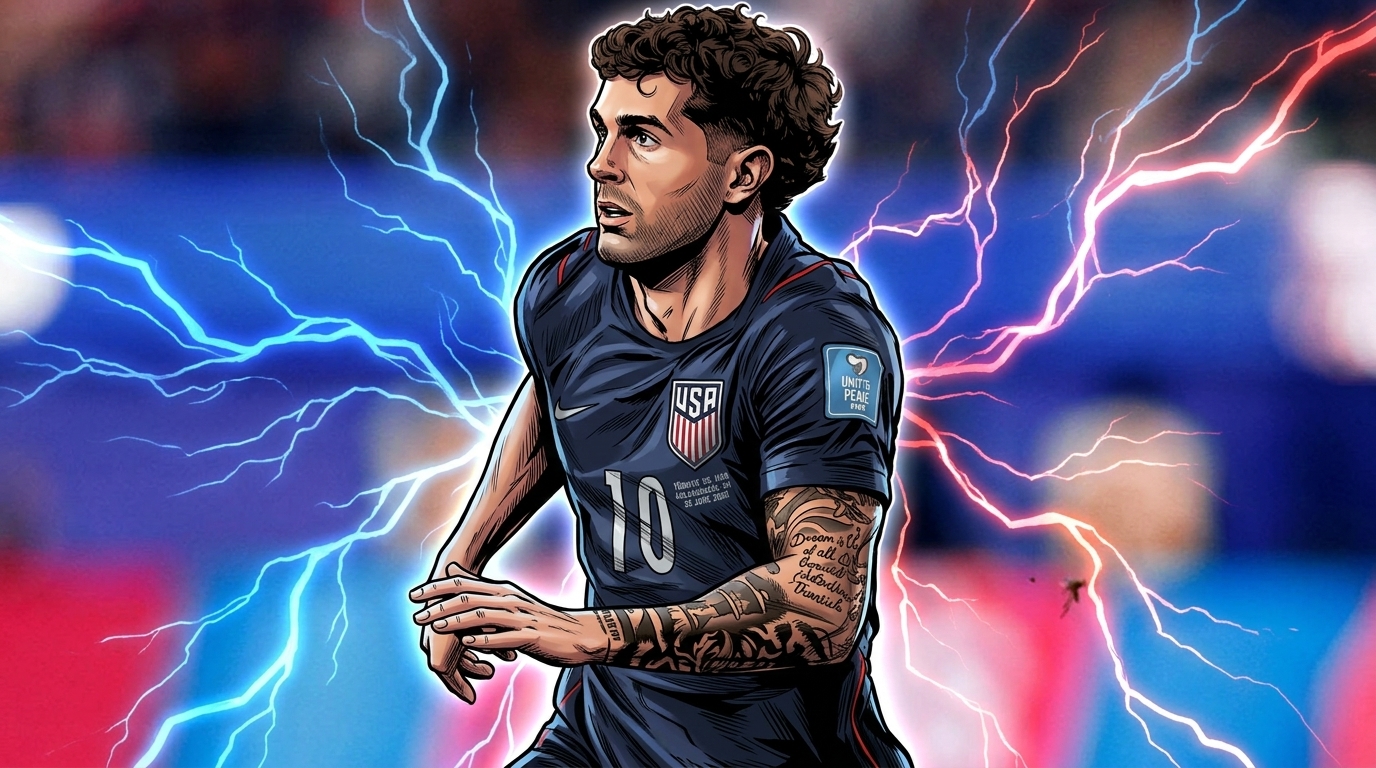
I think the actual story of this preview isn’t the opponent analysis: it’s the Pulisic question, and Pochettino hasn’t answered it cleanly. Per DAZN, the coach said after Turkey: “He’s available and we need to decide if it’s possible to play the full game.” That is the language of managed risk, not restored confidence. A player who is “available” and who may or may not play 90 minutes is a player whose coach is still hedging.
Balogun’s decision to represent the United States over England paid off materially in Group D. He’s fresh, he’s been the tournament’s most dangerous American attacker, and he returns after sitting Turkey for yellow card management. The predicted first XI (Freese; Freeman, Richards, Ream, Robinson; McKennie, Adams, Tillman; Dest, Balogun, Pulisic) is genuinely dangerous when everyone is sharp. The open question is Pulisic’s minutes ceiling.
Pochettino framed the group stage ambition precisely: “Making history is winning the World Cup. It’s not winning three matches only within the World Cup,” per ESPN. That quote exists alongside a Turkey result that was always going to be a throwaway. The question is whether Tuesday was managed confidence (protecting players for a match that mattered) or whether it exposed a coaching staff that doesn’t yet trust its own roster to close under pressure.
Can the USMNT beat Bosnia and advance to the World Cup quarterfinals?
The USMNT enters as -280 favorites against a Bosnia side that conceded in 11 of their last 12 matches and is making their first-ever knockout round appearance. If Pochettino deploys his first XI (Adams, Balogun, and a healthy Pulisic for 90 minutes) the USA should advance. The one variable that creates genuine uncertainty is Pulisic’s fitness, and that will be answered on the teamsheet.
I believe this team is good enough to win comfortably. I also believe the Turkey performance introduced a real question about whether Pochettino will commit to his best lineup from the opening whistle when it costs something, not yellow card arithmetic, but the actual strain of trusting a player who hasn’t been fully healthy.
Watch the Pulisic sub timing. If he starts and lasts 80 minutes, Pochettino has his answer. If he starts and comes off at halftime again, the quarterfinal conversation gets complicated, because whatever comes next after Bosnia is not going to concede in 11 of 12.