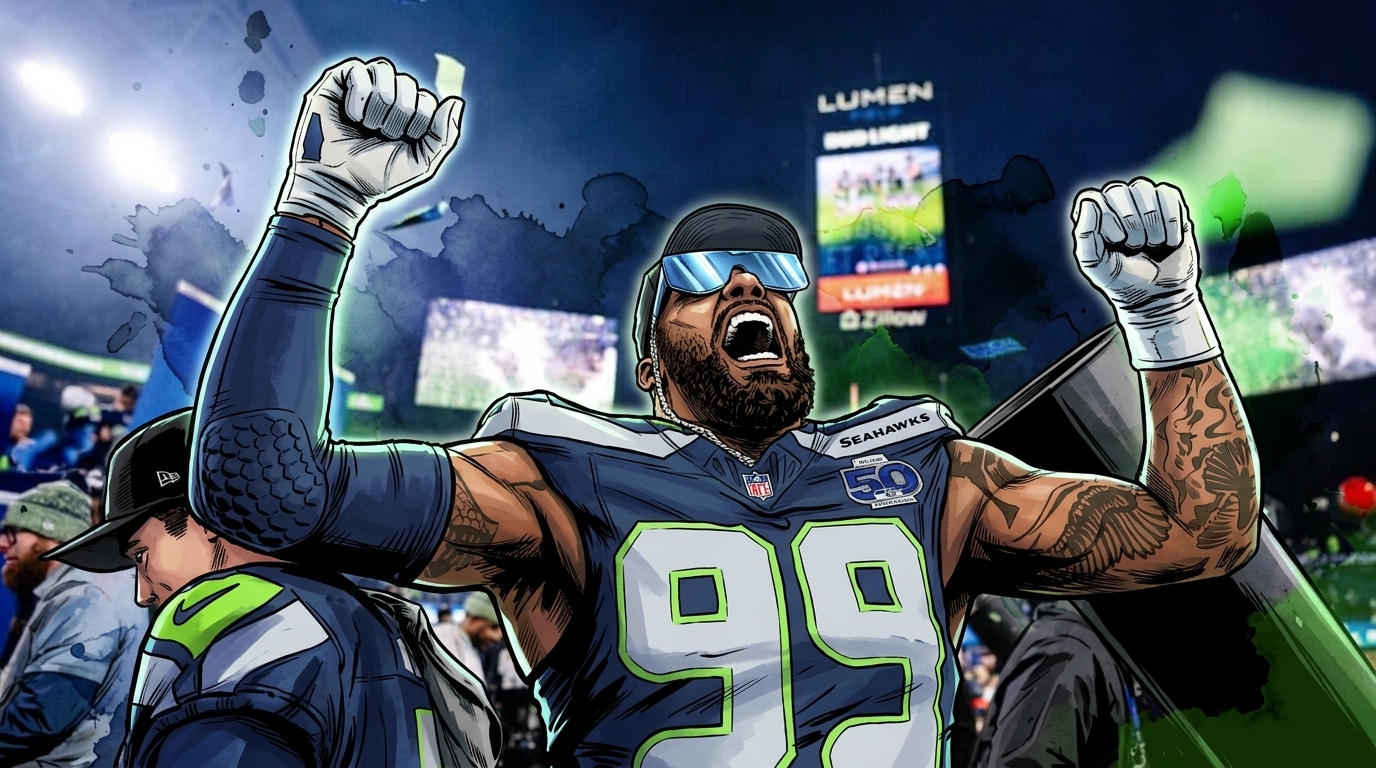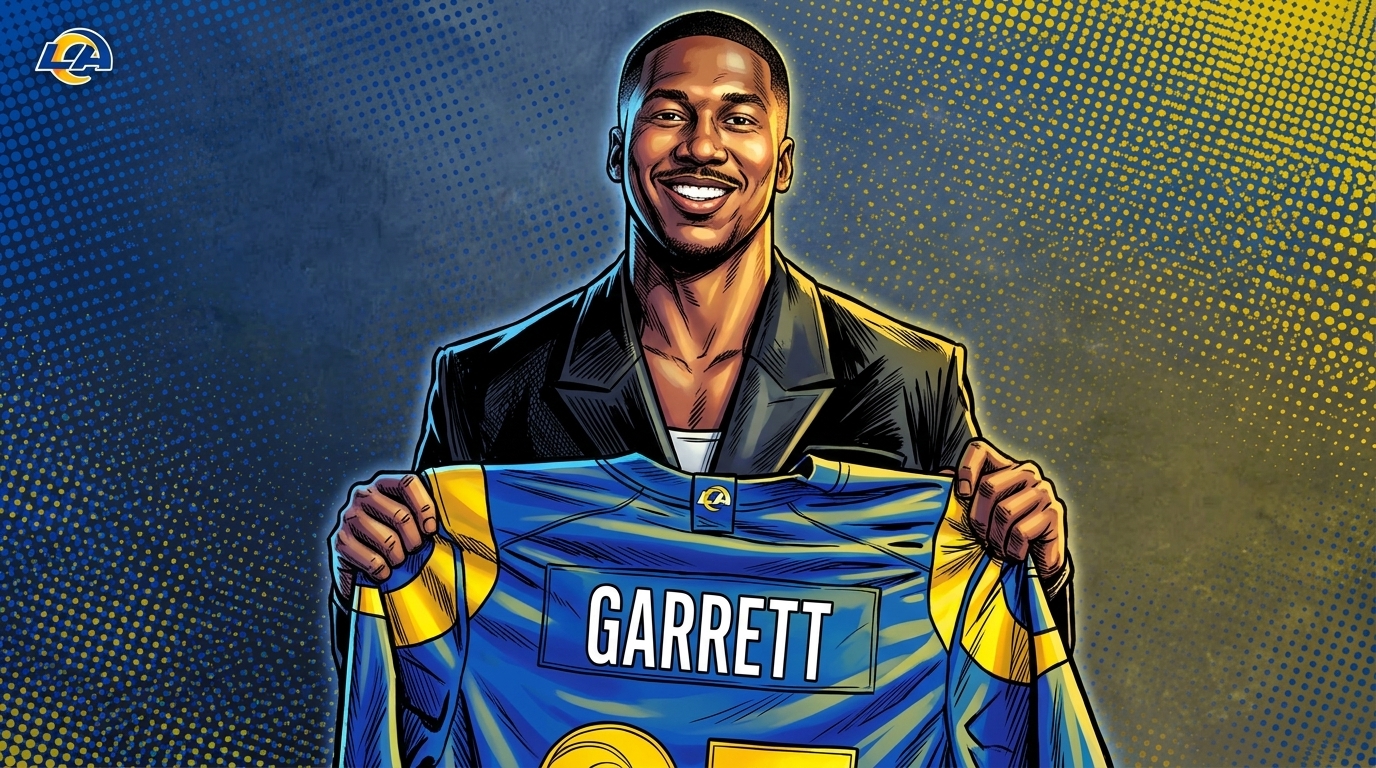

The Cleveland Browns traded Myles Garrett to the Los Angeles Rams on June 1, and the most Cleveland part of the whole transaction is that Garrett had to file the paperwork himself.
That’s what a no-trade clause waiver actually is. It’s a form. An employee at a dysfunctional company, one who has stuck around through every bad reorganization and every baffling strategic pivot, finally decides he is done, and the process requires him to put it in writing. Most players in Garrett’s position quit internally and say nothing; they cash the checks and count the days. Garrett didn’t do that. He signed the document. He handed it to HR. The Cleveland Browns are now a company whose franchise cornerstone filed a formal transfer request, and the transfer was approved because, frankly, nobody upstairs had a compelling counterargument.
Think about what that document represents. In early 2025, during Super Bowl week, Garrett demanded a trade. The Browns talked him out of it. He re-signed a four-year, $160 million extension and “recommitted” — the word organizations use when they’ve convinced a star employee to stop looking at job postings. Sixteen months later he waived the clause anyway, with $123 million in guaranteed money still on the table, because only the Rams were calling. Not a bidding war. Not multiple suitors. One team called persistently while the rest of the league watched from a polite distance. The Browns went 3-14 in 2024; they are officially in rebuild mode; and their response to losing a two-time reigning Defensive Player of the Year was to negotiate the best available package and call it a day.
https://x.com/Browns/status/2061539561856024772
Here is what Browns general manager Andrew Berry said about that package: “maximizing draft compensation was never the primary objective.”
Let that breathe for a second. The Browns traded Myles Garrett — a 23-sack edge rusher who won the Defensive Player of the Year award in 2023 and again in 2025, the first reigning DPOY ever traded in NFL history — and the GM’s official position is that they weren’t really trying to maximize what they got back. They received Jared Verse, a 2027 first-round pick, a 2028 second, and a conditional 2029 third that upgrades to a first if Garrett gets traded to an AFC North team. Verse is good; he was the 2024 Defensive Rookie of the Year with 12 sacks and 22 tackles for loss in two seasons. But Berry is out here in public saying the goal wasn’t to squeeze every dollar out of this transaction, which raises the obvious question: what the hell was the goal?
The Garrett-to-Browns relationship had been rotting for years, held together by contract extensions and press conference optimism while the franchise ran the sunk-cost QB carousel they’ve been running at quarterback. Garrett was the one non-embarrassing thing on the roster; he was the reason you could write a sentence about Cleveland defense without laughing. The Rams, meanwhile, have been collecting talent with the confidence of an organization that knows what it’s doing, having already locked up Matthew Stafford’s new extension before adding the best pass rusher in football. The Myles Garrett trade Browns made was, in the end, the Browns being the Browns: trading the good thing to fund a rebuild that will almost certainly produce a new set of bad things.
Cornerback Denzel Ward, for his part, had a response ready. “It’s Ohio against the world,” he said. This is the organizational ideology now. Ohio against the world; us against the doubters; a 3-14 football team that just traded its best player squaring its jaw at a universe that has not been kind. It’s genuinely funny, the way a late-stage diagnosis is funny, not because it’s amusing but because what else are you going to say. The Browns didn’t lose Myles Garrett because the world conspired against them. They lost him because he signed the form, handed it in, and walked out the door. The paperwork was in order.