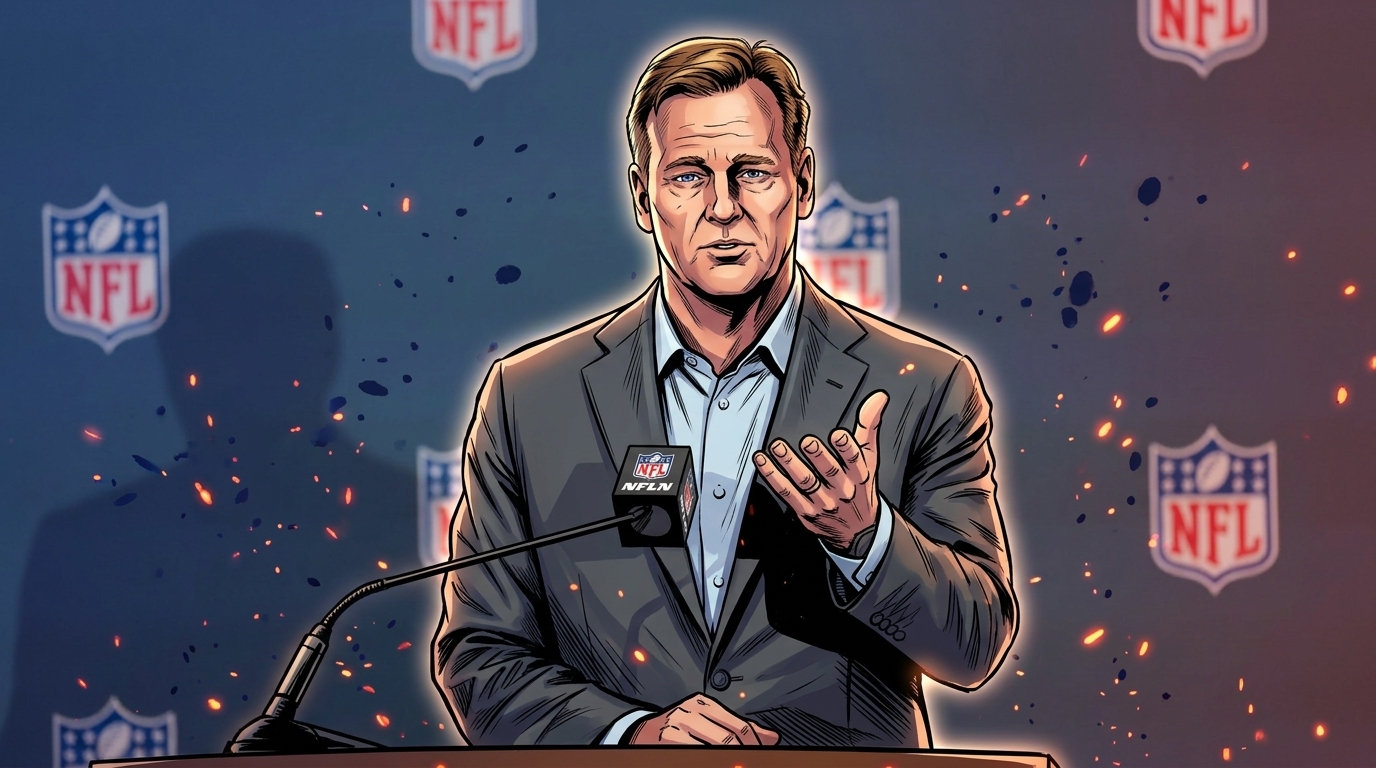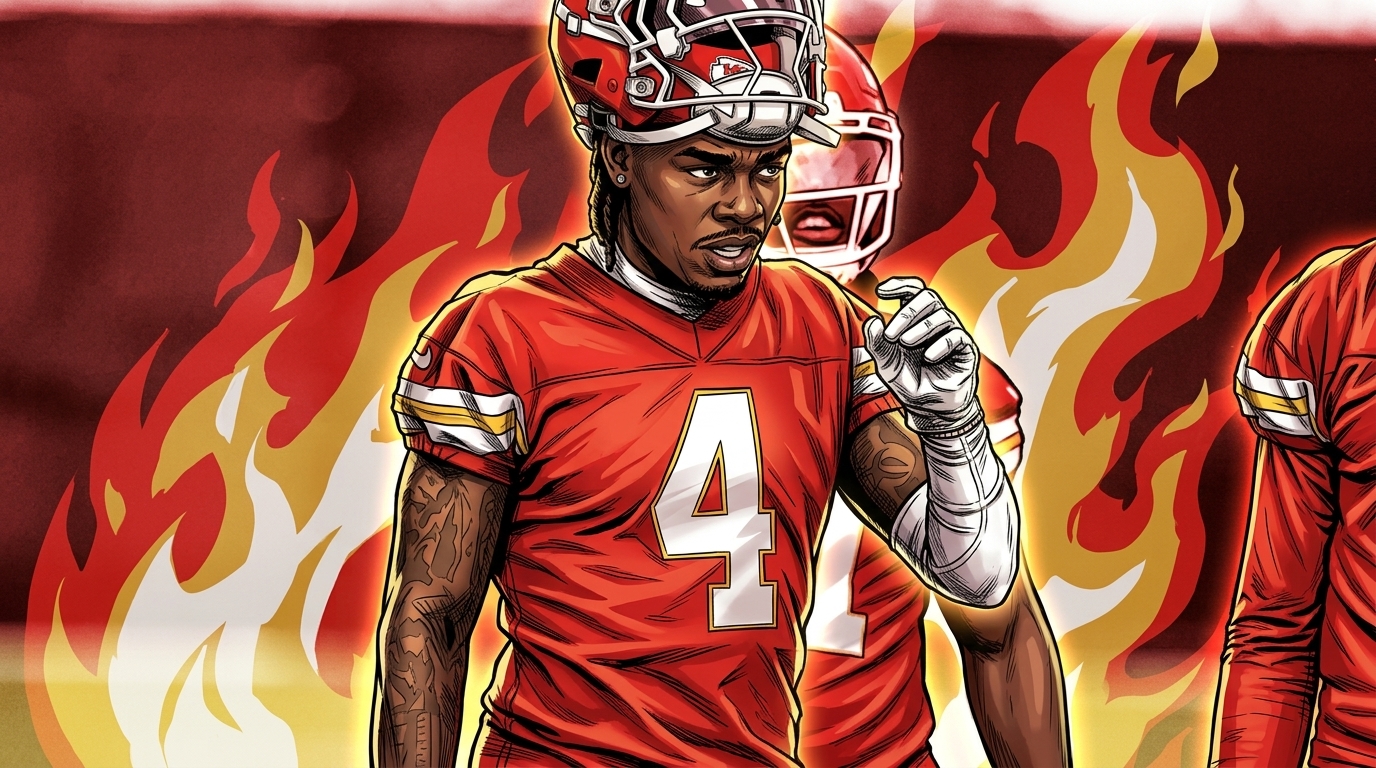

Here is the part that should bother you more than Rashee Rice smoking weed: the NFL — the same league that wrote a collective bargaining agreement in 2020 explicitly reducing marijuana penalties, raising the THC threshold from 35 to 150 nanograms, shrinking the testing window to two weeks of training camp, and eliminating suspensions entirely for positive tests — still has a player sitting in a Dallas County jail cell right now because a probation document signed in July 2025 didn’t get the memo. The institution evolved. The paperwork didn’t. And Rashee Rice is the gap.
https://twitter.com/RapSheet/status/2056808621929820258
Rice was booked May 19. He tested positive for THC, which violated his five-year deferred adjudication probation — the terms he agreed to when he pleaded guilty in July 2025 to two third-degree felonies stemming from a 2024 highway racing crash in Dallas. The 30-day sentence wasn’t handed down in the courtroom on May 19. It was already written into the plea deal, a pre-baked consequence sitting there like a landmine, waiting. Violation = 30 days. No hearing required. No new finding of facts. The tripwire did exactly what tripwires do. Rice is scheduled out June 16.
The deferred adjudication model is, in theory, a reform-minded tool. You admit guilt, you serve probation, you keep a clean record if you comply. The thing about deferred prosecution agreements is they’re written at a moment in time and don’t update. They reflect whatever norms existed in the room the day the deal was cut. The attorney on one side, the DA on the other, and a set of conditions that get frozen like a bug in amber — no THC use, report regularly, don’t leave the state — terms that will remain exactly as written for the full five-year run regardless of what changes around them.
What changed around them is considerable. The NFL itself spent six years publicly signaling that marijuana is not the crisis it was once treated as. The 2020 CBA was not ambiguous about this. Testing reduced to training camp. Threshold raised fourfold. Suspensions gone. The league that once opened a file on a player for a single failed test in April now has an official policy that says, essentially: we don’t think THC use is a character defect anymore. That’s not a fringe position — 24-plus states have legalized cannabis outright. The cultural consensus has shifted fast enough that the NFL, one of the most conservative major institutions in American professional sports, decided to move with it.
Rice’s probation agreement did not. The system froze the old rules into place and will enforce them until 2030 whether or not any of the underlying assumptions still hold. That is not a bug in how deferred adjudication works. That is exactly how it is designed to work. The conditions are the conditions. The DA’s office in Dallas County is not reviewing plea agreements every 18 months to check whether cultural consensus has shifted. They wrote terms, Rice signed them, and now he’s in a cell.
What makes this feel almost darkly constructed is the layering. Rice blew out his knee. He had a cleanup surgery roughly a week before he was booked — loose debris removal, inflammatory tissue, the kind of procedure that requires careful progressive rehab. He cannot do that rehab from a jail cell. He will miss OTAs and mandatory minicamp — 30 days in Dallas County, a wide receiver on a championship team, because the paperwork hasn’t caught up. He is a wide receiver on the Kansas City Chiefs, a team with championship expectations and a quarterback who needs his pass-catchers synced up. The Rashee Rice jailed weed probation story is, at its core, a story about a set of rules written in one context detonating inside a completely different one, with maximum collateral damage.
This is the part where someone says: he knew the rules when he signed. And sure, that’s technically true. But “he knew the rules” is the thing we say to stop the conversation before it gets uncomfortable. Did the rules reflect any current understanding of the actual harm involved? No. Did the Dallas County DA update the terms when the NFL rewrote its own policies on the same substance? No. Is there any mechanism in a deferred adjudication agreement for that kind of recalibration? Absolutely not. The system is not built to ask whether its tripwires still make sense. It is built to spring them.
The Rashee Rice jailed weed probation situation is not about a man who made a bad choice. It’s about an institution that drafts a document, staples a jail sentence to a THC test, and then refuses to revisit whether that pairing is coherent in 2026. The NFL figured it out. Twenty-four states figured it out. The plea agreement from July 2025 did not, and it does not have to, and that is the whole point. The system doesn’t evolve. It just keeps the tripwires.