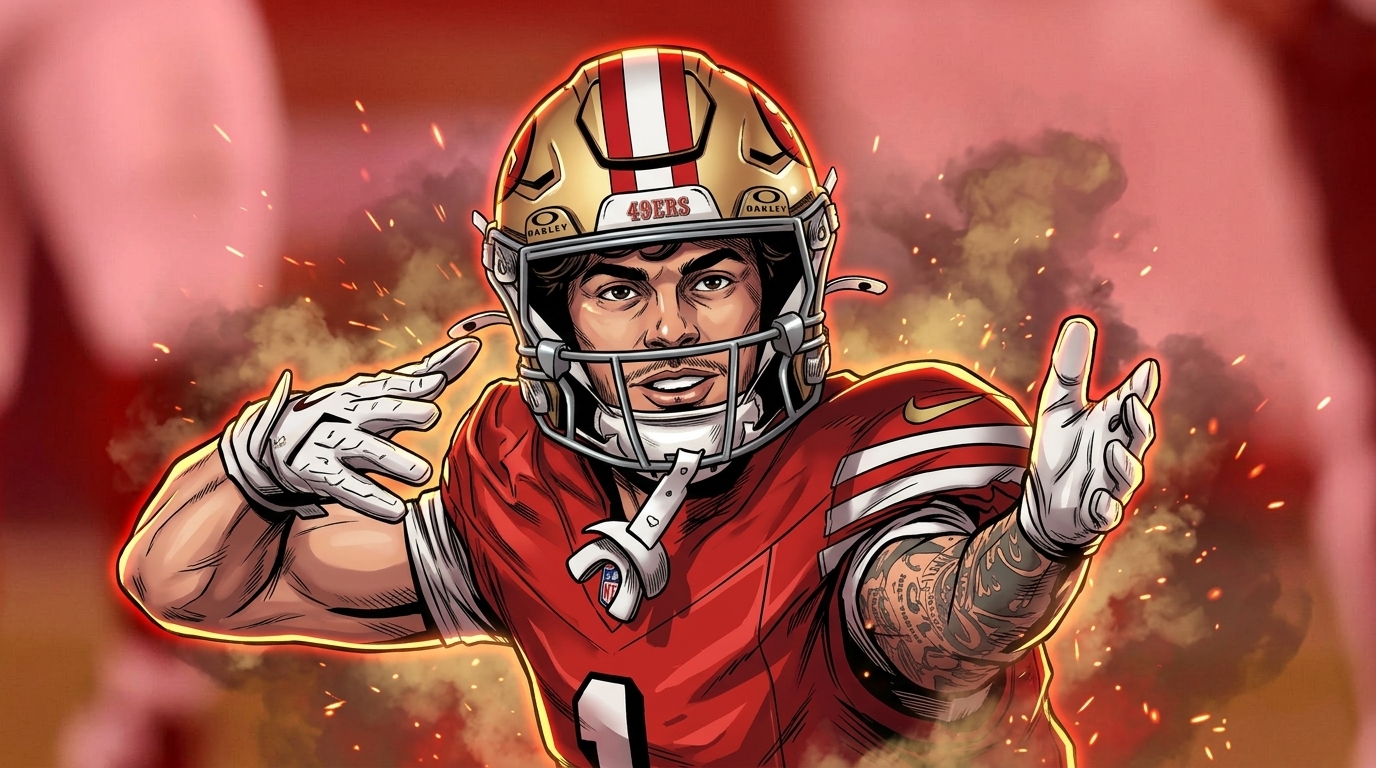
We spent the last year being told the 49ers had made peace with life after Deebo Samuel. On Aug. 1, San Francisco placed Ricky Pearsall on season-ending injured reserve for a right knee PCL injury, the same PCL he first hurt in Week 4 last season. Hours earlier, the reunion itself had already gone final: Samuel agreed to a one-year deal worth up to $7 million to come home.
The short version is almost mechanical. Pearsall’s knee never fully healed from last September, Christian Kirk is nursing a calf strain of his own, and the 49ers needed a proven body in that receiver room fast. So they went back to the player they’d traded away 17 months ago for a fifth-round pick (the same trade Samuel called “nothing but love” on his way out).
Call it panic and you’d be half right. General manager John Lynch has said the front office had been circling back to Samuel before Pearsall’s setback turned permanent, with Kirk’s calf already thinning the room. That’s less a same-day scramble than a hedge the 49ers had already placed, one they’re now leaning on harder than they expected to.
Start with what actually happened to Pearsall, because none of this is a new injury. He tore the PCL in Week 4 last season, in a loss to Jacksonville, and missed six games. It came back. He played through the rest of 2025 anyway, re-aggravating it more than once on the way to 36 catches and 528 yards in nine regular-season games, real production, just never for a full season. San Francisco opted against offseason surgery, betting that rest alone would settle the joint. The swelling returned in training camp. Surgery is now scheduled within two weeks, with a recovery window of six to 12 months (nine is the optimistic case), and Lynch says the expectation is a full recovery in time for 2027. Notice what’s missing from that sentence: 2026.
This is the part that should bother 49ers fans more than the transaction did. A knee that flares up in September, gets managed instead of repaired, and blows out again the following August isn’t bad luck. It’s a risk the organization decided to keep living with. Pearsall’s talent was never the miscalculation; how much runway his body would give him was, and the front office built the receiver room’s entire floor on that assumption anyway.
Samuel, for his part, spent the summer unsigned before landing back in the building he left. His one full season in Washington was the version of him the 49ers used to insist was too volatile to plan around: 72 catches, 727 yards, five touchdowns in 16 healthy games, no drama, no overexposure. Ian Rapoport reported the sides had agreed to terms the night of July 30, hours before Pearsall’s knee made the timing look less like sentiment and more like a bet that had already quietly paid off.
Mike Evans and Christian Kirk arrived this offseason specifically to keep the room from depending on one body again (Kirk has since missed camp time with a calf strain, its own small irony, given the pattern here). Lynch says Samuel will factor at receiver, in the run game, and on returns, which is either scheme flexibility or an admission that nobody in that room is a lock to stay on the field. I think it’s mostly the second thing, dressed up as the first.
David Lombardi, who covers the team closely, argued that this stint looks nothing like Samuel’s last chaotic run in San Francisco: the 2024 stretch when Aiyuk’s injury left Samuel as the offense’s sole engine, playing out of position because there was no one else to lean on.
https://twitter.com/LombardiHimself/status/2083010792954450245
Lombardi’s case is that 2026 is structurally different: Evans, De’Zhaun Stribling, and Kirk give this offense real field-stretchers, so Samuel isn’t required to be the fulcrum this time. It’s a fair distinction, and worth sitting with before landing anywhere.
He’s right about the personnel. I’m less convinced about what it changes. Two of the four healthy bodies the 49ers were counting on in that receiver room, Pearsall and Kirk, have already broken down or are breaking down in real time, which means Samuel isn’t walking into a deeper, steadier group. He’s walking into the same instability with more names attached to it. Extra field-stretchers don’t help much if half the group can’t stay on the field to stretch anything.
The 49ers didn’t move past Deebo Samuel. They miscalculated, twice, how much they still needed him. First when they traded a healthy, productive receiver for a fifth-round pick because they trusted Pearsall to replace his production without the baggage. Again when they built that receiver room’s floor on a knee they’d already watched fail once. Re-signing Samuel isn’t nostalgia. It’s an admission, 17 months late, that the plan never had the depth it was sold as having.
What to watch from here: whether Samuel’s expanded role across receiver, backfield, and returns actually holds once camp settles; whether Kirk’s calf clears before Week 1; and whether Pearsall’s 2027 timeline survives a full offseason program instead of the rest-and-hope approach that didn’t work the first time. For the rest of our NFL coverage as camp battles play out, we’ll be tracking all three.