
A receiver’s yards per catch is one of the cleanest tells in football. It strips out volume and gets at something more specific: when this player got the ball, how far did the defense actually let him go with it? Track that number for Deebo Samuel across seven seasons and it doesn’t wobble. It falls. And the team that watched it fall hardest, during his one year away from them, just brought him home anyway.
Why Did the 49ers Sign Deebo Samuel Again in 2026?
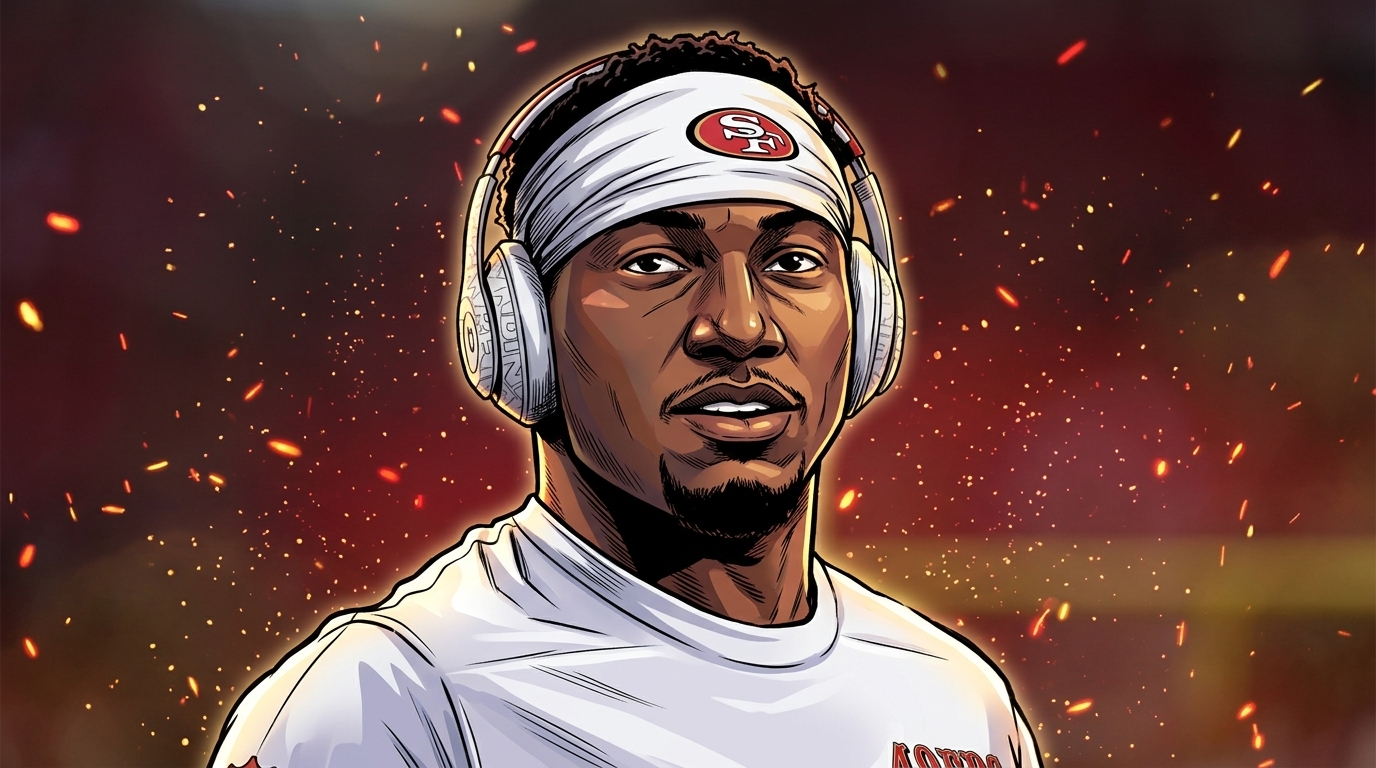
San Francisco signed Samuel to a one-year deal worth up to $7 million because two projected starting receivers went down in training camp within days of each other, thinning a room that had already lost its top backup in free agency. This is a roster patch dressed up as a reunion, not a vote of confidence in the player Samuel currently is.
Ian Rapoport reported the terms Thursday, and the shape of the deal matters as much as the number. “Up to $7 million” on a single year is prove-it money, the kind of structure a team offers when it wants protection more than commitment. Eight days ago, the running storyline on Samuel was that thirty-one teams had already passed on him at a price point lower than this one. He’s walking back into the building that let him leave, not into a bidding war.
What Deebo Actually Did in Washington
Here’s the part San Francisco can’t spin away. In 2025, Samuel caught 72 passes for 727 yards and five touchdowns in Washington, which sounds like a solid complementary season until you check the per-catch number: 10.1 yards. That’s a career low, and not by a little. His previous worst season, 2022 in San Francisco, sat at 11.3. Washington’s version of Samuel was averaging over a full yard less per reception than the worst year of his 49ers tenure.
Put it against his peak and the gap gets uglier. In 2021, his first-team All-Pro season, Samuel averaged 18.2 yards every time he touched the ball as a receiver. Every catch in Washington traveled, on average, about eight fewer yards than every catch during that peak year. That’s the difference between a receiver defenses have to respect vertically and one they’re comfortable tackling in space.
The full arc tells the story better than any single season: 14.1 yards per catch as a rookie, then 11.8, then that 18.2 outlier, then 11.3, a bounce back to 14.9 and 13.1 across his final two years in San Francisco, and now 10.1 in his lone season away. Three of the last four years have dropped from the one before it, with 2023 as the lone rebound in between. This isn’t one bad year against a career of excellence. It’s a decline with one loud exception in the middle.
None of that erases what he built in San Francisco. Across six seasons there, Samuel put up 334 catches for 4,792 yards and 22 touchdowns in 81 games, adding another 1,218 yards on the ground — one of the more unusual receiver résumés in the league, built on yards after catch and designed touches as much as route-running. That production is why he requested a trade after the 2024 season and got dealt for a fifth-round pick instead of anything resembling fair value. A player coming off numbers like that doesn’t usually return for a fifth-round pick’s worth of leverage. He does when the version of him that shows up next is uncertain.
The tweet that broke the deal:
https://x.com/NFL/status/2082998688511594509
Rapoport’s framing was clean and neutral, which is fitting, because the deal itself reads as pure triage rather than a statement signing.
The Injuries That Forced San Francisco’s Hand
Christian Kirk strained his calf in camp. Ricky Pearsall’s right knee started swelling, tied back to the PCL injury he dealt with in 2025 — a knee that’s already cost him significant time. Both injuries surfaced within days of each other, and the team is reportedly weighing surgery on Pearsall’s knee, which would end any hope of a quick return. In plain terms: Pearsall has missed 14 games across his first two NFL seasons, sitting out roughly four of every ten contests he’s been eligible for. That’s a pattern, not bad luck, and it’s one San Francisco has to plan around rather than hope past.
Layer in that Jauan Jennings, the depth receiver who’d been holding the room together, left for Minnesota in free agency, and camp opened with real gaps at receiver. Samuel was the name still in their phone once the plan broke, not a piece of the plan itself.
A Receiver Room That Already Has Its Star
This is not the room Samuel left. San Francisco also signed Mike Evans this offseason, and Evans arrives with a résumé that needs no translation: twelve seasons in Tampa Bay, 866 catches, 13,052 yards, 108 touchdowns, and a streak of eleven straight 1,000-yard seasons that ties Jerry Rice’s all-time record. Rice’s mark stood alone for decades. Evans matching it is the rare counting stat that actually captures greatness: not a hot stretch, but over a decade of never having a down year.
Samuel’s reunion also comes on the heels of the receiver room’s other cap casualty, the Brandon Aiyuk situation that already reshaped how San Francisco is allocating money at the position. Add Kirk and Pearsall’s health questions, and the room Samuel is walking into is younger, cheaper at his specific role, and already has its alpha in Evans. He’s the fourth receiver in the pecking order at best, a rotational body who can still win at the catch point, not the focal point he was in 2021.
What the Prove-It Contract Says That the Timing Doesn’t
The number tells one story. Seven million, spread across one year with incentives attached, isn’t a team betting on a bounce-back. It’s a team betting on availability. San Francisco doesn’t need Samuel to rediscover 18.2 yards per catch. It needs a healthy body who can run real NFL routes for four months while Kirk’s calf heals and Pearsall’s knee gets sorted out, one way or another.
The timing is the real signal here, more than the dollar figure. San Francisco didn’t call in June, when Samuel was sitting unsigned and the market had already rendered its verdict. It called after two starters went down in the same week. That’s not sentiment. That’s a team doing math under pressure, and the math said a diminished but available Deebo Samuel still beats an open roster spot. Expect him in a rotational, matchup-specific role rather than a workhorse one — and expect the 49ers to lean on Evans, not Samuel, whenever the game is actually on the line.