
The standard template for an aging superstar’s return goes like this: the announcement comes first, the roster construction comes second, and the gap between the two is papered over with press conference optimism and a fan base trained to believe the arithmetic will work out. The Washington Capitals ran this in reverse, and the result is strange enough to document.
On June 23, Washington acquired Jordan Kyrou from the St. Louis Blues — 28 years old, 46 points in 72 games, $8.125 million against the cap; nine days before Alex Ovechkin signed anything. On June 24, they landed Alex Tuch via sign-and-trade from Buffalo: eight years, $84 million, 33 goals and 66 points last season. A franchise-level power forward, not a complementary piece added to keep a legend comfortable. Two significant acquisitions, substantial cap commitments, genuine organizational conviction, all of it locked in while Ovechkin’s future remained an open question.
https://twitter.com/PierreVLeBrun/status/2069843346147721331
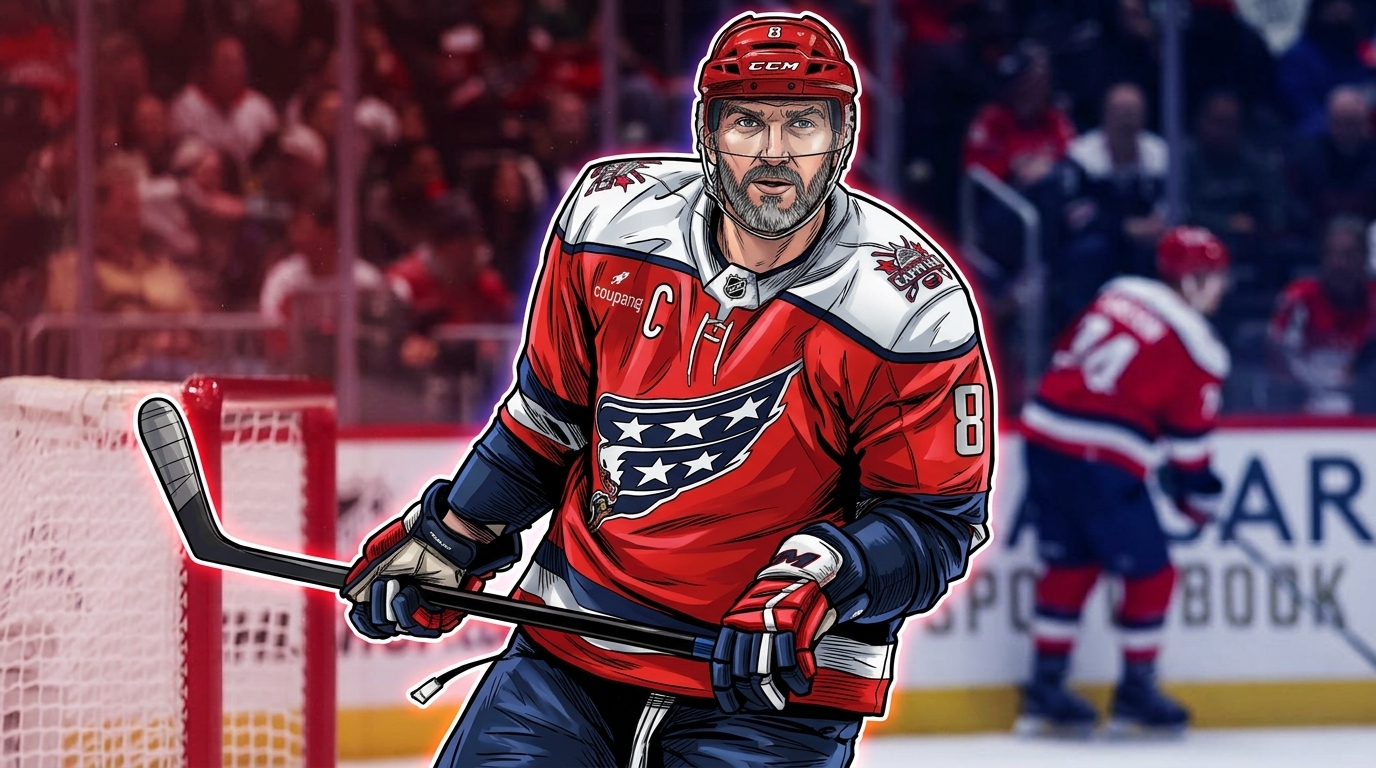
Washington built the thing first. Then, on July 2, Ovechkin re-signed for one year at $4.25 million — his 22nd season, arranged after the infrastructure was already in place. Coach Spencer Carbery confirmed that Ovechkin was “very, very impressed” with the moves. Of course he was; he was watching a franchise do the logical thing, which in professional sports is unusual enough to register as a genuine surprise.
The announcement, when it came, was delivered from a vacation in Turkey. The video. The grin. “I’m back, babes.”
That line only works because of the sequencing. Strip away the Kyrou trade and the Tuch contract and it reads like any other aging star insisting things are different this time — the kind of declaration that ages badly by February. The joke, and Ovechkin clearly understood this, is that Washington handed him something to come back to. The “babes” is not bravado; it’s a man who checked the roster and liked what he saw.
The counterargument is straightforward: one year is one year, Ovechkin is 40, and the Eastern Conference is not going to step aside. Kyrou’s 46 points is a real number but not a dominant number; Tuch at $10.5 million annually is a significant bet on a player who has never been a first-line centerpiece. These things are true.
And yet. Kyrou’s speed paired with Ovechkin’s net presence creates a matchup problem Washington hasn’t had in years, a legitimate threat in motion meeting a guaranteed threat at the dot. Tuch provides the kind of physical, point-producing presence that makes a top six look like an actual top six rather than a collection of wingers hoping for context. The Capitals are not pretending to be ready; they assembled something, then made the call.
This is not how it usually goes. The more common approach is to announce the return, wave at the fans, and assemble the depth chart around the narrative, which produces rosters where the legend is the plan rather than a component of one. It’s a model that works commercially and fails competitively, and it’s the default because building around a star’s timeline is easier than building and waiting to see if the star shows up at all.
Washington waited. The star showed up. For a franchise operation, this qualifies as institutional competence, which is rarer than it sounds. For more on how this shapes the Eastern Conference picture, see our NHL coverage.
He’s back, babes. The building is real this time.