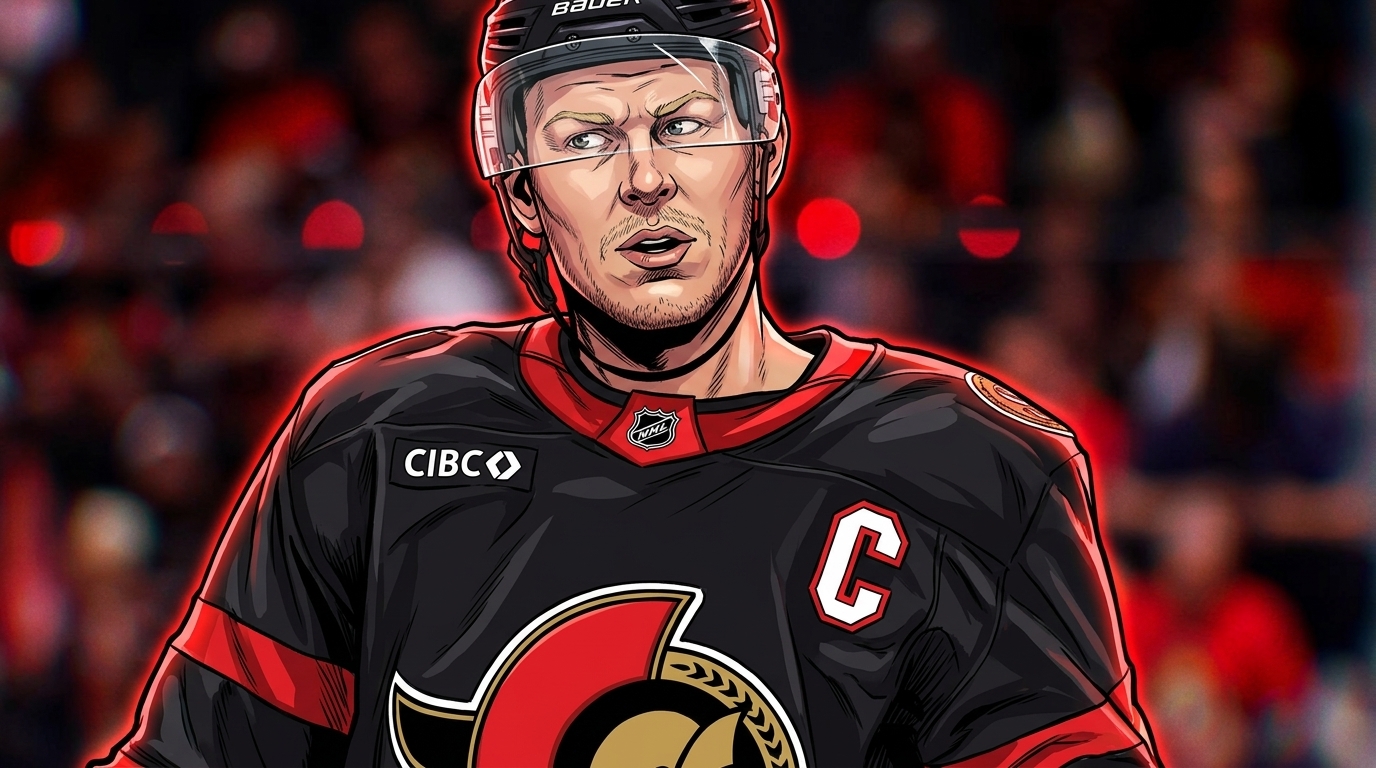

“Fully committed” is a term of art in professional hockey, and the Brady Tkachuk trade to the Panthers is its clearest recent illustration of what the phrase actually means.
On April 29, three days after Ottawa was swept in the first round, Tkachuk stood in front of reporters and said: “I have been fully committed to this team, to this city. And (the talk), it’s just become a distraction. Frustrating to deal with.” On June 21, the Senators traded him to Florida for picks No. 9 and No. 25 in the 2026 NHL Draft, a conditional 2029 first-rounder, and a 2027 second. Three first-round picks and a second. A draft class. That’s what Florida paid to take their captain; that’s what Ottawa got to let him go.
Think of “fully committed” the way you’d think of a lease renewal notice. The tenant says they’re staying; they mean they haven’t yet found somewhere better. The landlord hears the word “committed” and begins planning accordingly. Then the agent calls. The lease renewal notice is not binding — neither, in any practical sense, is the phrase.
This is not a Tkachuk problem specifically. The phrase is institutional furniture every player in an uncertain contractual situation reaches for; the honest alternative, something like “my priorities have shifted and your city ranks third on my list,” is simply not available. Tkachuk had two years left on a $57.5 million deal, a no-movement clause that gave him actual leverage, and an agent whose job is to find the best situation. “Fully committed” bought everyone a few weeks of peace. It was priced accordingly.
Steve Staios, the Senators GM, met Tkachuk in New Jersey in May. Tkachuk told him he wouldn’t re-sign when the contract expired. Staios said later: “What changed was a trade request… something was amiss.” This is the GM of a professional hockey franchise expressing surprise that a player’s stated commitment did not translate into an actual one. Staios also noted, with the flat delivery of a man filing an insurance claim, that “the dynamic of a no-trade clause changes how the transaction works… it was pointed at one team at the end.” Florida. Obviously Florida — where Brady’s brother Matthew plays, where the roster contends annually, where Brady would say at his presser: “Holy cow, that team is incredible and they have a chance to win every single year.”
https://x.com/FlaPanthers/status/2068839549950640580
The Tkachuk reunion is the story the NHL will sell this fall, and it’s not wrong exactly. The Wingmen podcast tweeted “Guess who’s back together again…” before the trade was even official; nobody on the Tkachuk side was particularly surprised. Brady wearing No. 8 alongside Matthew is a good story. None of that is cynical. It’s just the more comfortable version of what happened.
The structural version is harder to market. Ottawa, whose season ended at the hands of the Hurricanes who swept them and then reached the Stanley Cup Final, received three first-round picks and lost their captain anyway. The loyalty tax isn’t what the Senators paid Tkachuk over seven years; that was market rate. The real tax is the negotiating position they didn’t have: picks No. 9, No. 25, and a conditional 2029 first, extracted from a single willing buyer, with the no-movement clause pointed at one destination and nowhere else to go. Ottawa got useful value; two first-rounders in the same draft is genuinely something. But they got the value available to a team that had run out of alternatives. That’s a different thing.
This trade will read, in five years, as either patient rebuilding or expensive regret, depending on what those picks become. What it reads as right now is a reminder that “fully committed” isn’t a promise; it’s a weather forecast. It describes conditions as of today. It carries no damn liability if conditions change. For anyone following the NHL’s summer transaction frenzy, Ottawa’s summer is the clearest available data point on what institutional loyalty language is actually worth: not much, and not for long.