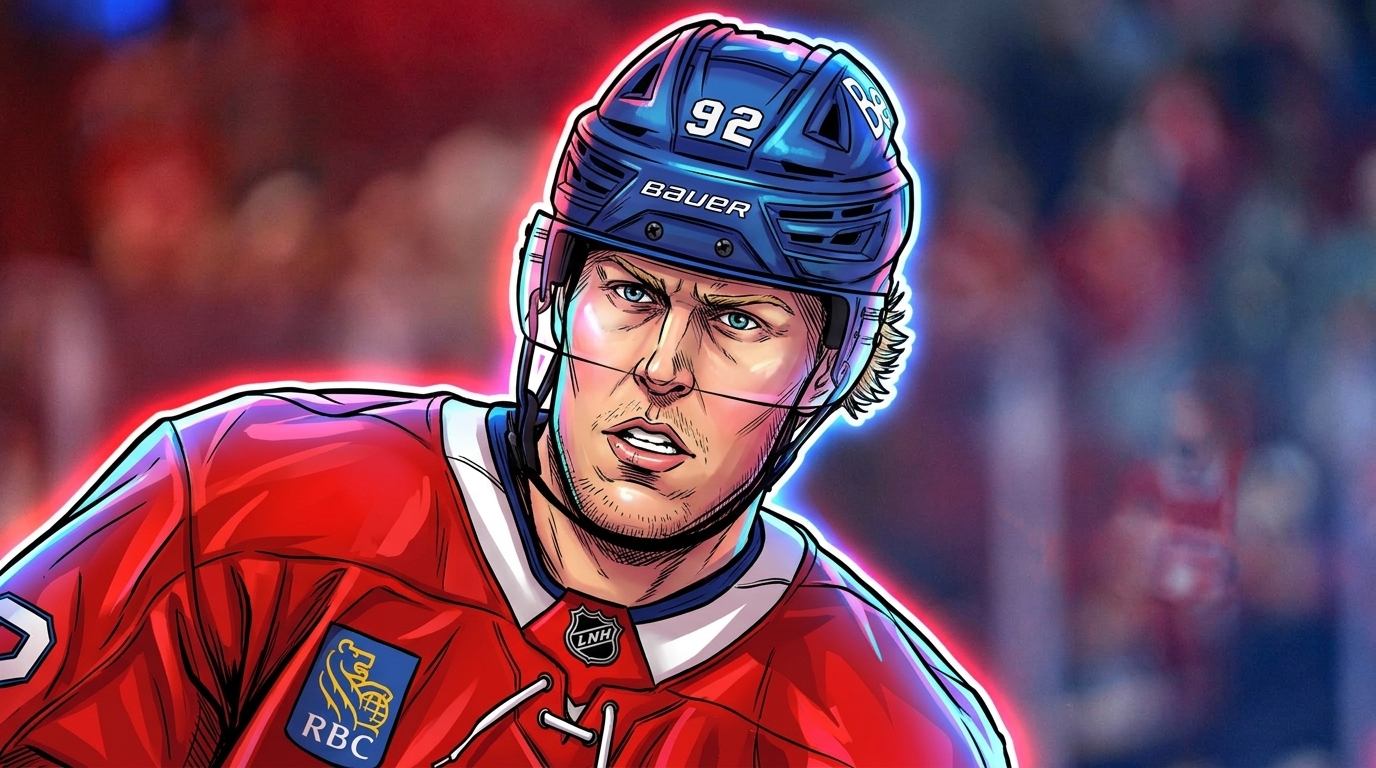

There’s a model for what happens when an NHL franchise fractures at the captain level. I’ve been building it for the past week, and the output is uncomfortable to look at. The inputs are: player leverage, contract years remaining, no-trade clause scope, public disclosure timing, and bidder pool compression. Run those variables through every cap-era captain trade demand, and you get the same answer every time. The selling team loses.
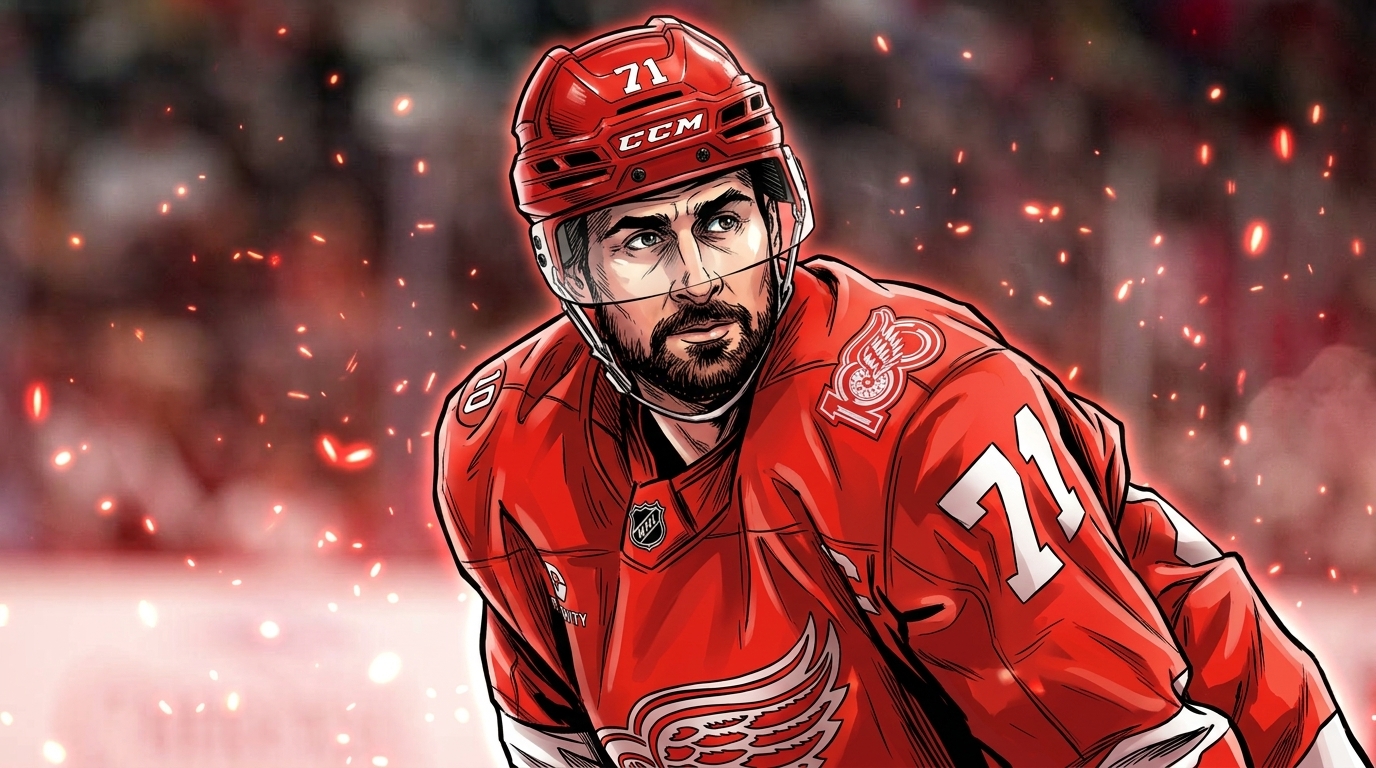
Dylan Larkin has a full no-trade clause, five years and $69.9 million remaining on his deal, and a short list of approved destinations (reportedly Florida, Minnesota, and Vegas). Friedman reported the trade request on June 4. The moment that became public, Detroit’s return window slammed shut — and Steve Yzerman knows it.
https://twitter.com/FriedgeHNIC/status/2062613387280781777
The Captain Leverage Paradox
The core problem: a no-trade clause is designed to protect the player. It does exactly that. But in a trade demand scenario, it also functions as a bidder suppressor that destroys the team’s leverage in direct proportion to how much protection it gave the player.
Larkin can only be traded to Florida, Minnesota, or Vegas. That’s not a market — that’s an auction with three registered bidders who all know they’re the only three registered bidders. Every general manager at that table understands that Detroit’s options are: accept the best offer from this pool, or keep a player who has formally requested out. Neither choice is good. The three approved teams are negotiating from a position of certainty that no normal trade offers.
My dad watches cricket, and he always talks about how a team loses the series the moment their bowlers stop believing they can get wickets. The dynamics are different, but the outcome is identical: once the belief that the status quo is tenable evaporates, the leverage goes with it. Yzerman refusing to blink, telling reporters “I cannot make any guarantees…that request could or would be met,” is the only card he has left. The “no guarantees” posture isn’t stubbornness. It’s the last remaining negotiating tool.
What Happens to NHL Teams When Their Captain Demands a Trade?
In every documented public captain-level trade demand since the 2005 salary cap was introduced, the team trading its captain received below-market value for the player. The compressed bidder pool, the public nature of the request, and the seller’s inability to walk away combine to produce a consistent discount on what open-market value would have been.
Jarome Iginla’s exit from Calgary in 2013 is the clearest case study. Calgary traded its captain (10 seasons wearing the C, 525 goals in a Flames uniform) for Kenny Agostino, Ben Hanowski, and a first-round pick that became Morgan Klimchuk. The three players combined for roughly two dozen NHL games in Calgary before washing out of the organization entirely. Iginla scored 174 points in his next 249 games. Nobody was surprised. Everyone knew Calgary had to move him. That’s the paradox: the more inevitable a trade becomes, the less the selling team gets for it.
Eric Staal’s 2016 departure from Carolina returned Aleksi Saarela and two second-round picks, reasonable for a contract-year rental but underwhelming given the circumstances. Rick Nash leaving Columbus in 2012 is the closest thing to a win for the selling team, and even then, Nash was clearly the best player in that transaction.
The pattern isn’t that the selling team gets nothing. It’s that they absorb a discount they cannot escape, and the rebuild resets by two to three years.
Why Yzerman’s ‘No Guarantees’ Is the Only Correct Play
Larkin’s agent Pat Brisson framed this as collaborative: “We’re trying to work as a ‘team’ together on this.” Smart messaging. But the underlying reality is that Larkin (34 goals last season, fifth consecutive 30-goal campaign, 67 points at age 29) is a legitimate top-six center with prime years ahead of him, and his three approved destinations know that. Proposals received so far have fallen short of what Detroit considers fair value. Yzerman isn’t being obstinate. He’s doing arithmetic.
Yzerman said it plainly: “My job as the manager of the Detroit Red Wings is always to do what is in the best interest of the Detroit Red Wings.” That sentence signals to the three bidding teams that the floor is real, that he’ll hold it through free agency if necessary, and that the price compression they’re counting on isn’t guaranteed.
The franchise has missed the playoffs for 10 consecutive seasons. The 37th captain in Red Wings history, Larkin’s trade demand was coming for years. Yzerman needs to apply the same organizational patience here that he brought to the rebuild itself: refuse to panic-sell into a three-team market.
In Formula 1, a team that releases a driver under mid-contract pressure almost always accepts worse compensation than one that forces the process out. The leverage asymmetry is identical.
What Happens Next for Detroit
The likeliest outcome, per Friedman’s read, is that Detroit trades Larkin before the season. Yzerman is a realist, and a captain who has formally requested out is a chemistry problem that compounds through training camp.
The question isn’t whether the trade happens — it’s whether Yzerman can hold the line long enough to get something close to market value from three teams. He probably can’t get full value. He can, however, get meaningfully better than the Iginla return if he’s willing to run this into fall and let camp pressure work. At least one approved destination, probably Minnesota or Florida, needs a center more urgently than Detroit needs to close this by July.
Rod Brindamour spent 20 years building something in Carolina without ever publicly fracturing the captain relationship. Detroit never got there with Larkin, and that bill is now due.
The Captain Leverage Paradox resolves the same way every time: the player gets his preferred destination, and the team gets less than it deserved. The only variable is how much less. Yzerman’s job is to compress that gap. The only mechanism available is making Florida, Minnesota, and Vegas believe the Red Wings might not deal at all. That’s a hard bluff to sustain. It’s also the only play Detroit has left. Follow our NHL coverage as this situation develops through the summer.