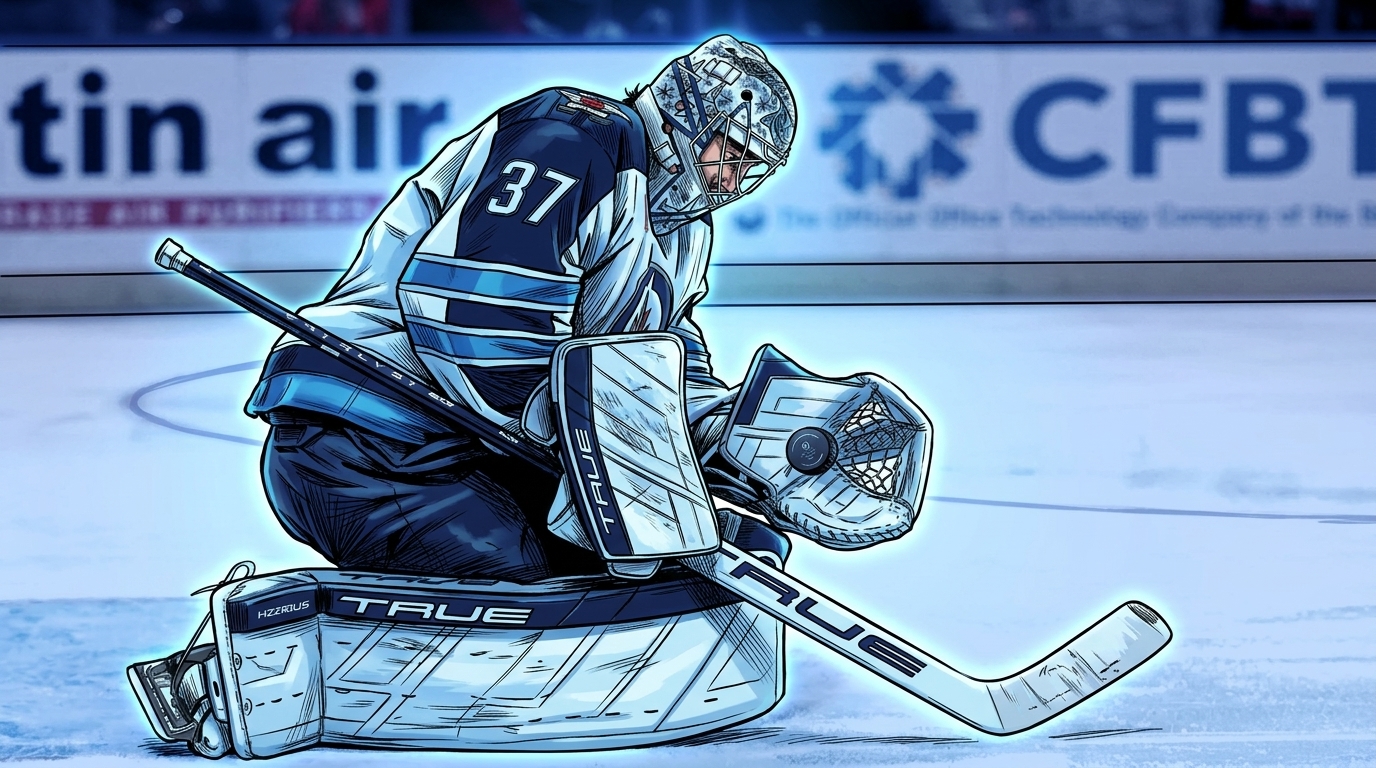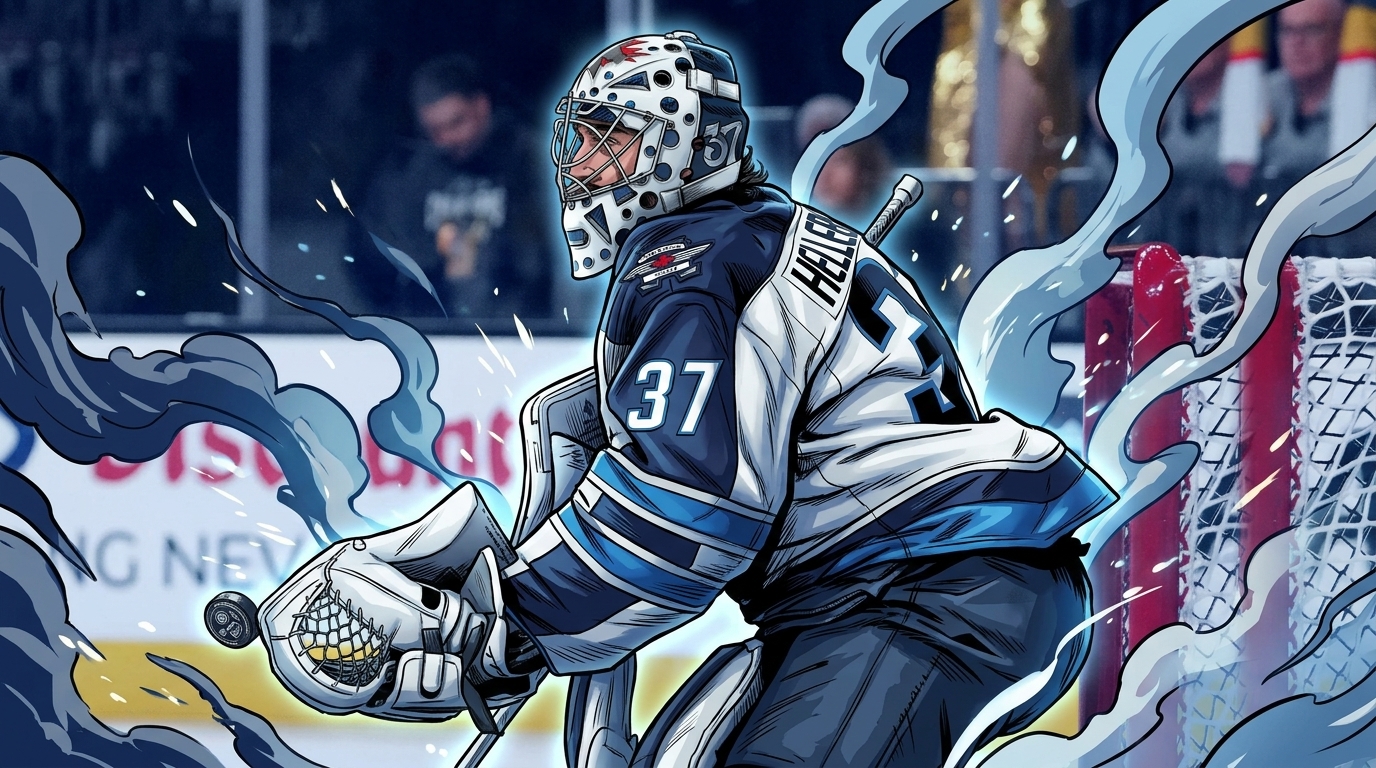

Jordan Staal won the Conn Smythe Trophy at 37 years and 277 days old, breaking a record that stood for 15 years, and the part that deserves the most scrutiny is how little anyone expected this particular player to end up here.
The Conn Smythe is supposed to go to the guy who hijacked the playoffs — the goalie who stood on his head for six rounds, the sniper who lit up every barn on the road trip. Tim Thomas won it in 2011 doing exactly that. What the award is not supposed to do is land in the hands of the best defensive center on a depth-driven team who logged 17 years of patience between championships and never once picked up his phone to call a contender. Except that’s what happened in 2026, and the sport’s most prestigious postseason prize is better for it.
Think of professional sports careers as buildings under construction. Most elite players are skyscrapers — visible from everywhere, finished fast, full of glass. Staal has been something else: a municipal water main. Invisible infrastructure that the whole thing depends on, installed in 2009 in Pittsburgh, rerouted to Raleigh in 2012; still running at full capacity seventeen years later when the city finally learned what it had underneath the street. Hurricanes fans who arrived after 2015 built their entire understanding of the franchise on top of Jordan Staal. They never saw him arrive. He was just there, winning faceoffs at 69% and making the third period feel manageable; and then suddenly he was hoisting a trophy named for the playoff most valuable player, older than any previous winner when he lifted it.
The NHL will file this under “feel-good story,” which is the league’s preferred method of flattening inconvenient facts. The inconvenient fact here is that Staal’s 6 goals and 7 points in six Final games are not a sentimental artifact — they are a legitimate production line. He scored in five consecutive Stanley Cup Final games, the first player to accomplish it since Jean Béliveau in 1956. Rod Brind’Amour said afterward: “It’s kind of an unbelievable ending to a great story. I’m so proud of him. Everyone got to see what I’ve known forever, what kind of player he is, and leader. We’re not hoisting that without him.” That reads like a eulogy. It is also a description of what seventeen years of infrastructure maintenance looks like when the pressure finally comes.
https://twitter.com/frank_seravalli/status/2066357971970318452
The gap between Staal’s two championships — 2009 Pittsburgh, 2026 Carolina — is now the longest in NHL history between a player’s Cup wins, clearing Chris Chelios’s 16-year record. There is a version of this story where that gap reads as tragedy: the years in Carolina when the team was good but not good enough, the franchise rebuilds around him, the quiet accumulation of 972 games and 499 points for a city that, when he arrived in 2012, barely had a hockey culture to speak of. Staal’s version is simpler and, frankly, more interesting: “I’m happy I stuck around. I believed in the culture, I believed in what we were trying to build in Carolina.” That’s not a retirement speech; it’s a thesis statement about what patience actually costs and what it actually returns.
The water main metaphor earns its keep here because infrastructure doesn’t announce itself. Carolina’s 2006 Cup featured Cam Ward — 22 years old, a rookie goaltender, a lightning rod. Their 2026 Cup features a 37-year-old center who wins faceoffs in the dark and skates 18 minutes a night without requiring a feature in The Athletic. The franchise’s entire identity runs through Brind’Amour’s cinder-block culture and Staal’s quiet insistence on showing up; and if that sounds boring, it’s worth pointing out that boring just beat Vegas in six games with a 3-0 shutout to close it out.
Jordan Martinook said you can’t put into words what Staal means to this team. The Conn Smythe Trophy has been trying to explain exactly that since June, and it’s doing a reasonable job.