
There’s a test I call the Same Day Test. If two countries from the same confederation exit the same World Cup on the same day, one of two things is true: bad draw luck, or structural failure. One is recoverable. The other isn’t.
On June 29, 2026, Germany and the Netherlands both lost in the Round of 32. Germany fell to Paraguay on penalties, 4-3, after finishing second in their group. The Netherlands fell to Morocco on penalties, 3-2, giving up an equalizer in the 91st minute. Two countries with a combined eight World Cup final appearances (Germany with 4 titles, the Netherlands with 3 finals and zero wins) were eliminated on the same afternoon by teams that didn’t exist as World Cup contenders a generation ago.
That is not bad luck. That is a data point.
https://twitter.com/espn/status/2071737620208496799
Three Eliminations in a Row. Not Bad Luck.
Julian Nagelsmann said it plainly after the Paraguay loss: “We are not part of the first class teams any more. This is now the third elimination in a row.”
He’s right, and the progression matters. Germany were eliminated in the group stage in 2018 — as defending champions, a statistical anomaly so extreme it still gets cited in probability discussions. Then group stage again in 2022. Now Round of 32 in 2026, knocked out by Paraguay on penalties after Germany lost to Ecuador in the group stage, a result that had already telegraphed what was coming.
The penalty record adds another layer. Germany had won every World Cup shootout they’d ever entered: four for four across four decades of tournament football. Against Paraguay, Kai Havertz, Jonathan Tah, and Nick Woltemade all missed. A VAR disallowance on a Tah header in extra time will get debated, but shootouts are outcomes, not causes. A team playing with confidence converts those.
Germany’s group stage record reads like a team cycling between false signals: a 94th-minute winner against Ivory Coast, a 2-1 loss to Ecuador, a 7-1 rout of Curacao. The Curacao scoreline created the illusion of menace. Ecuador removed it.
Why Are Germany and the Netherlands Out of the 2026 World Cup?
The short answer: both sides failed to solve defensive organization while opponents prepared to exploit the gaps in traditional European high-line systems. Germany lacked cohesion to close out a shootout. The Netherlands conceded from a set piece in the 91st minute despite controlling the final stretch: an organizational fragility, not a moment of misfortune.
The longer answer is a decade-long talent pipeline problem that neither federation has publicly acknowledged.
Europe still holds the historical edge: UEFA nations have won 12 World Cups to CONMEBOL’s 10, with no confederation outside those two ever lifting the trophy. But the last non-European, non-South American nation to reach a World Cup semifinal before 2022 was South Korea in 2002. Then Morocco did it in Qatar. Now Morocco is in the Round of 16 in 2026, having just eliminated the Netherlands with a squad where 19 of 26 players were born outside Morocco.
What Morocco’s Run Actually Means
Walid Regragui’s Morocco runs a compact defensive block with disciplined pressing and rapid transitions through wide areas. That’s a description, not a compliment. The real signal is that multiple international programs have publicly cited Morocco’s 2022 tournament as a direct tactical blueprint. Jordan’s coaching staff named them outright. Turkey’s technical department referenced Regragui’s pressing approach and recovery shape in their own planning.
This is how tactical diffusion works. A team demonstrates something new — sustainable pressure built on collective organization rather than individual quality. Within two cycles, the methodology proliferates. Morocco beat Belgium, Spain, and Portugal in 2022. Those weren’t upsets by the time they happened. They were the logical output of a better-prepared system against sides that hadn’t adjusted.
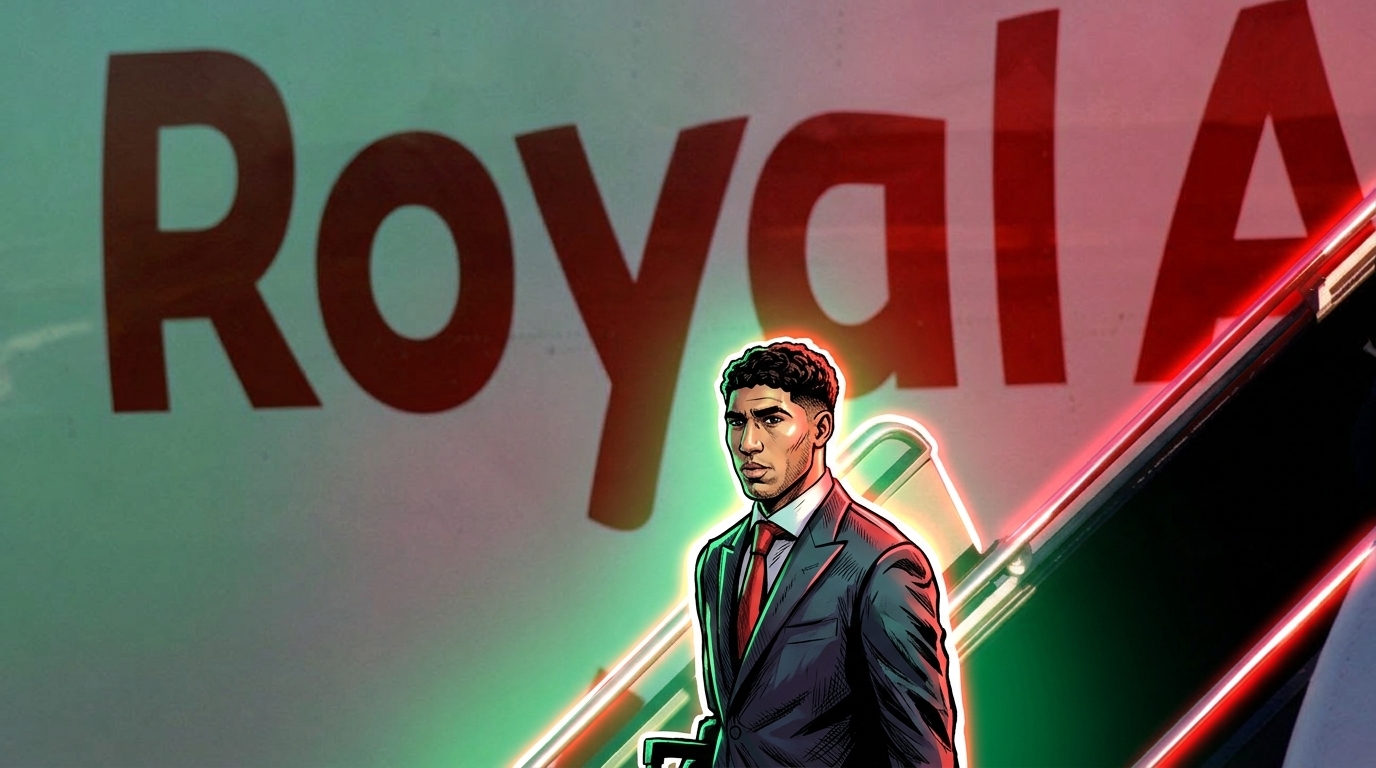
Achraf Hakimi is the individual anchor of this run. The PSG right-back led Morocco in completed passes (144), crosses (10), and shots on target (5) across the group stage. He also hit the crossbar against the Netherlands and, more painfully, missed a penalty in the same shootout Morocco won 3-2. The team absorbed his individual failure without fracturing. That’s the separation between a system and a collection of players.
https://twitter.com/brfootball/status/2071806285016621134
The Saibari detail deserves attention. Ismael Saibari has played his entire professional career in the Netherlands. He scored the penalty that knocked the Dutch out. The irony is real, but the deeper point matters more: Morocco’s squad is built from diaspora talent, players who trained inside European academy systems, absorbed European tactical education, and are now deploying it against the programs that produced them.
Europe Still Has Teams Left. That’s Not the Point.
France, Spain, and Portugal are still in. Anyone citing those names as evidence that Europe’s decline is overstated is conflating surviving the Round of 32 with underlying competitive health. Germany and the Netherlands aren’t anomalies at the bottom of UEFA’s talent distribution. They’re historically two of the best programs the confederation has ever produced.
The evidence suggests we are watching a genuine competitive rebalancing, not a temporary blip. South America has 10 World Cup titles and Africa has zero, but that gap is narrowing not because of individual players, because entire federations have built systems that function without relying on a generational talent to paper over organizational deficiencies.
Germany’s next cycle begins now, with a coaching staff that just watched three consecutive tournaments end in elimination. The Netherlands rebuild from a set-piece concession in the 91st minute of a game they were winning on the run of play. Both federations have the resources and the coaching capacity to compete. What they lack is an honest accounting of why two of the most decorated programs in World Cup history failed the Same Day Test.
Morocco plays Canada in the Round of 16 on July 4 in Houston. Follow our World Cup coverage. That’s where the new order becomes impossible to ignore.