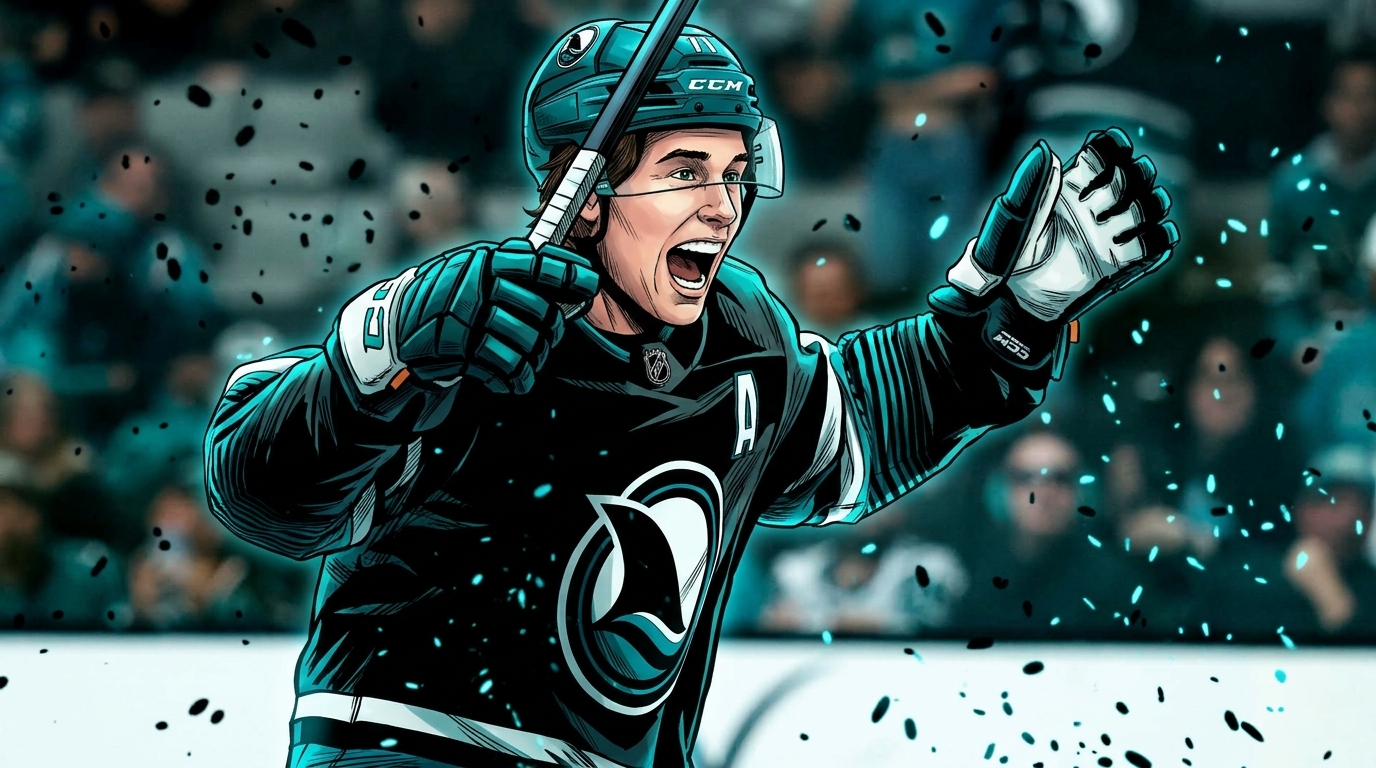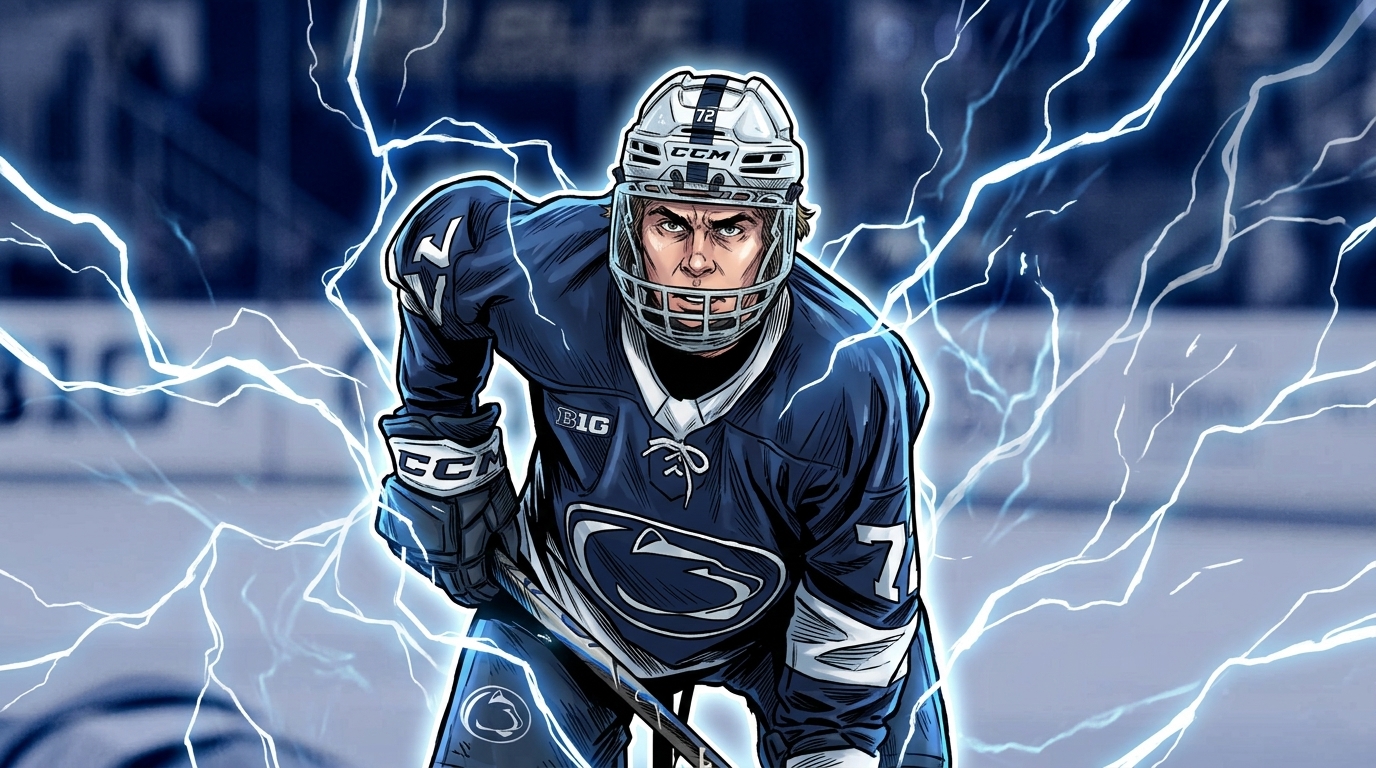
We’ve been watching draft season build for weeks — the trade rumors, the positional debates, the consensus chase — and we nearly buried the most interesting story in the whole thing under a pile of scouting-report noise. Gavin McKenna is going first overall to Toronto tomorrow in Buffalo. That much is settled. What the NHL does with the rest of it is the open question, and the answer, if recent history is any guide, is: not nearly enough.
McKenna is 18, from Whitehorse in Canada’s Yukon, a left wing who left the Western Hockey League’s Medicine Hat Tigers to pursue the NCAA path at Penn State. The choice was deliberate. It was also, depending on whom you ask, either visionary or an unnecessary detour for a player who was always going to be the best prospect in his class. What isn’t debatable is what he did once he got there: 51 points in 35 games, a 1.46 points-per-game pace that placed him fifth in all of NCAA scoring, and the Big Ten scoring title. He set or tied nine Penn State school records. He was a Hobey Baker Award top-10 finalist as a freshman. He is, per NHL Central Scouting, the No. 1 ranked North American skater in the 2026 class.
There’s a “but.” There’s always a but with McKenna: he’s 5-foot-11 and 170 pounds. In NHL draft rooms, that’s the number that keeps some scouts up at night. ESPN’s prospect analysis gave him an 88% probability of playing 200 or more NHL games (the Clayton Keller comp — 5-10, 169 lbs, five seasons into a legitimate top-line career) but also noted that “there is no consensus on any player except Gavin McKenna, and even he has scouts questioning whether he should be the first player off the board.” That’s not nothing. It’s also not really the point. The doubt is real; it’s also manageable.
What’s harder to manage, for the NHL at least, is everything else McKenna brings to tomorrow’s room.
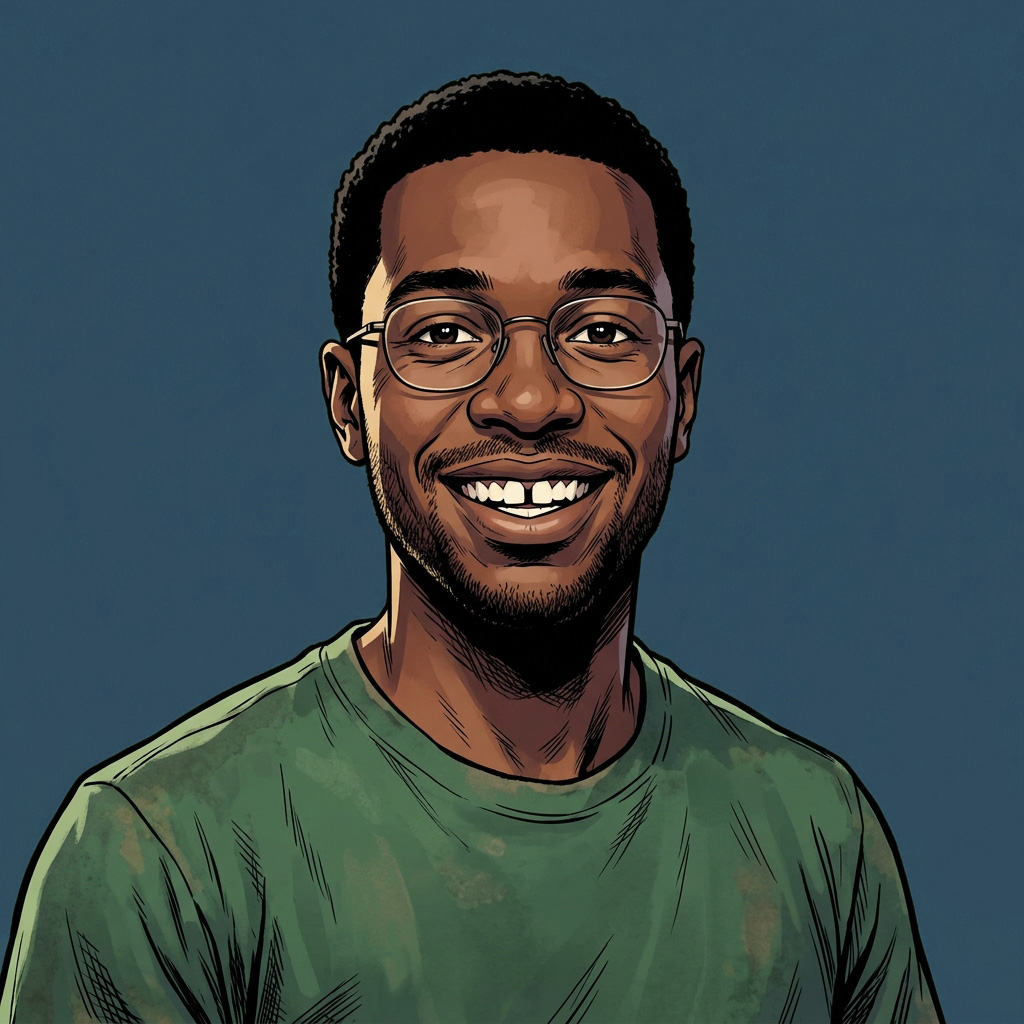
His grandfather is Joe Mason, 72 years old, a survivor of Canada’s residential school system (the network of institutions that separated Indigenous children from their families for more than a century, documented now for the abuse that defined them). McKenna has spoken about what Mason told him: about being left in the mountains as a child and made to survive alone for days. “If I’ve got something going on in my life that’s hard,” McKenna told NHL.com’s Mike Morreale, “I know it’s nothing compared to what he’s gone through.”
https://twitter.com/mikemorrealeNHL/status/2068661905388925177
McKenna’s connection to that history isn’t abstract or performative. He carries it literally: a tattoo that includes his grandfather’s cabin (the one Joe Mason built with his own hands), the coordinates of the Tombstone Mountains, a wolf for his clan, a moose. He received the Tr’ondëk Hwëch’in First Nation’s 2022 Role Model of the Year award. He mentors younger Indigenous players. When his name gets called tomorrow in Buffalo, the Tr’ondëk Hwëch’in community will be watching from a watch party in Dawson City. McKenna would become the first Indigenous player ever selected first overall in NHL Draft history.
That sentence deserves to exist on its own.
The NFL Draft drew 13.2 million viewers in round one this past spring, and the league spent months building the narrative infrastructure around its top prospects. Background pieces, family segments, the whole apparatus. The NHL, which just completed its highest-average-viewership regular season in 14 years, will get something in a pre-roll on their broadcast. The decentralized draft format, now in its second year after abandoning the players-attend-in-person model, doesn’t help either: McKenna won’t be walking across a stage in Buffalo with his family in the crowd, which strips away the one moment that makes casual viewers stop scrolling.
I used to compile research for analysts who went on television and never credited the sourcing. I know exactly what a produced piece on McKenna’s grandfather, the residential schools, and a teenager from Whitehorse going No. 1 overall would look like when given the full treatment. It would stop people. The NHL knows it too, somewhere, at some level, and still doesn’t have the institutional muscle to make it land at scale. That’s not a knock on individual journalists covering the draft; the beat reporters are doing the work. It’s the league apparatus that can’t convert the story into the moment.
The on-ice story is strong enough to carry this on its own terms. Toronto GM John Chayka made the trip to visit McKenna before the draft (he made the trip, which is something you do when you’re certain), and McKenna has expressed genuine appreciation for the Leafs. At his ceiling, McKenna is a top-line contributor for a Maple Leafs franchise that has spent years searching for its next face. That’s not a small thing to offer a fanbase that has been patient for a while now, and not always by choice.
The World Juniors earlier this year offered the clearest preview of what he can do when everything clicks. McKenna posted 14 points in seven games for Team Canada, earned player-of-the-game honors twice, and played through a tournament that required him to be something other than the best player on the ice every shift. Canada came home with bronze. McKenna came home with credibility.
There’s a version of this story where the size concern turns out to be the whole narrative: undersized prospect doesn’t translate, cautionary tale, the scouts were right. It happens. Keller is the counterargument, but Keller is also the exception cited precisely because exceptions need names. The more honest read is that nobody actually knows yet, which is fine, because that’s what training camps and first seasons are for. What we do know is that McKenna produced at a rate Penn State hadn’t seen before, did it against college competition that increasingly pipelines into the NHL, and did it while carrying a cultural weight that most 18-year-olds aren’t asked to shoulder. The combination doesn’t guarantee anything. It does make him worth watching closely.
What to watch for tomorrow in Buffalo: whether the NHL broadcast gives Joe Mason his moment, or whether the most compelling family story in the 2026 Draft cycle gets 45 seconds between commercial breaks. Watch whether Chayka comes to the podium looking like someone who knew all along. Watch whether the first Indigenous player ever selected first overall gets the framing the moment requires, or whether the league fumbles it by keeping the camera too close to the jersey and too far from the reason the jersey matters. The first round is already chaos before Toronto even walks to the podium, but pick one should be the easiest thing about tomorrow night.
The story is already written. The question is who shows up to tell it.