
The England Ghana World Cup 2026 match produced exactly what England always produce at major tournaments: total domination of the ball, total failure to do anything with it, and a manager who seems genuinely unbothered by this combination.
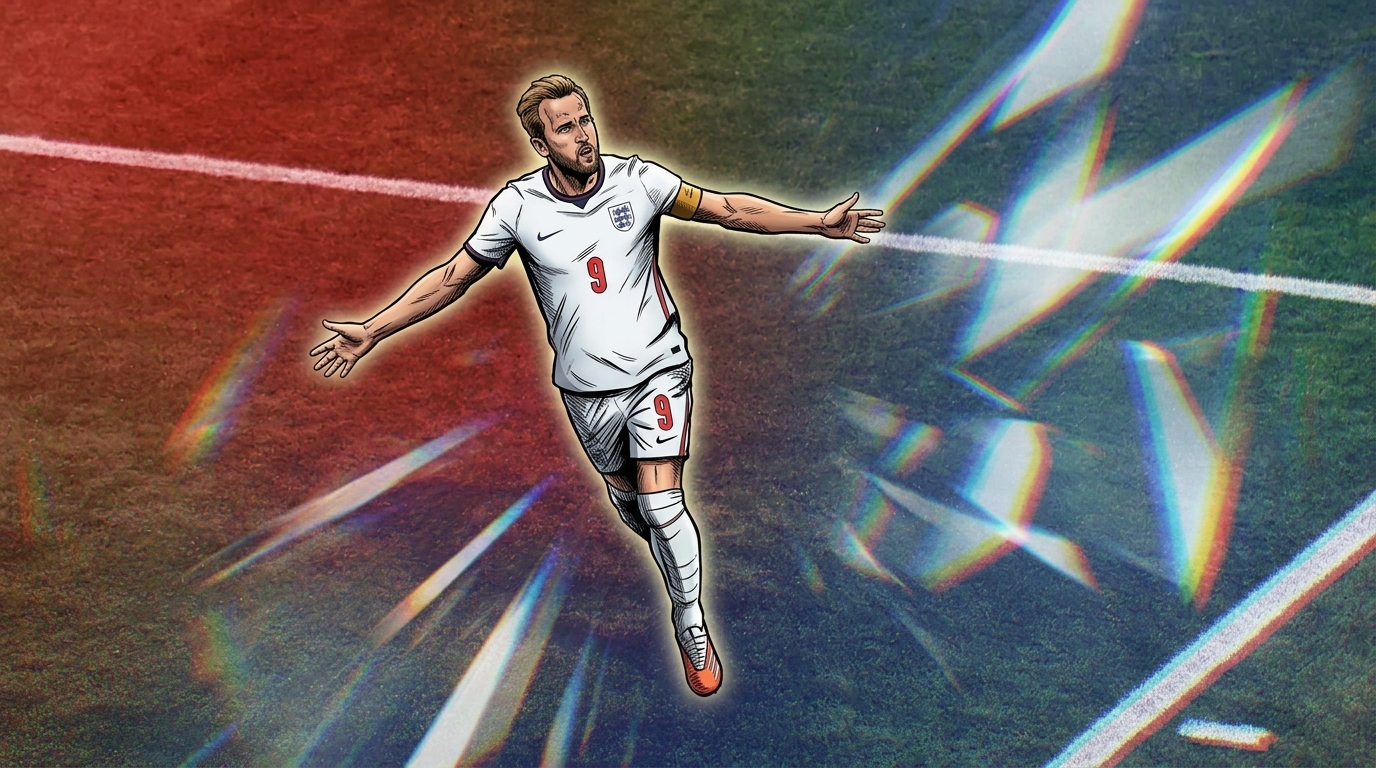
Harry Kane was standing in the penalty area in the 87th minute with the goal in front of him and a rebound at his feet. Nico O’Reilly’s header had clipped the crossbar. The ball fell to the England captain — open, six yards out, England needing a goal the way a drowning man needs a rope. Kane skied it over the bar. “I just couldn’t quite get over the ball,” he said afterward, which is the kind of technical explanation that feels like a confession of something much larger. The final score: England 0-0 Ghana. England had 79% possession. England had 19 shots. Ghana had one.
Think of England as a very expensive machine designed to convert raw materials into finished goods. The factory floor is immaculate; the conveyor belt runs perfectly; the workers are among the best in the world at moving product from one end to the other. The finished goods never come out. Managers arrive, redesign the process, hire efficiency consultants, retool the assembly line. The factory still produces nothing. Thomas Tuchel is the latest man brought in to fix the machine; he has spent nine months insisting the machine is actually fine.
“I’m not frustrated,” Tuchel said after the England Ghana World Cup 2026 match. “I saw it coming as I knew this would be a difficult game.” He added: “We had enough shots and crosses and a big chance with Harry Kane. It is what it is.” The phrase “it is what it is” is doing an extraordinary amount of load-bearing work here; it is the verbal equivalent of a company issuing a press release that says “quarterly earnings were disappointing, going forward we remain committed to earnings.” Tuchel did not look like a man who had watched his striker sky a rebound from inside the six-yard box three minutes from time. He looked like a man who had correctly anticipated that this would happen and was at peace with the outcome.
https://x.com/brfootball/status/2069542644967948643
Twenty-three World Cup draws. The most of any nation in the history of the competition. England do not lose at World Cups; they draw. They draw with precision and commitment; they draw against teams they were supposed to beat and teams that were supposed to beat them; they draw in ways that are somehow more demoralizing than defeats because defeat at least implies you were threatened. The night before, Portugal beat Uzbekistan 5-0 — Ronaldo scored twice, looked thrilled about it, the whole business concluded in the manner of a foregone conclusion arriving on schedule. England had five times the possession of Ghana and still required Marc Guehi to head a ball off his own goal line in stoppage time to preserve a scoreline that nobody wanted.
Jude Bellingham won Man of the Match and said he didn’t deserve it. He was right; it should have gone to a Ghana defender. Declan Rice noted that “loads of top nations drew their first game” — England’s first game was a 4-2 win over Croatia, so that line applies to exactly zero games England have played at this tournament. The math is being asked to do things math cannot do.
Kane’s goal drought is not disqualifying for the Golden Boot race at this World Cup; he scored in the opener, which means he has a number attached to his name, which is more than can be said for his performance against Ghana. Panama is next, June 27. England will likely score against Panama; Panama has lost both games and been eliminated. England will likely advance to the knockout round. England fans will likely be furious the entire way through. This is the special misery of following England: the team is competent enough to advance and incompetent enough to make every step of the journey feel like a punishment. Tuchel says he’s not frustrated. The rest of England will cover his share.