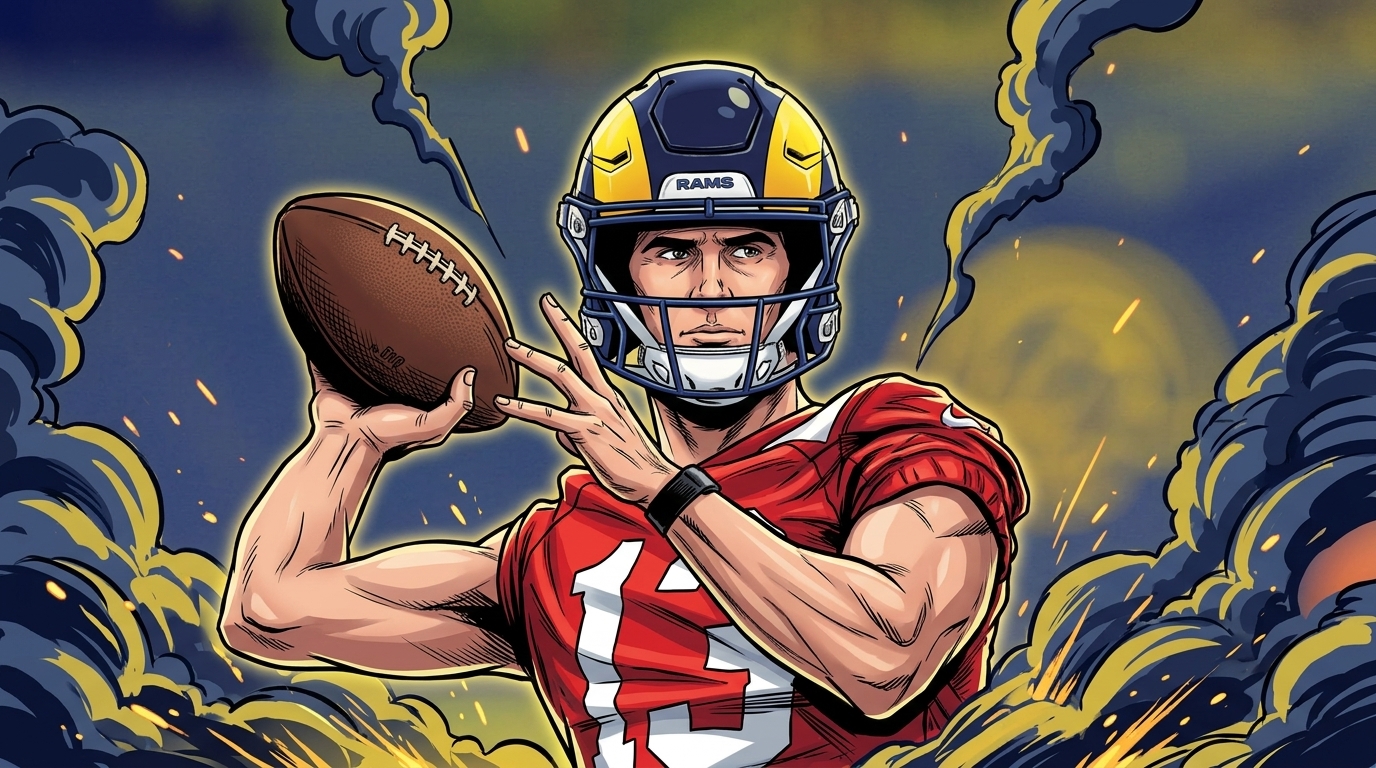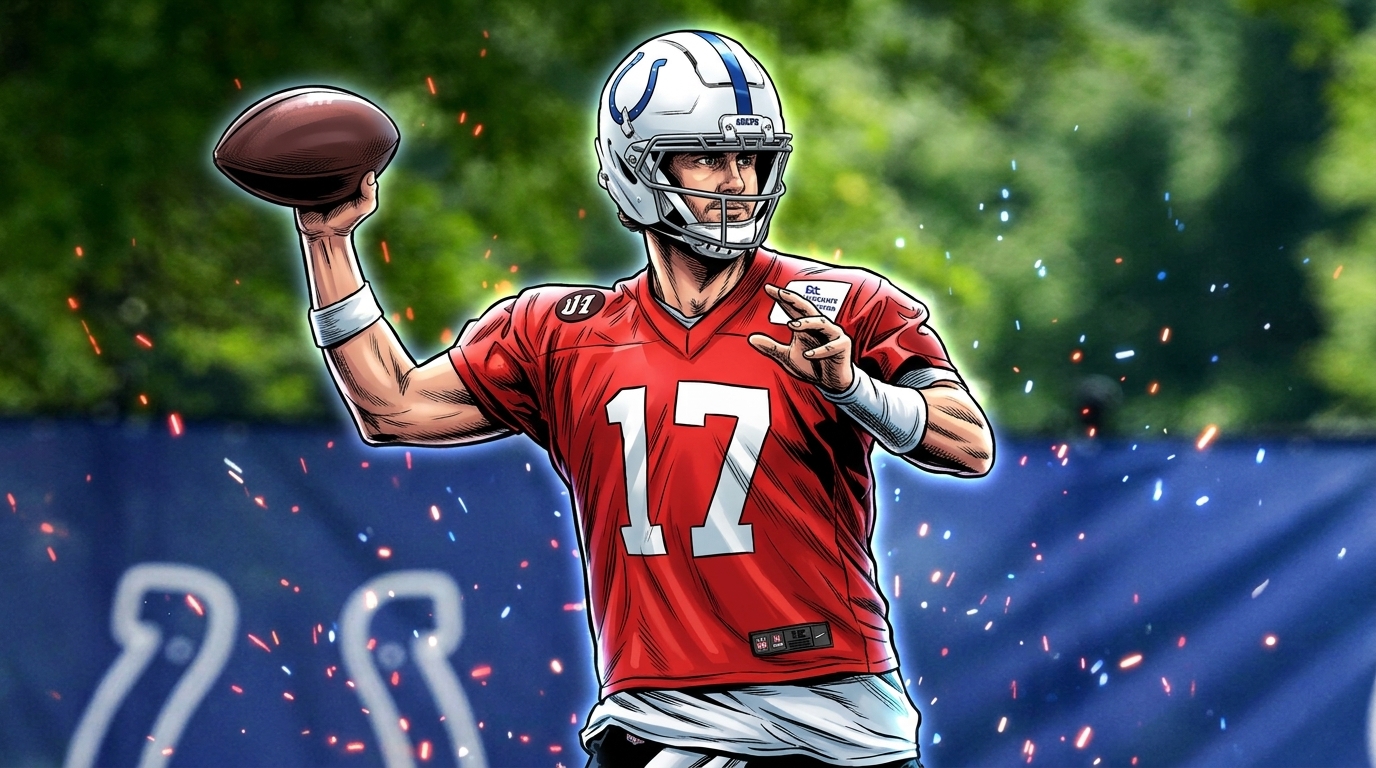

There’s a date everyone’s using to explain Daniel Jones’s recovery, and it’s not the one that actually tells you anything about his 2026 season. Jones tore his right Achilles on December 7 in a loss to the Jacksonville Jaguars, had surgery to repair it, and told The Pat McAfee Show last week that he’s fully cleared for Indianapolis Colts training camp, comfortably ahead of the nine-to-twelve-month window doctors typically quote for that injury. That part is real, and it’s good news. It’s also not the number that decides whether the Colts have their franchise quarterback back.
The Timeline Jones Actually Beat
Jones was also playing through a fibula fracture in the weeks before the Achilles tear, which may have factored in: compensating for one injury is a good way to create a second one. He underwent surgery to repair the torn Achilles shortly after, and by his own account, he’s ready to go full speed again:
https://twitter.com/PatMcAfeeShow/status/2081779220468969648
Eight-ish months from tear to full-team drills. Yardbarker put the number at roughly 7.5 to 8 months against a standard 9-to-12-month recovery window, and the Colts are comfortable enough with it that they’re letting Jones practice as a full participant right away, even while they manage his reps early on. Riley Leonard and Anthony Richardson are still on the roster behind him, and the team will keep evaluating both. But this is Jones’s job to lose, on a two-year deal worth up to $100 million that Indianapolis handed him after using the franchise tag, and he’s walking into camp on schedule.
Is “Cleared” the Same Thing as “Explosive”?
No. Clearance means the Achilles has healed enough to handle full-contact reps, a medical threshold. Explosiveness means the scramble speed and pocket burst are back to where they were before the injury, an athletic threshold that historically shows up later, if it shows up at all in year one.
Jones basically said this himself. Talking to James Boyd of The Athletic, he drew the line without anyone having to push him on it: “I’m doing everything. Cleared to do everything. I think it’s just about, at this point, sharpening that, getting more explosive, getting stronger, kind of improving what you can do. I can do everything and feel really good doing it.” That’s a player telling you, unprompted, that clearance and burst are two separate boxes to check. Only one of them is checked right now. ESPN reported that Jones himself anticipates needing another month of team drills just to feel like he’s back at 100 percent, even while fully cleared today.
What Rodgers and Cousins Show About the Gap
This isn’t a hypothetical gap. It has a track record, and the track record isn’t encouraging. Aaron Rodgers came back from his own Achilles tear averaging 6.7 yards per attempt, per Draft Sharks — roughly two full yards below what a competent starting quarterback needs to average, the difference between a functional offense and one defenses stop worrying about. Kirk Cousins ran 7.7 Y/A with 16 interceptions across 14 games in his return season before he actually was benched. Jones, for comparison, put up a career-high 8.1 yards per attempt in 2025, completing 68 percent of his throws with a QBR of 64.1, the best statistical season of his career, cut short by the injury in December.
Here’s the part that should worry Colts fans more than the calendar does: Jones leans on his legs more than Rodgers or Cousins ever did. Neither of those two built his game around scrambling and extending plays; Jones does. If burst is the piece that’s slowest to return after an Achilles tear, and Jones’s offense depends on burst more than theirs did, the gap matters more for him than it mattered for either of them. The one thing working in his favor is age. Jones is 29, twelve years younger than Rodgers was during his comeback and seven years younger than Cousins was during his. Younger tissue heals faster and more completely, and Jones has reportedly talked through the rehab process with both of them directly about the value of patience.
I run this exact type of injury-return regression in my fantasy baseball model every offseason. It’s baseball data, but the pattern holds across sports: medical clearance shows up in the box score weeks before the underlying performance catches up to it. It’s not a football-specific phenomenon. It’s just how soft tissue works.
Other camps are dealing with a version of this uncertainty on a much bigger scale. Atlanta and Houston both have real training camp quarterback battles to sort out before Week 1. Jones doesn’t have that problem. He’s the unquestioned starter, on a big contract, with a defined timeline back, which means the stakes for him aren’t about winning a job. They’re about proving the job was worth what Indianapolis paid for it, and how quickly a quarterback’s standing can shift once real snaps start counting again.
The Number That Actually Decides Jones’s Season
Forget the eight-month mark. The number that matters is the one nobody can measure yet: how many of his 2025 scrambles Jones can still make once the pads go on and the defense is live. Clearance gets him onto the practice field. It doesn’t tell you whether he still has the first step that made him a career-year quarterback in the first place.
My money’s on the burst coming back, not fully by Week 1, but by midseason. Jones is younger than both of the relevant comparisons by a wide margin, he’s already ahead of the standard recovery clock, and he’s clearly done the homework on how this specific injury heals. But “cleared” was never going to be the hard part. The hard part starts the first time he has to plant on that leg with a rusher bearing down — and that’s a test date on nobody’s calendar. Check back on Jones once the training camp reps actually start counting, not before.