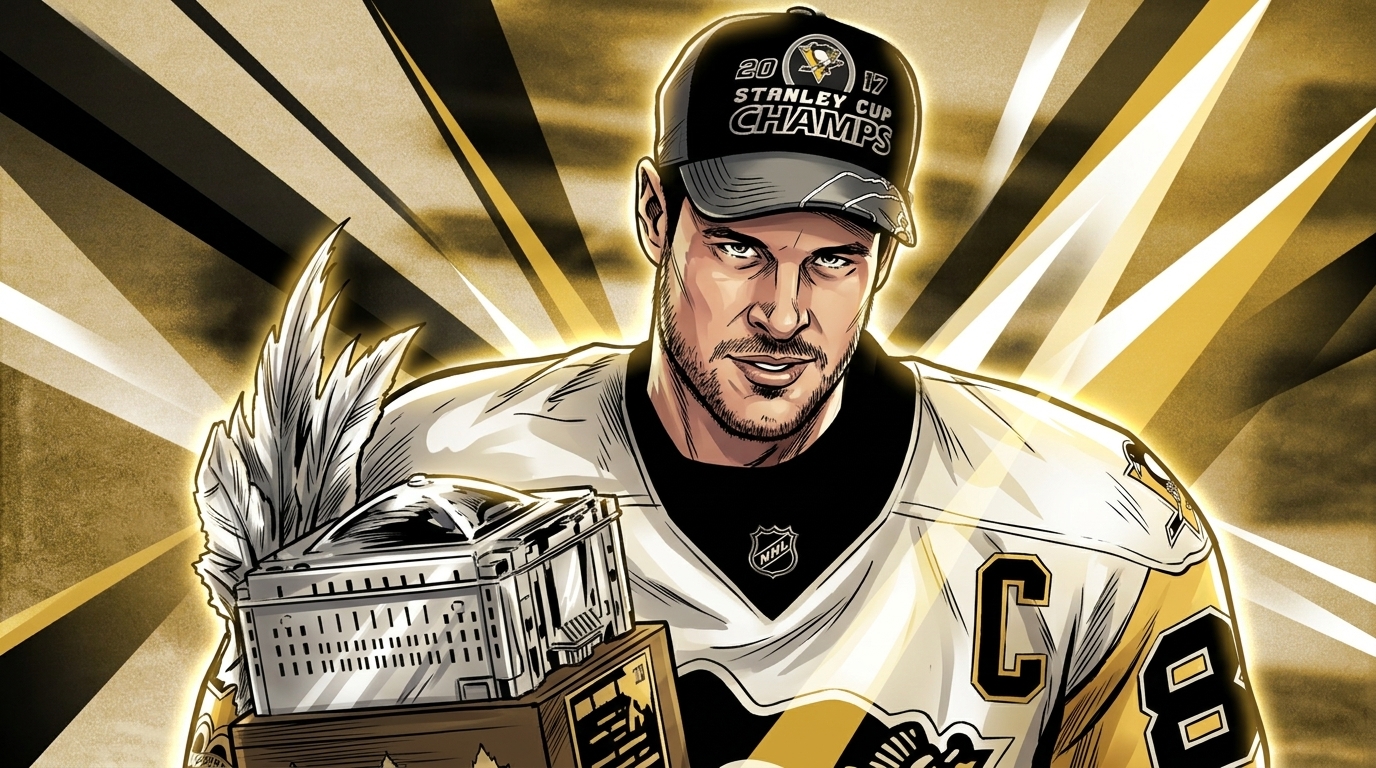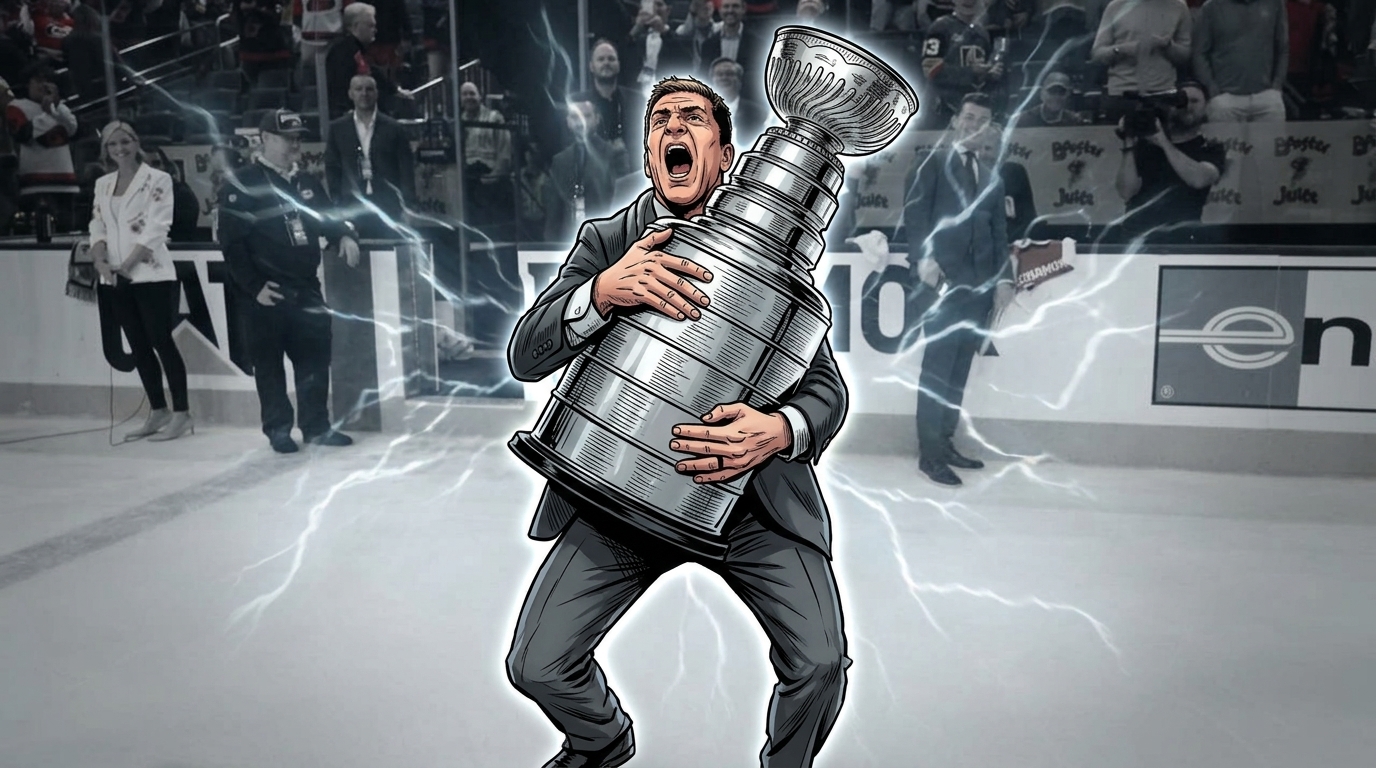
We’ve been watching this particular thread pull tight for years: the man who lifted the Cup as Carolina’s captain in 2006, staying in Raleigh through ten consecutive playoff-less seasons, becoming an assistant, becoming the coach, winning the whole thing again on June 14 in Las Vegas. Per NHL.com, Rod Brind’Amour became the fourth person in NHL history to win the Stanley Cup with the same franchise as both captain and head coach. The list is short enough to fit in a sentence. The story behind why it’s that short takes about twenty years to tell properly.
https://twitter.com/espn/status/2066358848366002627
Who Else Has Done This — and Why the List Is So Short
Four coaches in NHL history have won the Stanley Cup with the same franchise as both captain and head coach: Toe Blake (Montreal Canadiens), Hap Day (Toronto Maple Leafs), Cooney Weiland (Boston Bruins), and Rod Brind’Amour (Carolina Hurricanes, 2006 as captain, 2026 as coach). Brind’Amour is the first to accomplish this in the modern expansion era.
That context matters more than it might appear. Blake, Day, and Weiland all did it inside the Original Six, a closed ecosystem where personnel movement was tightly controlled and long organizational careers were common by necessity, not virtue. The expansion era opened up everything: free agency, salary arbitration, coaching carousels, GMs with five-year mandates and ownership groups that fire everyone when the arena gets restless. Staying long enough to win twice in the same jersey, separated by twenty years, is not just rare. It’s nearly impossible to engineer.
Brind’Amour did it anyway. What his coaching record actually looks like makes the case without much editorial help: 46 wins in his first season, a playoff team every year since 2018-19, and 16 wins in 20 playoff games this spring.
The Ten Years in the Wilderness Nobody Talks About
The part of this story that gets compressed is the decade Brind’Amour spent in Raleigh when nobody outside Carolina was paying attention. That decade is what makes the 2026 championship more than a nice symmetry piece.
He was 35 years old when the Hurricanes beat the Edmonton Oilers in Game 7 of the 2006 Stanley Cup Final. He was the captain, the emotional center, the first Hurricanes player to touch the Cup. The franchise was 9 years into Raleigh (relocated from Hartford in 1997) and had just beaten a city, Edmonton, that had been playing NHL hockey since the WHA days of 1972. Raleigh threw a parade for a city that had been, to put it charitably, ambivalent about the NHL since the franchise arrived from Hartford. The organization had arrived, improbably, at the top of the sport.
Then came 2007, 2008, 2009. The playoffs missed. Then 2010, 2011, 2012. The organization cycled through GMs and coaching staffs. Brind’Amour retired as a player after 2009-10, but he didn’t leave. He took an associate coaching job with the team that had won him a championship, working under Kirk Muller and then Bill Peters, accumulating years and institutional knowledge in a market that most NHL observers treated as an afterthought. (The phrase “hockey in the South” was still being deployed as a punchline in national media as recently as 2016, as though the sport’s geography was a joke with a reliable punchline.)
By 2018, Carolina had missed the playoffs for ten consecutive seasons, the longest active drought in the league. When they hired Brind’Amour as head coach on May 8, 2018, the hire read locally as a loyalty play. His first season produced 99 points, a seven-game first-round win over the Washington Capitals, the defending Stanley Cup champions, and a trip to the Eastern Conference Final. It was not a loyalty play.
What This Means in an Era When Everyone Moves
The Hurricanes’ dominant start to these playoffs set the tone for what followed: a 16-3 run through four rounds that ended with Carolina beating the Vegas Golden Knights 4-2 in the Final. The organization that spent a decade invisible in the national conversation now holds the cleaner dynasty argument than anyone else in hockey. Two Stanley Cups. Both of them with Brind’Amour touching the trophy.
As ESPN’s feature on the “jock-nerd alliance” detailed, the pairing of Brind’Amour’s old-school intensity with GM Eric Tulsky’s analytics-driven roster construction built something that sustained itself through trades, drafts, and salary-cap gymnastics. That’s the modern version of institutional continuity: not one person staying, but one person anchoring a philosophy long enough for a front office to form around it.
Jordan Staal’s Conn Smythe win is part of the same thread. Staal arrived in Carolina in 2012, in the middle of the drought, and is still there fourteen years later. He and Brind’Amour are proof of concept for something the modern NHL doesn’t often incentivize: staying. Trusting the place. Not optimizing exits.
Brind’Amour told reporters after the Game 6 win that this was “the greatest team that has ever won the Stanley Cup.” Coaches say that kind of thing after championships. But the quote lands differently coming from someone who has been in the building as player, as assistant, as head coach, long enough to have watched every iteration of what this franchise could be. He sat through the 2012, 2013, 2014 seasons. He was in the film room when Carolina was one of the worst teams in professional hockey and nobody was watching. He knows the worst version of it. He built the best.
The contrast with Blake, Day, and Weiland isn’t only chronological. Those three men captained and coached franchises in an era before players and coaches had the agency to leave easily. The reserve clause, not loyalty, kept people in place. The market didn’t permit careers that looked like Brind’Amour’s. His career looks like that in 2026, when the market practically demands the opposite: take the offer, collect the ring wherever it’s available, optimize for personal legacy over organizational investment. Every modern coaching hire is framed as a “culture change.” Brind’Amour never had to change the culture. He was the culture, waiting for the roster to catch up. That’s the distinction worth isolating from the larger championship story.
(He is still not in the Hockey Hall of Fame, per ESPN’s reporting from earlier this year. Two Stanley Cup rings as a player and coach of the same franchise, a 20-year organizational legacy, and a coaching record that includes both championships in franchise history. The Hall will, presumably, get around to this.)
https://twitter.com/Canes/status/2066493719516250145
What to Watch Next
The question now is whether the Hurricanes can do what almost no modern NHL franchise has: repeat. The league’s salary cap and free agency rules are designed, in effect, to prevent it. Carolina, with a deep roster and key players entering contract years, faces an offseason of difficult decisions that every champion eventually confronts.
The secondary question is more interesting in the long run. Brind’Amour is 55. He has a contract. He has won with this franchise as a player and a coach and has no obvious reason to stop. If Carolina retains its core, the 2026-27 team enters the season as the clear Cup favorite, with the same coach who has been building toward this since the Obama administration. That kind of continuity compounds. The Hurricanes have accumulated organizational knowledge about how to win with this particular group, in this particular city, at this particular moment in the salary-cap era, and none of that knowledge is leaving Raleigh this summer. That is worth something the standings don’t fully capture.
More broadly, the Brind’Amour story is now the clearest argument for what long-term organizational investment looks like when it actually works. Whether any franchise can replicate it, or whether it requires the particular circumstance of one person willing to weather a decade of irrelevance for a city he chose, is the harder question, and one that won’t have an answer for another twenty years.
Hockey-Reference carries the full coaching record through this spring for anyone who wants the granular accounting. The number that keeps standing out isn’t the win percentage. It’s the year the job started: 2018. That’s eight seasons ago. In this league, that kind of tenure is the real milestone.