We should sit with the number before explaining it, because nine of ten sounds like a typo the first time you read it. Nine of ten African nations at the 2026 World Cup advanced past the group stage: Algeria, Cape Verde, Côte d’Ivoire, DR Congo, Egypt, Ghana, Morocco, Senegal, South Africa. Tunisia was eliminated. Everyone else is playing knockout football in America right now, and the scaffold of how we understood the global game has shifted so quietly that most people haven’t caught up yet.
This is not an upset story. It’s a story about infrastructure, patience, and two decades of compounding investment finally clearing the ledger.
What Does Nine of Ten Actually Mean Historically?
Before this tournament, nine different African countries had combined for eleven total knockout appearances across the entire history of the World Cup: Morocco in 1986, Cameroon in 1990, Nigeria in 1994 and 1998, Senegal’s quarter-final run in 2002, Ghana in 2006 and the quarters in 2010, Algeria and Nigeria in 2014, Senegal and Morocco in 2022. Morocco’s semifinal two years ago felt like an inflection point. What 2026 tells us is that it was actually a preview.
Now nine teams reached that stage in a single tournament. The expanded 48-team format gave CAF two additional slots (ten nations instead of eight), but format alone doesn’t generate a 10-10-10 group stage record. African teams took points from Brazil, England, Portugal, Spain, Uruguay, and Belgium. That isn’t participation. That’s competition.
The individual stories pile into a kind of historic accumulation. Cape Verde, a country of roughly 500,000 people, became the smallest nation ever to reach World Cup knockouts, per Al Jazeera. They advanced on three draws without winning a single match, the first team to manage that since Chile in 1998, and they face Argentina in Miami on July 3. DR Congo, absent from the tournament since 1974, beat Uzbekistan 3-1 for their first ever World Cup victory, Yoane Wissa scoring twice. Fiston Mayele’s post-match quote landed with appropriate weight: “It’s really historic for our country, Congo. It’s the first win and the first knockout stage.” South Africa made it out of their group for the first time before losing to Canada 1-0 in the round of 32, which matters less than the fact of arrival.
And Senegal beat Iraq 5-0, the largest margin of victory by an African team in World Cup history, with goals from Habib Diarra, Ismaila Sarr, Pape Gueye (twice), and Iliman Ndiaye.
https://x.com/FIFAWorldCup/status/2071061582159999317
Is This a Fluke, or Did We See This Coming?
I think the honest answer is that it was coming, and the people paying close attention saw it. I’ve followed African football loosely for years, pulled in through Bundesliga connections and Dembélé’s trajectory through the West African pipeline. The 2022 Morocco run felt genuinely shocking in the moment. In retrospect, the federation had been building for a decade, the tactical sophistication was documented, and the only thing missing was the stage.
What 2026 confirms is that Morocco was not an outlier. The Premier League pipeline for West African talent is running at full capacity. South Africa’s PSL clubs now channel a mandated percentage of television revenue into youth academies, and the returns show in player pools rather than press releases. AFCON has grown more competitive as the continental scene has matured, which means African squads arrive at World Cups with knockout experience already banked.
The counterargument worth engaging: yes, the expanded format lowered the elimination threshold somewhat, and a 10-team field produces different variance than an 8-team field. But the 10-10-10 group stage record, measuring competitive performance across thirty matches against quality opposition, doesn’t yield to the format explanation. As Peter Crouch observed on FOX Sports, “It’s a matter of time before an African team wins a World Cup.” That’s not hype; it’s a read on trajectory that the 2026 group stage made very hard to refute. CAF President Motsepe called the achievement “hard-earned and well-deserved,” and the institutional language for once undersells rather than overstates. This is also, not coincidentally, what makes European football’s structural problems legible in a new way: the teams on the other side of that historical divide didn’t wait around.
Where Does Ivory Coast Fit Into All of This Today?
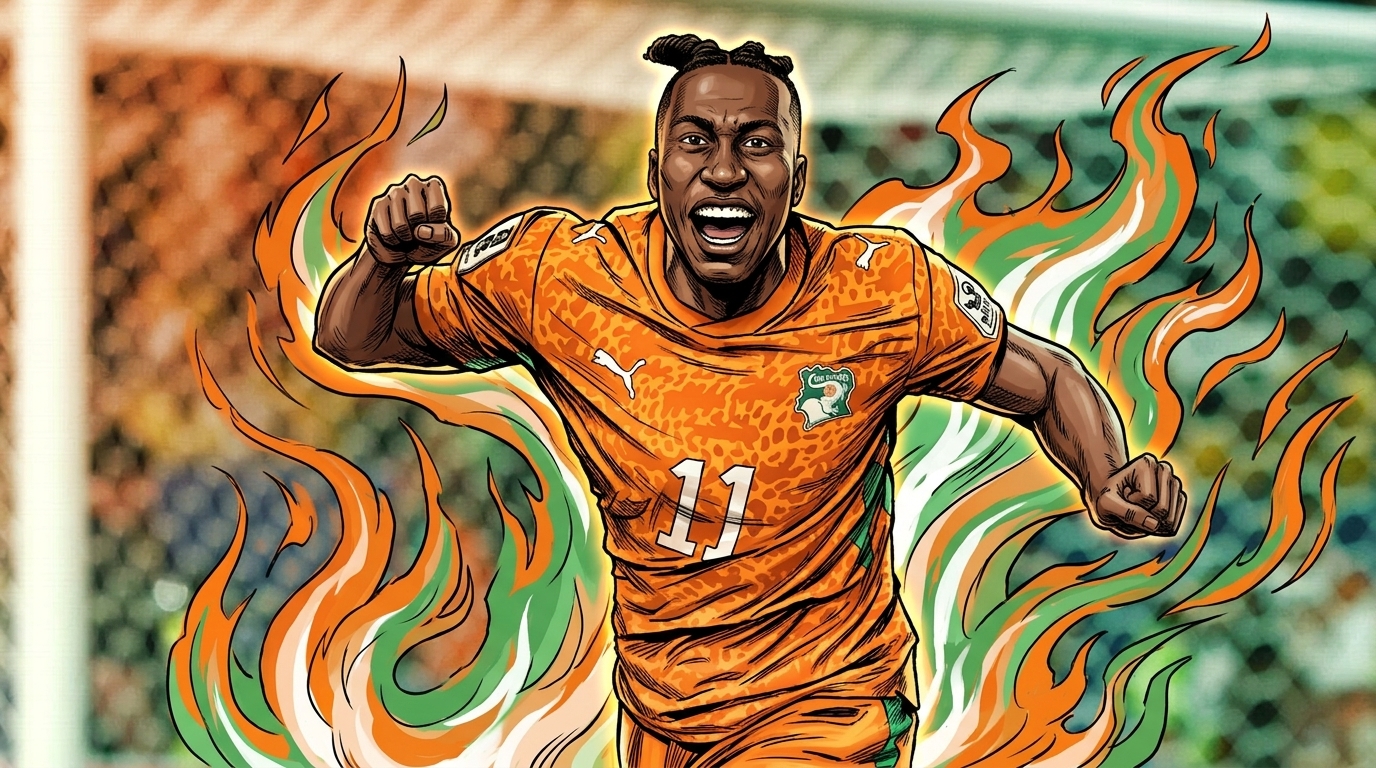
Côte d’Ivoire plays Norway today, June 30, 1 PM ET in Arlington, Texas, and the weight of that match is worth naming. Didier Drogba’s generation qualified for the 2006, 2010, and 2014 World Cups. They were among the most talented African squads of their era, players European clubs valued, players who carried real expectation, and they never once escaped the group stage. Three tournaments. Three exits.
This generation accomplished what those Drogba-Touré teams never could. That matters as a statement about where African football is now, not as a slight to what those players were. The talent development continued. The investment continued. Eventually the results follow.
Vozinha, the Cape Verde goalkeeper who arrived with 14 million Instagram followers and a social presence larger than most World Cup squads, became the face of one of the stranger underdog stories here. But even that fits the pattern. Cape Verde’s emergence was the product of a diaspora pipeline connecting domestic talent to Portuguese football’s development network, compressed into a squad small enough to feel improbable.
Nine teams in the knockouts means nine more chances to confirm that this wasn’t a one-tournament anomaly. Morocco is unbeaten and drew with Brazil. Algeria is playing. Congo is in it for the first time in fifty years. Today Ivory Coast faces Norway, and if they advance, they’ll have done what three prior generations of Ivorian footballers — including some of the best players this continent ever produced — never managed.
The tectonic shift doesn’t require an African team to win the trophy to be real. It required exactly what we’ve already seen: nine teams treating the Africa World Cup 2026 group stage as a floor rather than a ceiling. That happened. Quietly, methodically, across twenty years of building. And now here we are.