There’s a particular kind of institutional awkwardness that only shows up in the negative space — in what wasn’t said at the press conference, the player who wasn’t mentioned, the face that wasn’t in the graphic. It’s harder to write about than a quote or a decision, because it requires you to sit with something that hasn’t fully resolved. I’ve been sitting with this one for a couple of days now.
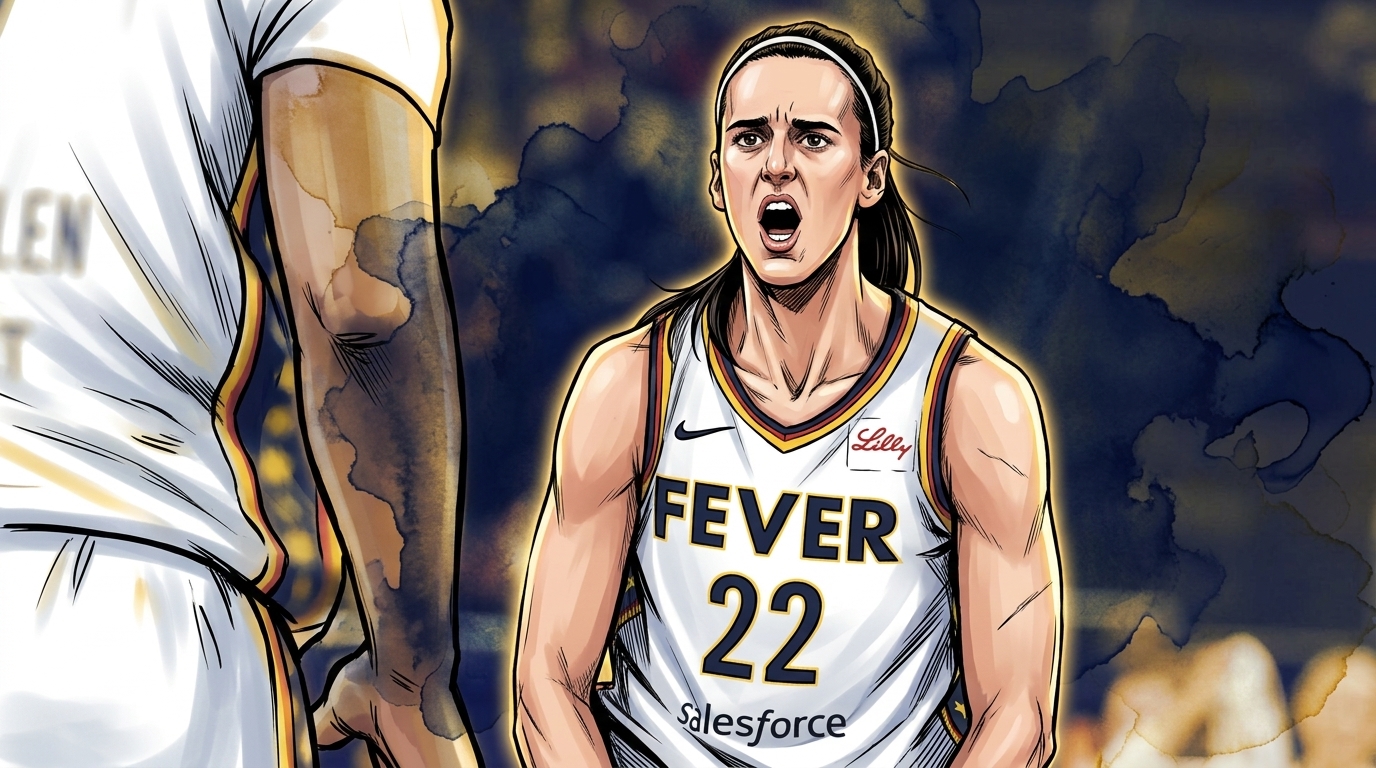
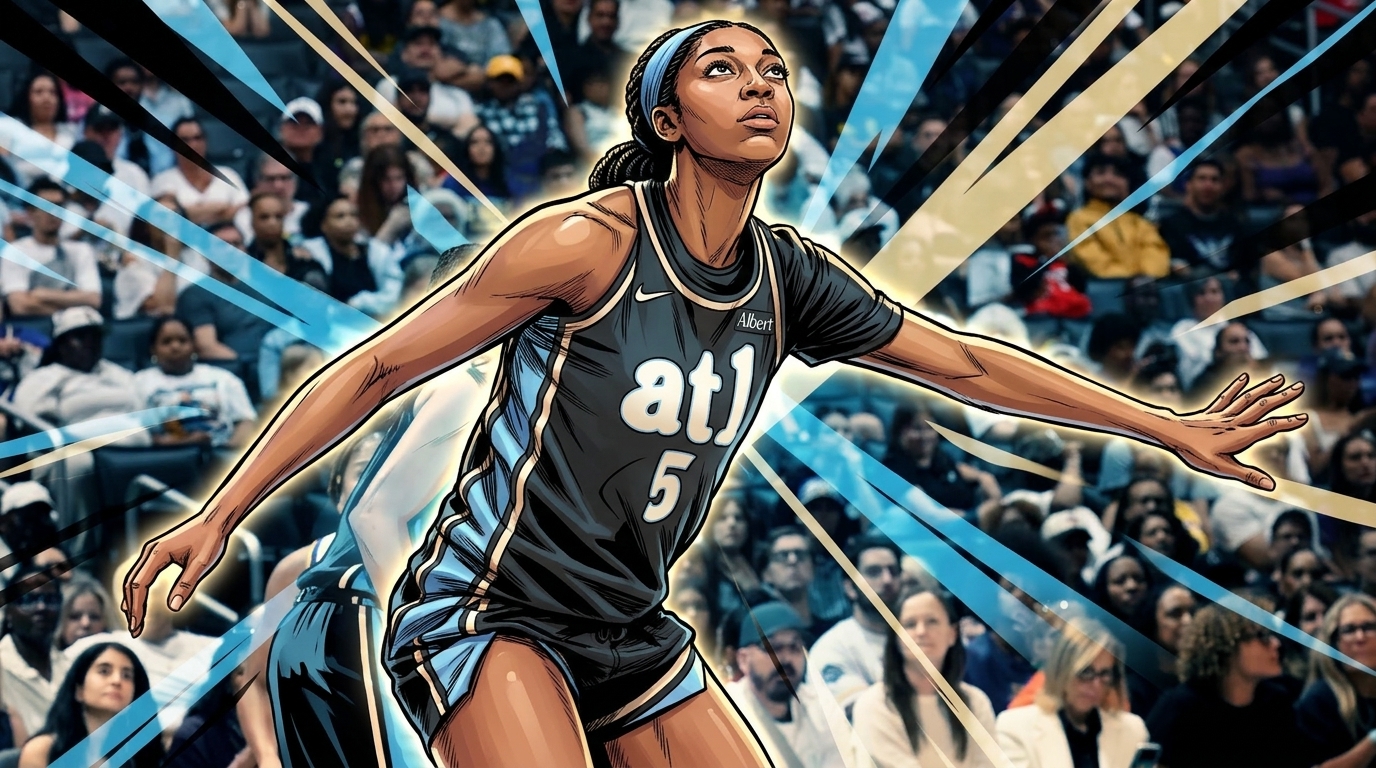
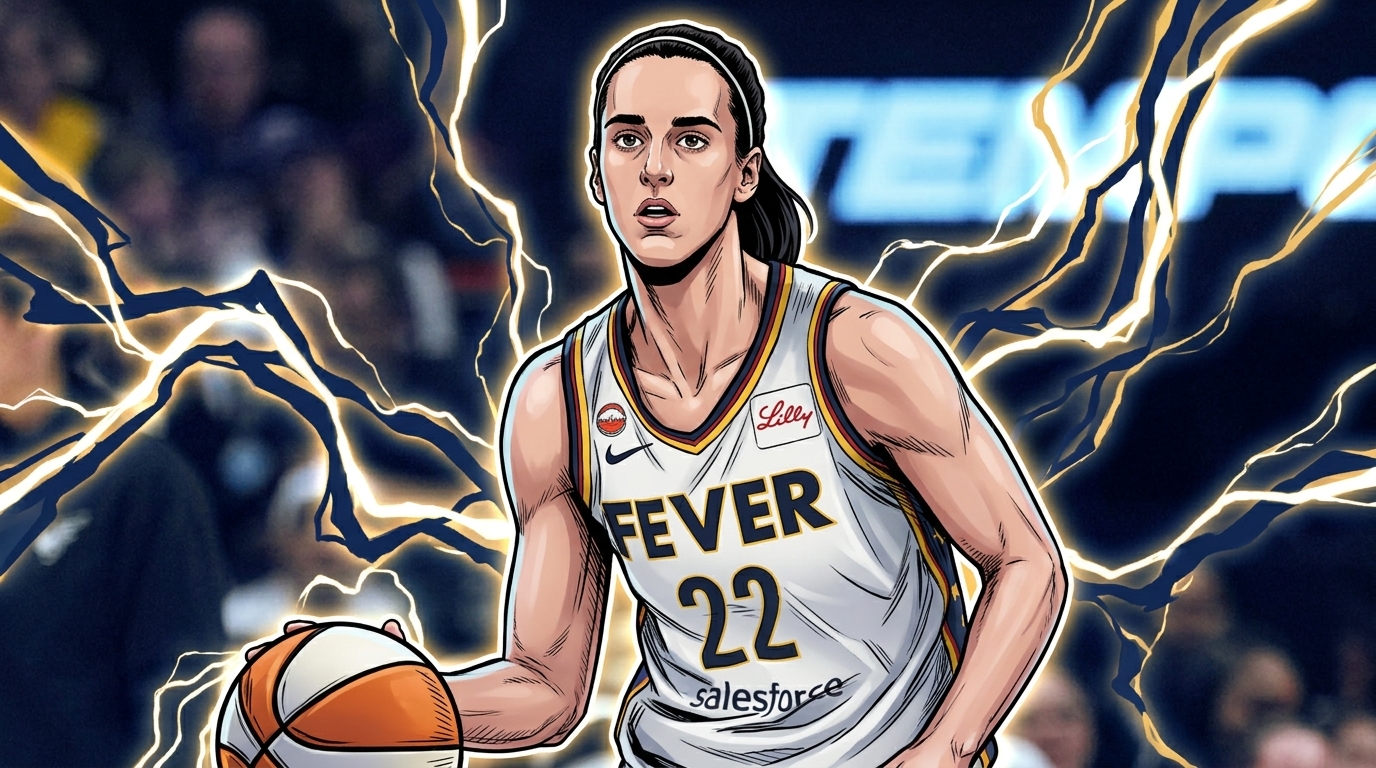
On May 17, the WNBA posted a doubleheader promo graphic. The Fever were playing the Storm. The graphic featured Raven Johnson and Zia Cooke for that slot, and A’ja Wilson and Angel Reese for the Aces-Dream game. The caption read: “Do not disturb, the W is on today.” It was a clean, competent piece of social media work, the kind leagues post every week. Except Caitlin Clark wasn’t in it. The league’s own post pulled 5.2 million views — almost entirely from people noting that the player in the featured game had been left out. The WNBA has said nothing.
I want to be careful here, because the “intentional snub” narrative is the easy one and I don’t think it holds up under much pressure. Johnson and Cooke are former South Carolina teammates. It’s genuinely plausible that whoever assembled the graphic was working around a shared-roster motif, grouping players with a common thread, and the architecture of the creative just left Clark outside the frame. Graphic design decisions that seem like statements often aren’t. They’re just decisions made quickly, by someone under deadline, that happen to land in a minefield.
What I can’t fully explain away is the 5.2 million views, and more than that, the silence. The WNBA’s relationship with Caitlin Clark has been generating this kind of friction since before she played her first regular-season minute. The league has been criticized, sometimes in the same week, for over-featuring her and under-featuring her — a double-bind that would be almost funny if it didn’t tell you something real about how impossible the institutional position actually is. You can’t win by featuring her because then you’re conceding that the league’s appeal is concentrated in one player, which undermines the “collective growth” story. You can’t win by not featuring her because then 5.2 million people show up to point at the empty space.
The numbers underneath all of this are not subtle. WNBA viewership jumped 170% in 2024, averaging 1.2 million viewers on ESPN — the kind of growth that turns heads in any media environment, let alone one where linear sports viewership has been contracting for years. Clark’s 2026 season opener on ABC drew 2.49 million viewers. The Indiana Fever franchise valuation went from $90 million before Clark arrived to $560 million, per Sportico. That’s not a growth story anymore. That’s a transformation story, and it has one primary variable.
None of that means Clark is the WNBA. It means the WNBA built its biggest commercial moment in history around her arrival, and is now trying to figure out how to talk about that without making every other player in the league feel like a supporting character in someone else’s narrative. That is a genuinely hard problem, and I have some sympathy for the people trying to solve it. But avoiding the problem by omission — if that’s what this was — tends to cost more than it saves.
The discourse that formed around the graphic is its own object worth looking at. The response sorted almost immediately into two camps that were not really talking about the same thing. One camp, concentrated around the Portnoy/OutKick axis, read the omission as deliberate political statement — a league hostile to Clark and her audience. The other camp, which skewed toward WNBA traditionalists and critics of the Clark-hype media cycle, read the outrage as manufactured, and pointed (sometimes correctly, sometimes not) to racial resentment as the thing powering the criticism. Both camps are responding to real dynamics. Both are also flattening a situation more ambiguous than either reading can hold. The graphic is a Rorschach test now. What you see in it says more about what you brought to it than about the WNBA’s actual intent.
Raven Johnson averages seven minutes a game and 1.3 points per game. That’s a fact worth naming plainly, not to diminish her — she’s 23, she’s developing, she was part of a championship program — but because it’s directly relevant to what the graphic communicated to people who follow the sport closely. Clark scored 20 or more points in each of her first three games of the 2026 season. The promotional slot being filled was her game. At some point the gap between production and visibility becomes the story, regardless of intent.
The Clay Travis rhetorical question about whether the Bulls ever ran a Jordan-free promo got floated in the conversation last week. I’ll be honest: I don’t know the answer to that, and I’m not sure the comparison holds even if someone could document it — the WNBA is navigating something the NBA in 1992 wasn’t. Specifically: an audience that was actively hostile to the league before Clark arrived and is now one of its biggest viewership drivers. That’s a legitimately novel institutional situation. There probably isn’t a clean historical precedent for it.
What I keep coming back to is the league’s silence. Not the graphic itself — the 5.2 million views and not a word in response. A league more comfortable with its own biggest commercial asset might have said something simple: here’s why the graphic looked the way it did, here are the players we were celebrating, the doubleheader was great, see you next week. That’s not a capitulation to the outrage machine. That’s just institutions communicating. The silence reads, at least to me, like an institution that doesn’t know how to name the thing it’s feeling. And I’m not entirely sure I do either.
Maybe that’s the most honest place to land. A league uncomfortable with its own biggest commercial asset, a media ecosystem primed for conflict, a fanbase sorted into camps that barely share a sport — and a graphic that probably wasn’t designed to say any of this, but said it anyway.