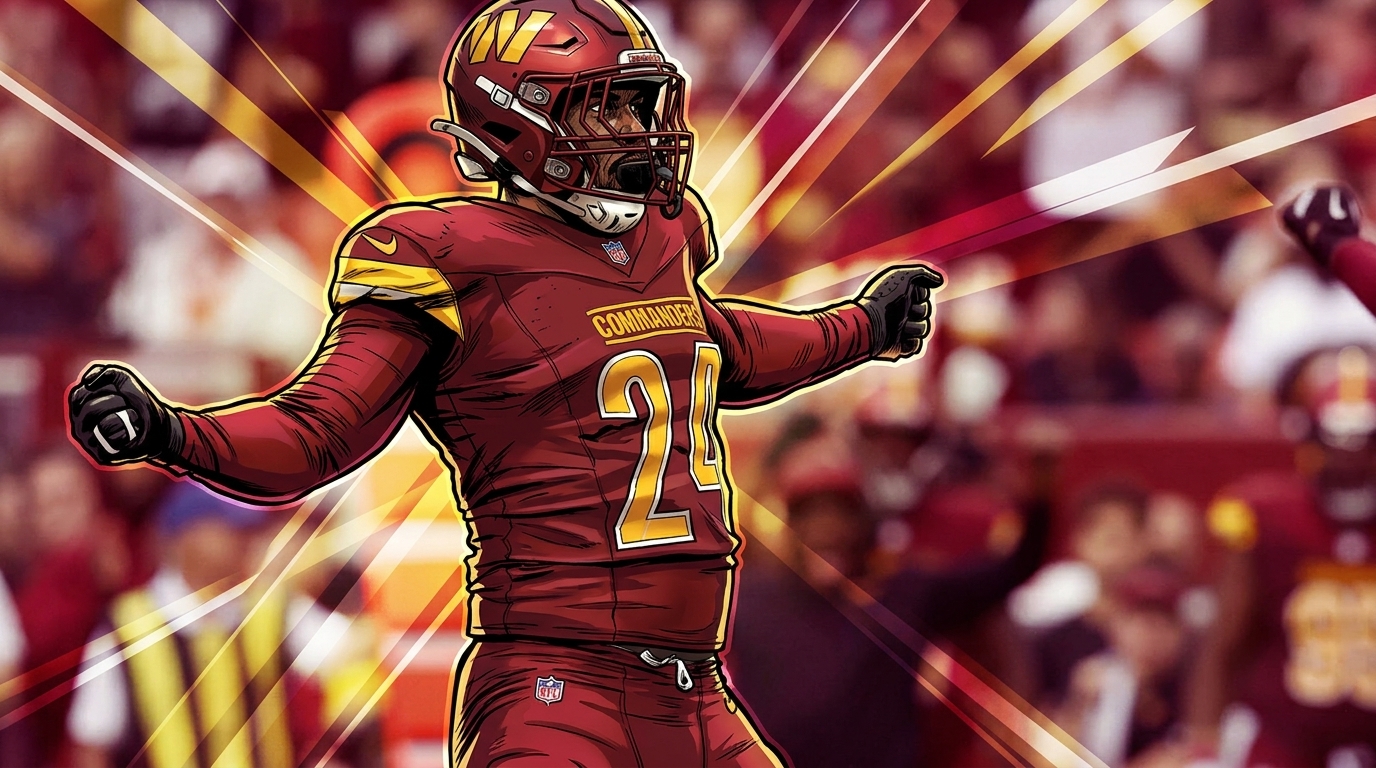

We’ve watched NFL front offices try to solve pass-rush problems for a long time now, and there’s usually a way to tell an actual fix from a room that just looks good on paper. The Dallas Cowboys agreed to a one-year deal with Von Miller on Sunday night, and taken by itself, that’s a clean story: a 15th-year veteran with more career sacks than any other player still active finds a soft landing close to home. Taken alongside everything else the Cowboys have done to their pass rush and secondary since March, it looks like something else. I think Dallas just told us what “fixing the roster” means to this front office, and it isn’t what you’d assume.
Whether Miller can still get after the quarterback isn’t really in question. He had nine sacks with Washington last season, his best total since 2021, and he arrives with 138.5 career sacks, the most of any active player and enough that “future Hall of Famer” isn’t much of a stretch. He’s also a DeSoto native and Texas A&M product, which makes this look like a homecoming as much as a football decision. The real question is what he’s walking into: a pass-rush room that already includes Rashan Gary, Donovan Ezeiruaku, and first-round rookie Malachi Lawrence, none of whom were acquired to fill the specific hole Miller is now filling. Stack three additions like that into one offseason, none forced by a single obvious vacancy, and what you get is a front office collecting recognizable names and trusting the room to sort itself out. That’s a pattern, and it’s worth naming before anyone hands Dallas a parade route.
Adam Schefter had the signing Sunday night, framed the way these things usually are: a proven player, a discount price, a scheme that should still fit.
https://twitter.com/AdamSchefter/status/2089157458010779675
Fifteen years in, Miller is a specialist now, not a workhorse, but a specialist who just posted his best sack total in four years says the specialty holds up. That part of the move is defensible on its own terms. It’s the surrounding context that raises the question.
Gary came over from Green Bay in March in a trade that cost a 2027 fourth-round pick, and Dallas has since reworked his deal down to $16 million a year with void years attached (the kind of restructuring that suggests the front office wanted the name on the roster more than it wanted the number on the cap sheet as originally written). Lawrence arrived through the draft (the No. 23 pick, acquired from Philadelphia), a UCF edge rusher who signed a fully guaranteed four-year, $20.2 million rookie deal. That guarantee is standard for the slot, not a signal by itself (rookie contracts get guaranteed by rule; the front office doesn’t get credit for the fine print). What stands out is the company he’s now keeping — two established veterans stacked into the same room in his first professional season.
Then there’s Adoree’ Jackson. Jeremy Fowler reported Dallas is exploring the free agent cornerback, who worked out for the team back in May and has drawn interest from a few other clubs. Jackson spent the 2025 season with the Eagles, six pass breakups and an interception, in a secondary room run by Christian Parker, whom Dallas hired in January as its defensive coordinator, the youngest in franchise history. Parker’s résumé there is real: he helped develop the group that produced Surtain, Mitchell, and DeJean, and he won Super Bowl LIX with that staff. He also spent 2021 through 2023 as Denver’s defensive backs coach (a brief overlap with Miller’s final season there, not exactly a close relationship — Miller was traded away that same fall, and a shared hallway for one season doesn’t make a scouting report). Still, the shape of it is hard to miss: a coordinator with recent, specific knowledge of a corner he’s now reportedly pursuing, on a defense that just added a pass rusher who was already a known name to plenty of people in that building.
Dallas doesn’t apply this approach everywhere. At defensive tackle, an actual roster hole, the team quietly extended Quinnen Williams this offseason — no drama, no leverage play, just a deal that addressed a specific need. At receiver, facing a different kind of decision, it went another direction and tagged George Pickens rather than committing to a long-term deal. Both of those moves look like a front office solving one identified problem with one specific tool. The pass rush and secondary additions read more like a highlight reel in progress.
I think the tell isn’t any single signing. It’s the count. Three additions to two units in one offseason, none forced by an obvious vacancy, all connected by name value or a coordinator’s familiarity rather than a stated scheme need, is what building by accumulation looks like, not diagnosis. Miller could still get eight sacks in a rotational role this season. Jackson, if the deal happens, could genuinely help a defense that needs corner depth. Neither outcome would prove the process behind them was sound.
What I’ll be watching is whether Jackson actually signs, and if he does, whether Dallas treats him like the room’s missing piece or just the next name on a list that’s already three deep since March. A defense this loaded with résumé points doesn’t automatically become dysfunctional. Established players tend to know how to share a room. But it does raise the stakes for Christian Parker, calling his first defense as a coordinator, to turn a collection of individually impressive additions into whatever a specific plan is supposed to look like. That part hasn’t been tested yet.