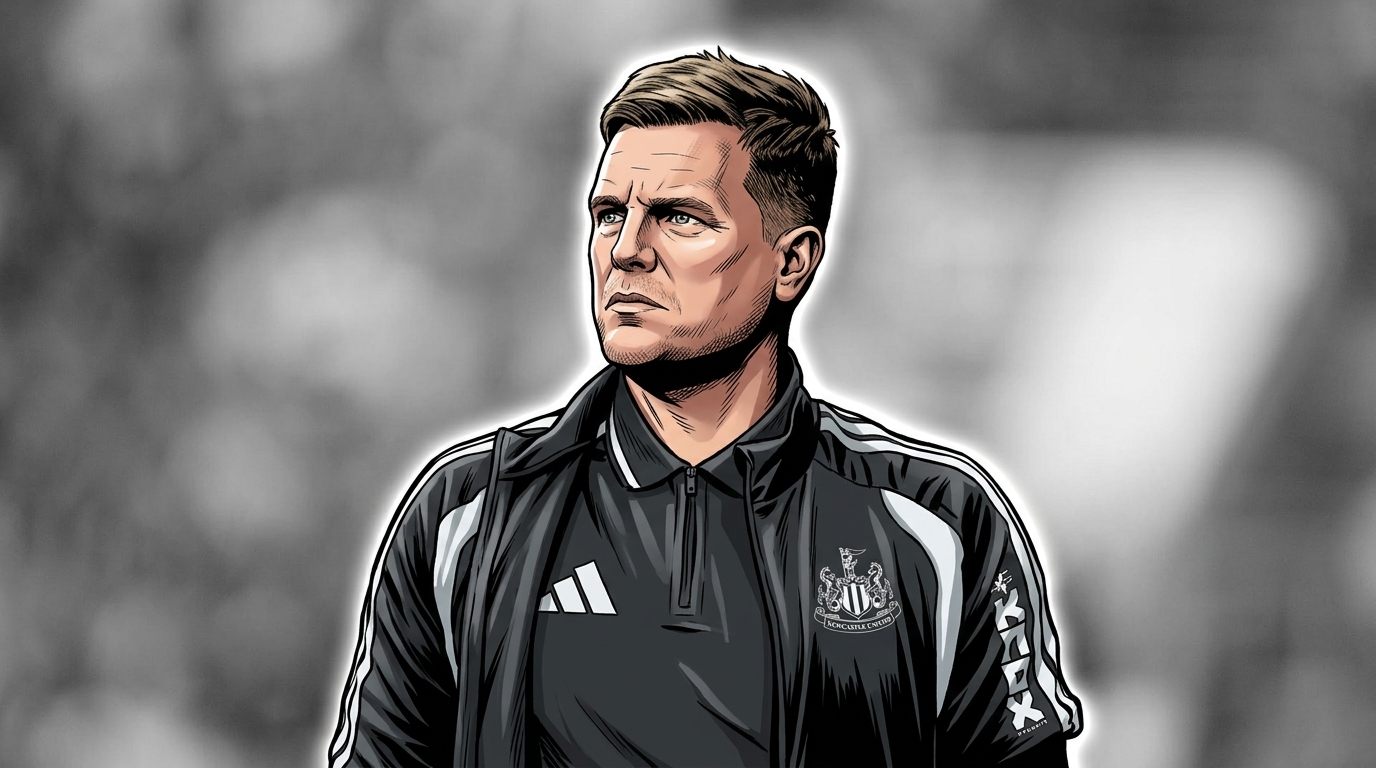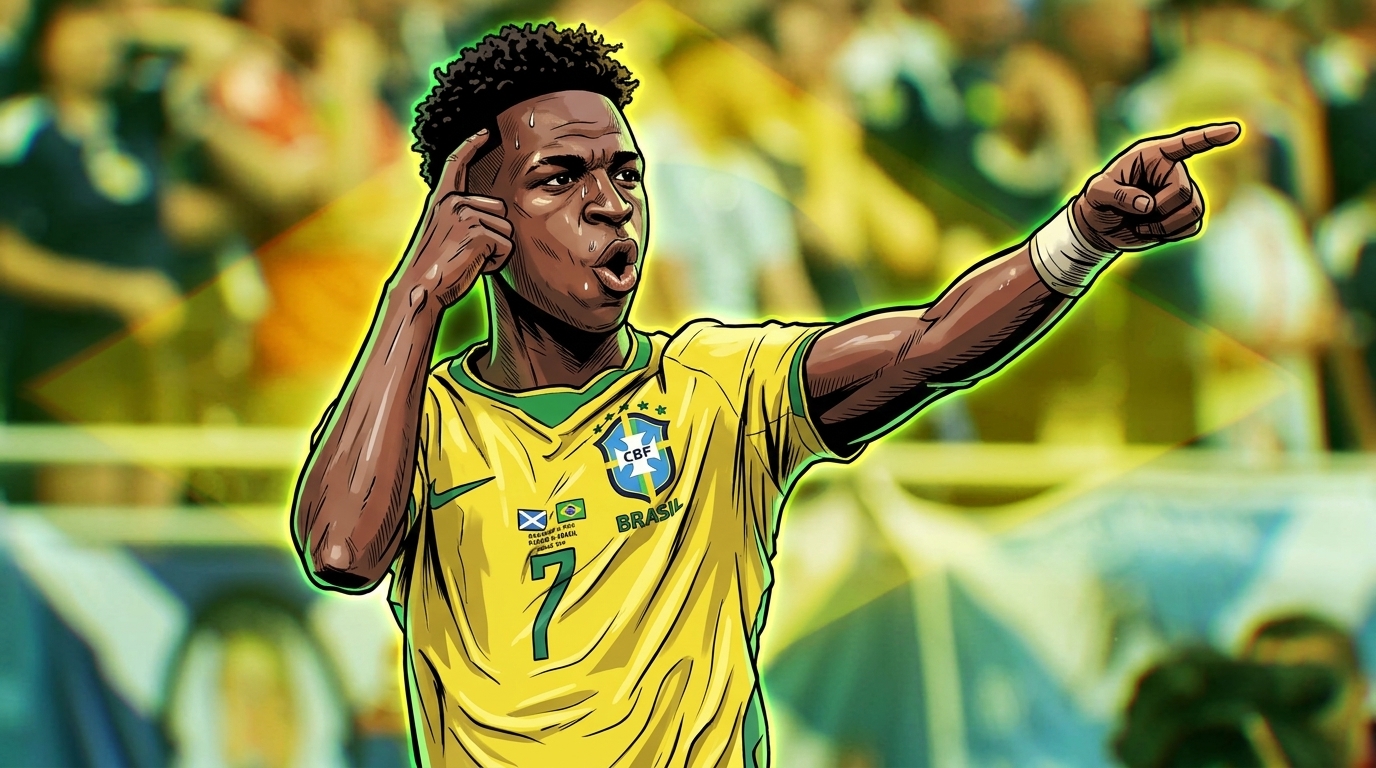

We’ve been watching generational transitions get announced, debated, and projected for years. Coaches make them explicit at press conferences. Federations build PR campaigns around them. The next great one is always being groomed, always being protected, always coming soon. And then — occasionally — the succession happens in a single 90-minute span, without ceremony, without anyone’s permission, in front of 64,478 people at Miami Stadium. That’s what we witnessed on June 24th. Vinicius Junior scored twice against Scotland, Neymar entered in the 76th minute to watch him do it, and then Neymar walked to the press conference and eulogized himself in Portuguese. The torch isn’t being passed. It’s already gone.
Is Vinicius Already the Best Brazilian at a World Cup Since Ronaldo?
Four goals in three group games. Six goal involvements in six career World Cup appearances. Those numbers alone don’t capture what makes the Vinicius Junior 2026 World Cup run historically significant — the company he’s keeping does.
Vinicius is now the fifth Brazilian to score in all three group stage games at a single World Cup. The previous four: Jairzinho in 1970, Romário in 1994, Ronaldo in 2002, Rivaldo in 2002. Brazil won the tournament in all four of those years. (This is the fifth time a Brazilian has managed this, in case you’re keeping count — and if you’re Brazilian, you are absolutely keeping count.)
https://x.com/TheAthleticFC/status/2068167328127471883
Per The Athletic FC and OptaJoe, Vinicius currently averages one goal involvement per World Cup appearance, six involvements in six appearances. Only three other Brazilians across five or more World Cup appearances have matched that rate: Ronaldo at 19 in 19, Pelé at 11 in 8, Tostão at 7 in 7. That is not an arbitrary list. That is the list. The fact that a 25-year-old Real Madrid winger has inserted himself into that conversation after six appearances is either the most encouraging sign for Brazil since Ronaldo’s 8-goal 2002 run, or the beginning of something that surpasses it.
The Vinicius Junior 2026 World Cup group stage produced 4 goals and a career total of 5 — tying him with Ronaldo in that particular Brazil ledger, per ESPN. He’s 25. Ronaldo had 15 before he turned 27. The math, for now, still favors Ronaldo. But we are three games in, and this tournament has 64 teams and no obvious favorite in the bracket above Brazil’s side of the draw.
https://x.com/Sofascore/status/2069935313343205666
Against Scotland, the Sofascore rating was 9.3. Fifty-five touches, two goals, the kind of performance that makes opposition managers concede the bracket position before the bracket position is officially assigned. Our preview of Scotland vs. Brazil laid out the structural threat Vinicius posed — the directness, the capacity to dribble through high defensive lines, the sheer rate at which he manufactures chances out of nothing. The execution exceeded the projection.
What Neymar’s Bench Role Actually Means for Brazil’s Identity
There is a version of this story that is about Neymar’s decline, and we should acknowledge that version before setting it aside. Neymar is 34. He missed the 2022 World Cup through injury, watched Brazil eliminated in the quarterfinals by Croatia from a hotel room (or wherever you watch a tournament you were supposed to captain), and has played 13 total international appearances since October 2023. The 76th-minute substitute role against Scotland was his first Brazil appearance in nearly three years. It was, on its surface, a comeback.
But a comeback from what, exactly? Into what role? Because what we actually witnessed on June 24th was Neymar entering a match that his replacement had already decided — twice — and then producing a post-match quote that functions as a concession speech. “Vini is our best player now,” Neymar told reporters, “and he’s in incredible form, he’s helped us a lot, deciding games, and that’s important for us.” He also became the fourth Brazilian to play in four different World Cups, joining Djalma Santos, Cafu, and Pelé — which is a remarkable footnote, made slightly surreal by the circumstances under which it arrived.
The identity shift here is larger than a single player transition. Neymar’s Brazil was built around individual expression: the dribble sequence, the skill move, the improvised moment. Carlo Ancelotti, 13 months into his tenure as Brazil manager, has built something fundamentally different. Vinicius under Ancelotti: 7 goals in 13 games. Vinicius under prior Brazil coaches: 6 goals in 39 games. The acceleration is not accidental. Ancelotti’s system — organized pressing, pace-based transitions, collective movement — is designed for what Vinicius does natively at Real Madrid. Neymar’s dribble-centric improvisation never fit that framework particularly cleanly, even before the physical decline.
What the bench role actually means, then, is that this isn’t a team in transition. The transition happened. We just didn’t have a clean visual metaphor for it until Neymar jogged onto the pitch at the 76th minute, found the match already settled, and told the press room who the star of this World Cup is. That’s not bitterness. That’s a 34-year-old who understands the game well enough to say the true thing out loud.
The contrast with Erling Haaland’s own big-tournament narrative is instructive here: when a generational talent is finally in a system that suits him, the numbers follow in a way that feels both inevitable and somehow still surprising. Ancelotti gave Vinicius the system. Vinicius is doing the rest.
Why Brazil vs. Japan on Monday Is Already the Undercard
Brazil faces Japan on June 29th at Houston Stadium, 1 PM ET, in the Round of 32. Japan came through Group F as runners-up and are a serious defensive side, organized, disciplined, and dangerous on the counter. This is not a walkover. The match will require Ancelotti’s system to operate under knockout pressure, which is a different calculation than the group stage allows.
And yet the actual narrative of this tournament, at least for Brazil, has already resolved its central question. The bracket drama is real. Japan is capable of unsettling anyone on a given day, and the knockout format rewards defensive organization, but the thing everyone actually needed to know about this Brazil team we already know. Vinicius Junior is the player Neymar was always projected to be in the tournament’s decisive moments. Four goals, no missed group game, a 9.3 rating in the finale, and the explicit endorsement of his predecessor.
Watch for Ancelotti’s adjustments against a more disciplined defensive block. Japan will not press high the way Scotland did, which removes some of Vinicius’s transition opportunities and puts more emphasis on combination play in tight spaces. Whether Neymar gets minutes is a secondary question; whether he gets them in a meaningful moment is the one worth tracking. The optics of his 76th-minute cameo against Scotland were accidental poetry. A similar scenario in the knockout rounds would be something else entirely.
The Vinicius Junior 2026 World Cup story has already reached a clarity that most generational narratives take years to achieve. Jairzinho in 1970, Romário in 1994, Ronaldo and Rivaldo in 2002 — all were defined by whether they could finish the tournament the way they started it. Three group games in, Vinicius has done what all four of them did. The question now is whether he can finish what those Brazil teams started. The last four that had this conversation won the whole thing.