
Fourteen months ago, John Tortorella was a punchline in a city that specializes in punchlines. The Philadelphia Flyers had just fired him — 97 wins, 107 losses, 33 overtime losses, zero playoff appearances across three seasons — and GM Daniel Briere described the state of the rebuild with a two-word summary: “Rock bottom.”
Monday night in Las Vegas, Tortorella’s Vegas Golden Knights swept the Presidents’ Trophy-winning Colorado Avalanche 4-0 to reach the Stanley Cup Final.
You could call it a comeback story. You would be wrong. The framing flattens something more interesting — a story about organizational fit, about what happens when a brilliant, abrasive, constitutionally impossible-to-manage-up coach finally lands in a place where his particular brand of difficult is exactly what the building needs.
Tortorella did not change. The context did.
How Did John Tortorella Get to the Stanley Cup Final?
Tortorella was fired by the Philadelphia Flyers on March 28, 2025, after three seasons with no playoff appearances. He spent the following winter as an assistant coach on Mike Sullivan’s Team USA staff, winning Olympic gold at the 2026 Milan Games — the first U.S. men’s hockey gold since 1980, secured in overtime against Canada. A year after being dismissed by Philadelphia, VGK fired Bruce Cassidy with just 8 games remaining in the regular season and hired Tortorella on March 30, 2026. He went 7-0-1 to close the regular season, then 12-4 in the playoffs, sweeping the Presidents’ Trophy-winning Colorado Avalanche 4-0 to reach his first Stanley Cup Final since winning it with Tampa Bay in 2004.
That is the timeline. The explanation requires a little more work.
The Flyers Weren’t Wrong — They Were Just a Bad Fit
The narrative temptation here is to say the Flyers made a mistake, that they failed to see what Tortorella could be. That is not quite right either, and the distinction matters.
Tortorella’s coaching philosophy runs on veteran accountability. He demands intensity, imposes structure, and trusts experienced players to execute at a high level within a demanding system. That approach has produced 777 regular-season wins and two Jack Adams Awards — in 2003-04 with Tampa Bay and 2016-17 with Columbus. Both came with rosters built around established NHL contributors. The Flyers were not that. They were a team in active reconstruction, asking young players to absorb and develop through losing seasons. Tortorella himself acknowledged the mismatch, telling reporters after a 7-2 loss to Toronto that he was “not really interested in learning how to coach in this type of season.” Briere cited that comment among several reasons for the firing.
That is not a coach failing. That is a coach who was misapplied.
The parallel that comes to mind is the coaching decisions that define a playoff run — how the relationship between a coach’s demands and a roster’s experience either creates chemistry or friction. Tortorella in Philadelphia created friction not because he was wrong but because the roster could not absorb what he was delivering. Fit matters more than method. The Flyers hired a coach for a team they hoped to become. They paid for it.
Tortorella said he was blindsided by the firing. That tracks. He was running his system, being himself, doing exactly what he had always done. The building around him had simply changed in ways that made the match untenable.
A Gold Medal, Eight Games, and One Clean Slate
The gap between the Flyers dismissal and the VGK phone call was roughly twelve months. During that window, Tortorella joined Sullivan’s Olympic staff in a mentorship capacity — an assistant role, not a head coaching position. Mike Sullivan ran the bench in Milan. Tortorella was the elder statesman, the “old wise man” in his own words, staying connected to the game while the league sorted out its next opening.
He picked up an Olympic gold along the way. The United States beat Canada 2-1 in overtime, per NBC Olympics, completing the first American men’s hockey gold since the 1980 Miracle on Ice. It is a legitimate resume line. It is also probably not what VGK GM Kelly McCrimmon was thinking about when he reached out.
What McCrimmon was thinking about was this: “Somewhere along the way, we lost our spirit, and we lost our energy as a team.”
That quote, per NHL.com’s coverage of the hire, is the entire job description. Bruce Cassidy had won VGK a Stanley Cup in 2023. He was 32-26-16 in 2025-26. On paper, it did not look like a crisis. But the team had gone 8-15-4 since January 17, including a 1-5-2 stretch in the weeks immediately preceding the decision, and it had lost something less quantifiable than wins and losses. McCrimmon fired a championship coach with eight games left in the season and called John Tortorella the next day.
The diagnosis matched the profile. McCrimmon needed someone who had never in his professional life tolerated a team losing its spirit. Tortorella took the job with no runway and no room to build gradually. VGK went 7-0-1 to close the regular season. They won the Pacific Division.
What 12-4 Actually Means (And What the $100K Fine Proves)
Here is what Tortorella’s VGK has done in the 2026 playoffs: eliminated Utah in six games, eliminated Anaheim in six games, then swept the Presidents’ Trophy winner they just swept out of the playoffs in four straight — 4-2, 3-1, 5-3, 2-1. Colorado had 121 points, the best record in the NHL. They became just the fifth Presidents’ Trophy winner in NHL history to be swept in the postseason.
In Game 3, VGK trailed 3-0 in the first period. They won 5-3. After the game, Tortorella said, “This is a game where we showed some balls. I want them to feel it for a little bit, as far as what they did against a really good hockey club.”
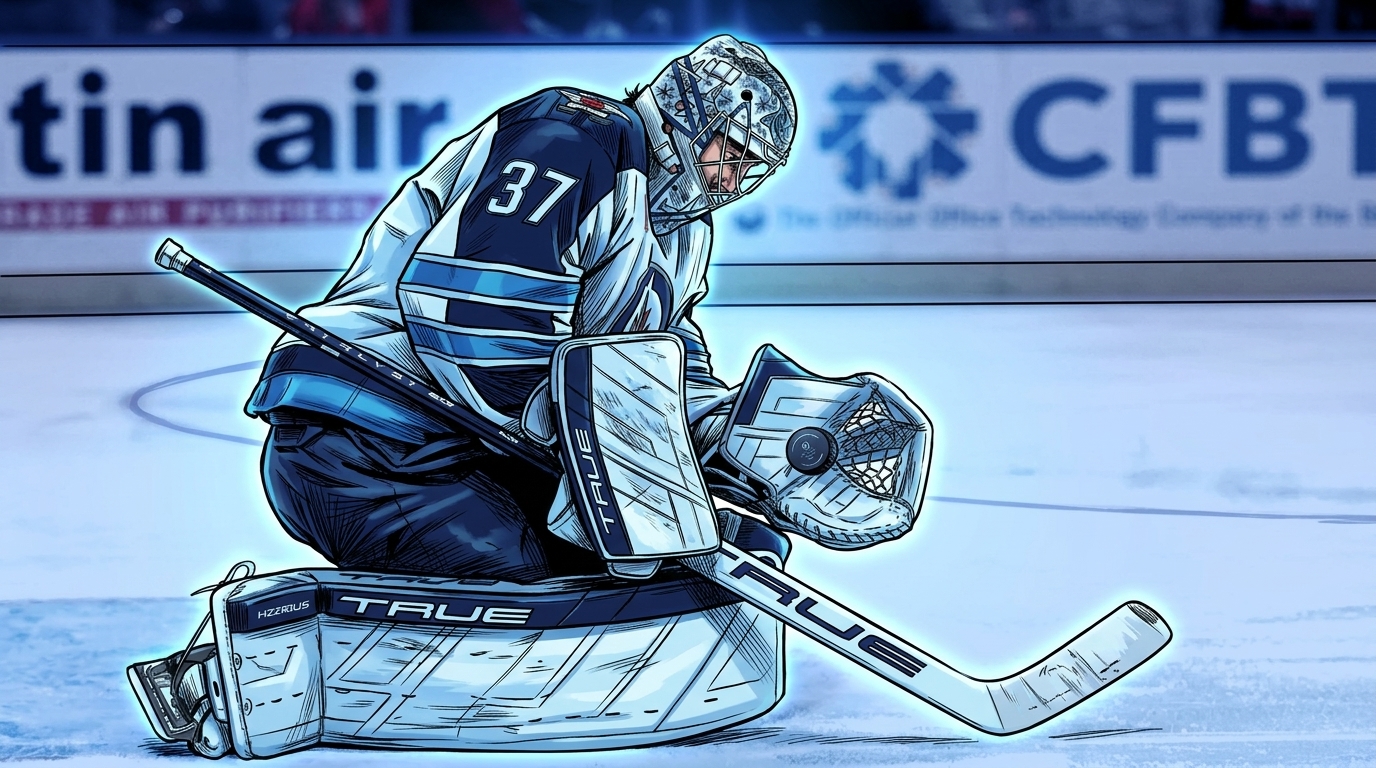
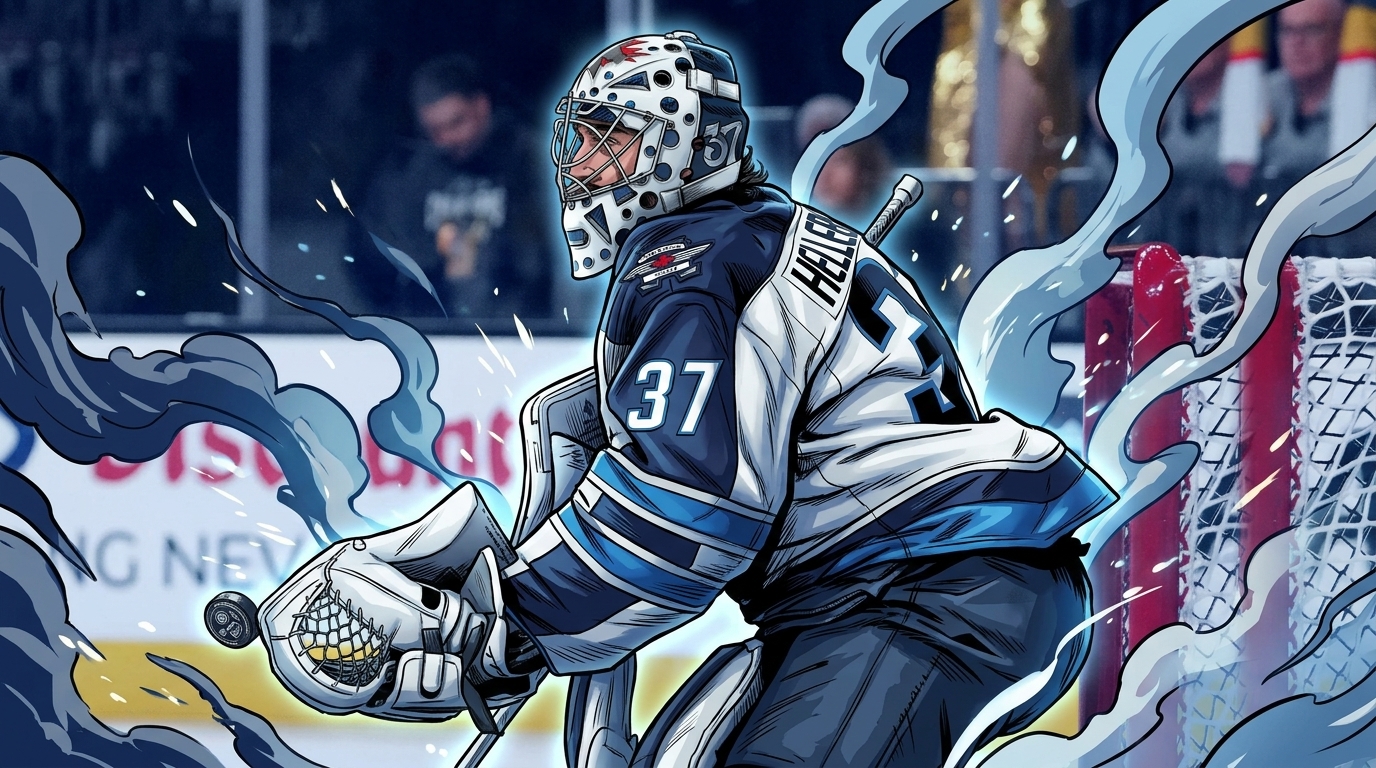
In Game 4, the clincher, Carter Hart made 20 saves as VGK held on 2-1. For the playoffs, Hart is posting a .924 save percentage and 2.30 GAA.
After the series, Tortorella said: “Your stars are going to be stars, but to keep advancing and to get to the situation where you’re now playing in the fourth round, playing for the Cup, those other pieces have to come together.”
The record is 12-4. The approach is not complicated. He goes four lines deep — Mark Stone noted that when a team rolls four lines, zone starts matter less. Tortorella told reporters his posture with this veteran group was to “just get out of the way and learn from them.” This from one of the most demanding coaches in the history of the league. The roster earned that trust by being built for exactly the pressure he generates.
And then there is this: During the second round, after VGK eliminated Anaheim, Tortorella refused the mandatory post-game press conference. The NHL fined him $100,000 and stripped VGK of their 2026 second-round draft pick for repeated media availability violations, per LV Sports Biz. VGK appealed. The league denied it.
So here is the thing about the “impossible to manage up” part of this story: it is not historical. It is current. Tortorella cost his franchise a six-figure fine and a draft asset in the middle of a Cup run, and the organization absorbed it and kept going. That is the thesis of this entire arc in a single data point. He is exactly as difficult to manage as he has always been. VGK built a structure — and, apparently, a budget — that could accommodate it.
The Philly Connection No One Can Ignore
The Philadelphia Inquirer flagged it immediately after the sweep: two ex-Flyers, both written off by that franchise, are now in the Stanley Cup Final together.
Carter Hart was the Flyers’ franchise goalie before the Hockey Canada World Juniors sexual assault investigation effectively ended his Philadelphia tenure before a verdict. He sat out nearly two full seasons. Acquitted of all charges in July 2025, he signed with VGK in October — a two-year, $4 million deal that the hockey world noted with cautious attention. Hart returned from a mid-season lower-body injury in April and has been one of the steadier playoff goalies in the field.
Neither Hart nor Tortorella is in the Final because Philadelphia believed in them. They are in the Final because Vegas did.
The easy read on Tortorella’s arc is that he bounced back, that adversity made him sharper, that the hunger from being fired fueled his run. That is a compelling story. It is also probably too simple. A 67-year-old coach with 777 wins and two Jack Adams Awards does not need a firing to remind him who he is. What he needed — what he finally has — is a roster experienced enough to translate his demands into results instead of friction. A GM willing to make a shocking mid-season move and then trust the process. A franchise culture that, apparently, can absorb a $100,000 fine and a forfeited draft pick and shrug it off as the cost of doing business.
Tortorella returns to the Stanley Cup Final for the first time since winning it with Tampa Bay in 2004 — over 8,000 days between appearances, per NHL.com. He said after the clincher: “I consider the first three rounds to be playoffs. The last round, that’s when you play for the Stanley Cup.”
He is ready to play. He said so. Four times, actually, in response to four different pre-Game 4 questions from reporters. That is John Tortorella. That has always been John Tortorella. The only thing that changed is the zip code.