
I cannot believe we are still doing this.
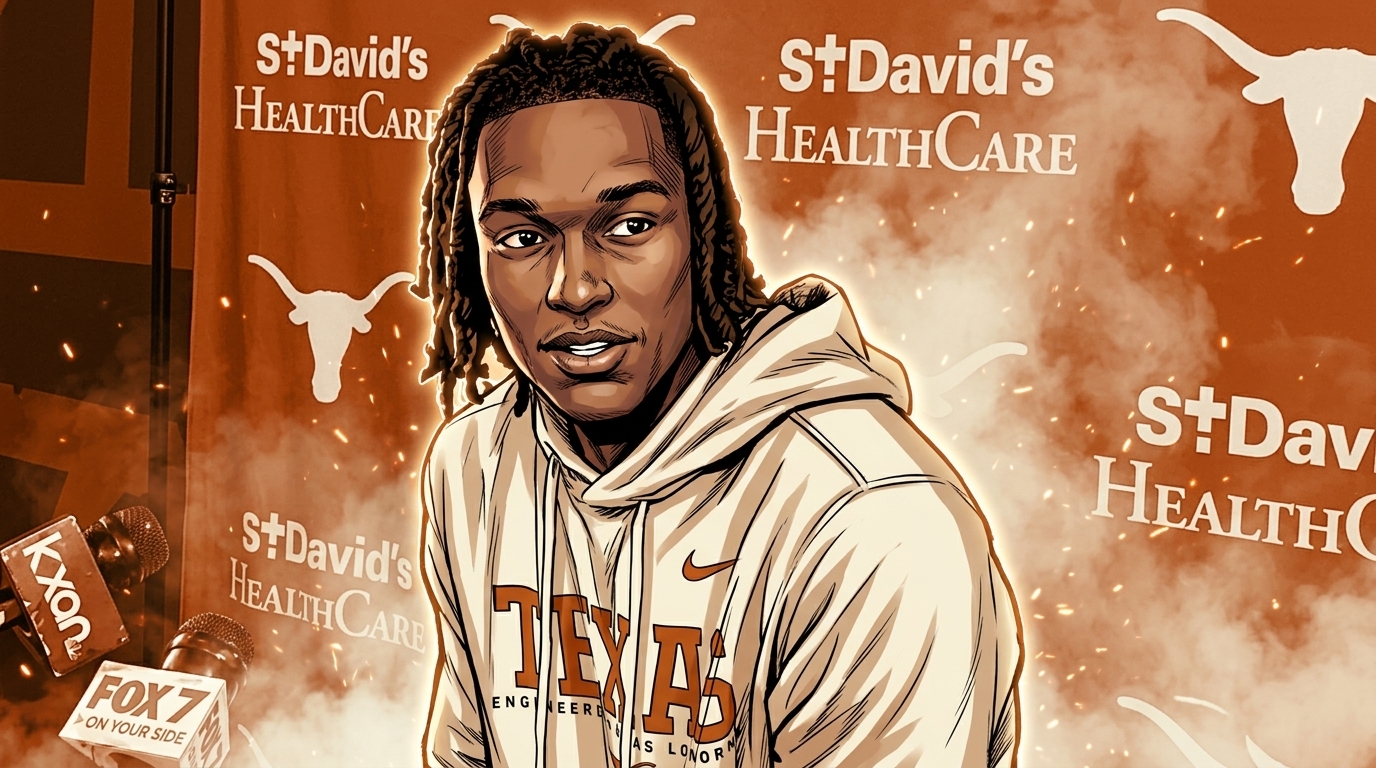
Cam Coleman — 56 catches, 708 yards, five touchdowns last season, 6-foot-3, 201 pounds, the consensus number-one wide receiver in the entire transfer portal — committed to Texas in January. His NIL valuation sits at $2.9 million. His actual Texas deal, per sources, is estimated at least $3 million, possibly higher. Texas, as an institution, has spent $23 million on transfer portal acquisitions — more than any other program in the country. Ohio State is second at $20 million. Oregon third at $19 million.
And his camp’s message to reporters was: money is not the deciding factor.
I worked in housing policy for 18 months after Rutgers, and I recognize this grift. Not Coleman’s grift — the language grift. The framing grift. The PR-industrial complex of college athletics has gotten so good at saying nothing with the most words possible that we now have a world where a $3 million deal is described as a non-factor, and everyone just nods along like that’s a thing people say.
Pete Nakos at On3 reported that sources told him Coleman’s camp made clear “money is not going to be the deciding factor in this recruitment, even though sources have said his deal could be in the $2 million range.” That was before the Texas commitment. After he announced for the Longhorns, the NIL valuation jumped from $1.8 million to near $3 million. The ESPN ranking had him at second overall in the portal, On3 had him third. His camp told reporters money wasn’t a priority. The market immediately repriced him upward by $1.2 million upon his announcement.
You tell me what story we’re reading here.
https://twitter.com/Hayesfawcett3/status/2010416043454513646
Coleman is not the villain. Auburn went 5-7 last season. Hugh Freeze got fired mid-season. Alex Golesh was hired to replace him. If you were a generational receiver with two years of eligibility left and a blank check waiting in Austin, you’d have taken the meeting too. Arch Manning is the starting quarterback. Texas just won a College Football Playoff berth. The competition argument isn’t fake. It’s just not the whole argument, and everyone knows it.
Here’s what actually happened: Texas’s $23 million transfer war chest — which ranks first nationally, ahead of Ohio State, Oregon, and Texas A&M — functioned exactly as intended. It created an environment where the best available player would find Austin compelling for reasons that cannot be legally disentangled from the money. Sarkisian reportedly noted that Arch Manning took less in his own NIL arrangement specifically to free up resources for portal acquisitions. The program is optimized around this. The point is that the fit and the money are the same thing now.
Think about what that actually means for the Tulane, the Appalachian State, the Kansas State that built a roster in good faith over two years. They did everything right: developed their guys, ran good schemes, won games. And then January hits, and Texas writes a check. And the powerhouse can say — hand on heart — that it wasn’t about the money. Because when you have $23 million to spend, the money becomes invisible. It becomes “culture.” It becomes “opportunity.” The athlete is not wrong to frame it that way. But the NCAA, which has no meaningful regulatory framework limiting any of this spending, is just watching it happen from a lawn chair.
Former Texas safety Quandre Diggs put it more bluntly on social media: “If you had a blank check for him? Why tf he ain’t go there?” — implying Coleman turned down a bigger number somewhere else. Which, if true, actually makes the “not about the money” framing more accurate. It also makes it more revealing. Coleman may have genuinely prioritized something over a larger bag. Good for him. That doesn’t make the system less absurd. It makes it more absurd, because the system now produces decisions where a 20-year-old receiver has to weigh competing eight-figure employment offers and explain to reporters which non-monetary factors tipped the scales.
The victim in this economy isn’t Coleman and it isn’t Texas fans. It’s the walk-on at Iowa State who will watch two of his receivers transfer out this January when a bigger program comes calling, and who has no recourse because the NCAA decided deregulation was easier than governance. The ledger just keeps growing.
The SEC has 11 of the top 20 programs by transfer NIL spend. They built that advantage, they’re deploying it, and they’re going to keep doing it. What Texas’s $23 million looks like against the NFL’s salary cap is a fun comparison, actually — it’s close. The NFL at least has a union.
Coleman will probably be great at Texas. He’s a legitimate number-one receiver with real production and two years to build a legacy in Austin. None of that is in question. What’s in question is the sentence construction we’ve agreed to use around it — the collective performance of pretending that $3 million is a footnote, that the program with the largest checkbook in the country just happened to offer the best “fit,” that the NCAA’s silence is anything other than a policy choice made by people who benefit from chaos.
It wasn’t about the money. The money was just there.